A study examining changes in social media usage
A new study has been published that looks at social media usage among Americans from 2020 to 2024. It reports a variety of trends, including a decline in usage of major platforms like YouTube and Facebook, and an increase in the proportion of Republican supporters.
[2510.25417] Shifts in US Social Media Use, 2020-2024: Decline, Fragmentation, and Enduring Polarization
Shifts in US Social Media Use, 2020–2024: Decline, Fragmentation, and Enduring Polarization
https://arxiv.org/html/2510.25417v1
This paper analyzes changes in social media usage in the United States from 2020 to 2024 using the American National Election Studies (ANES), a unique survey data source on voting, public opinion, and political participation. The survey subjects were 8,280 people who responded to a survey conducted before the 2020 US presidential election, 7,449 people who responded to a survey conducted after the election, 5,521 people who responded to a survey conducted before the 2024 US presidential election, and 4,964 people who responded to a survey conducted after the election.
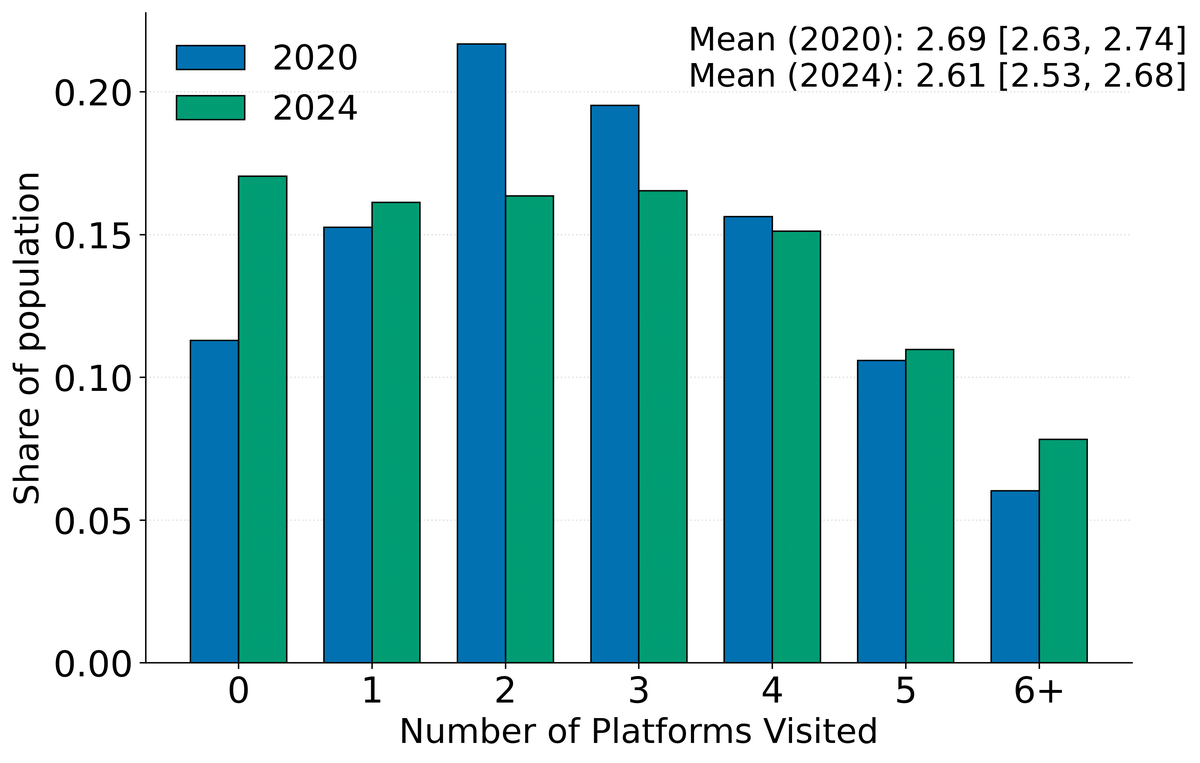
According to this survey, social media use among Americans as a whole is on the decline. The graph below summarizes the survey results on the number of social media platforms used, with the horizontal axis representing the number of social media platforms used and the vertical axis representing the percentage of the population. Comparing 2020 (blue) with 2024 (green), we can see that the percentage of Americans who do not use social media at all is increasing. Furthermore, with the increasing number of users using five or more platforms, the research team described the 'fragmentation of the digital public sphere.'
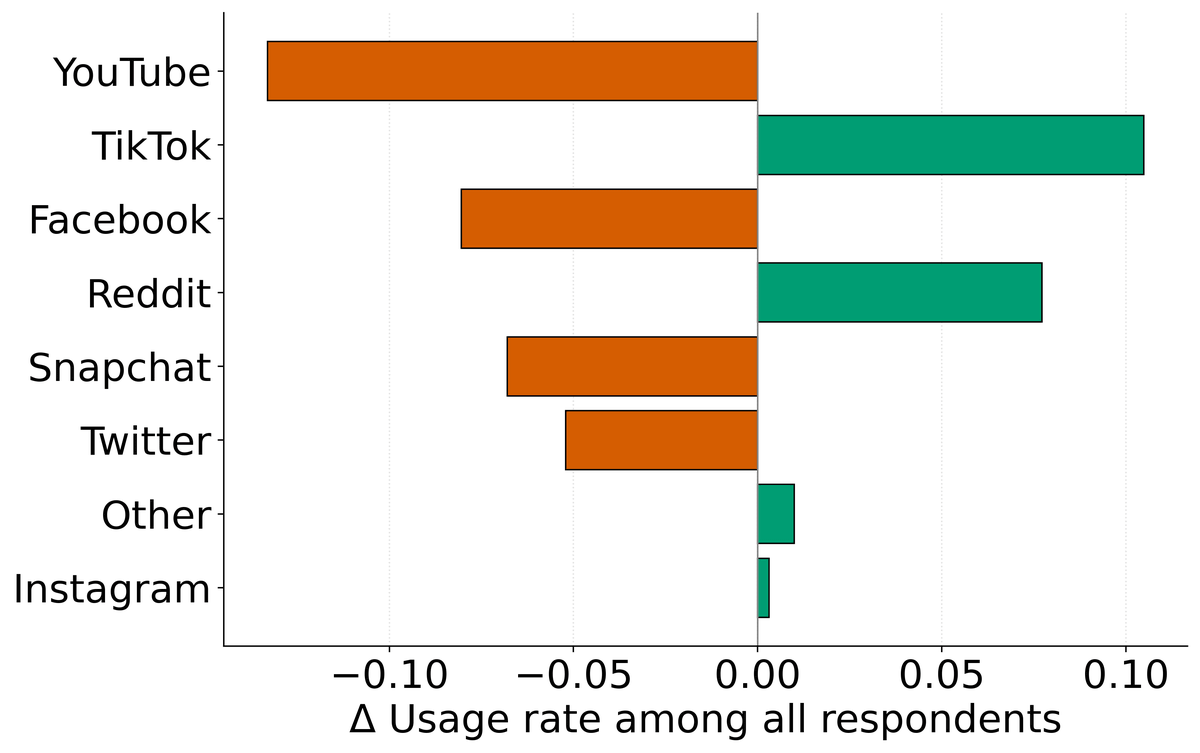
A graph summarizing the changes in usage rates by platform from 2020 to 2024. While usage rates for YouTube, Facebook, Snapchat, and X (formerly Twitter) are declining, usage rates for TikTok, Reddit, and Instagram are increasing.
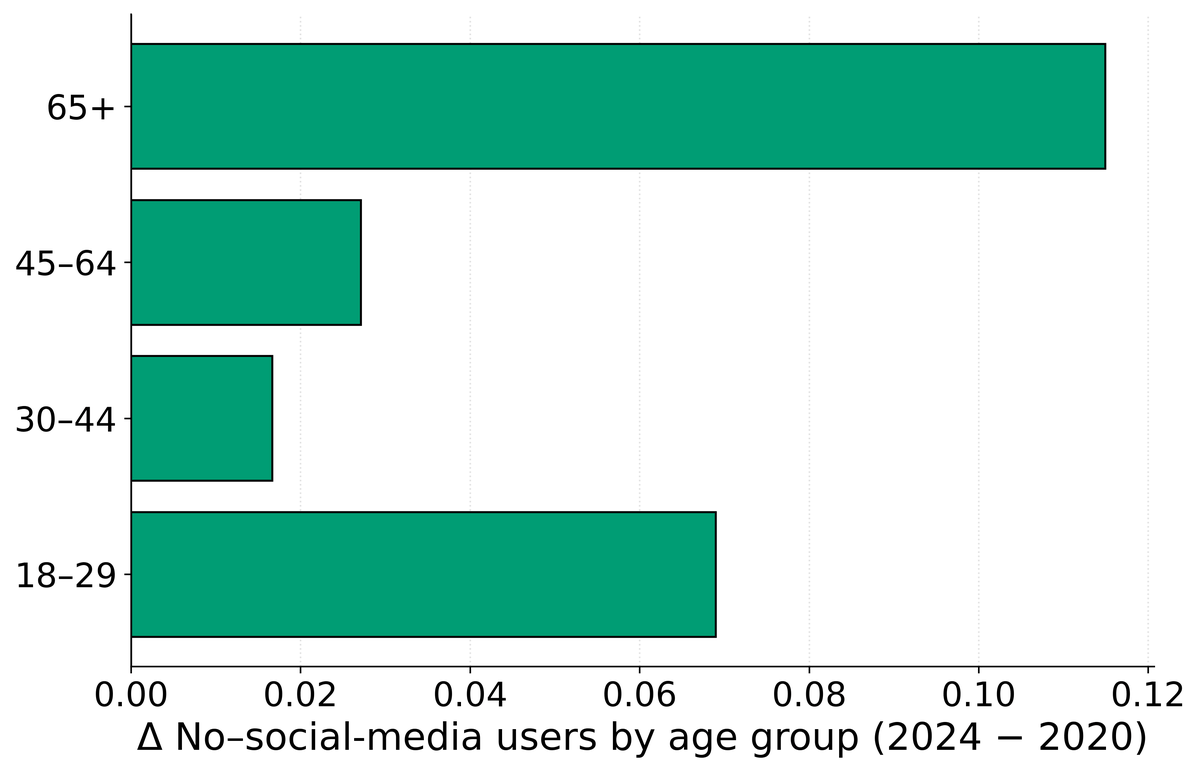
The following is a summary of the changes in the percentage of users who answered 'I don't use social media' by age group. The number of users who do not use social media is increasing among young people aged 18 to 29 and elderly people aged 65 and over.
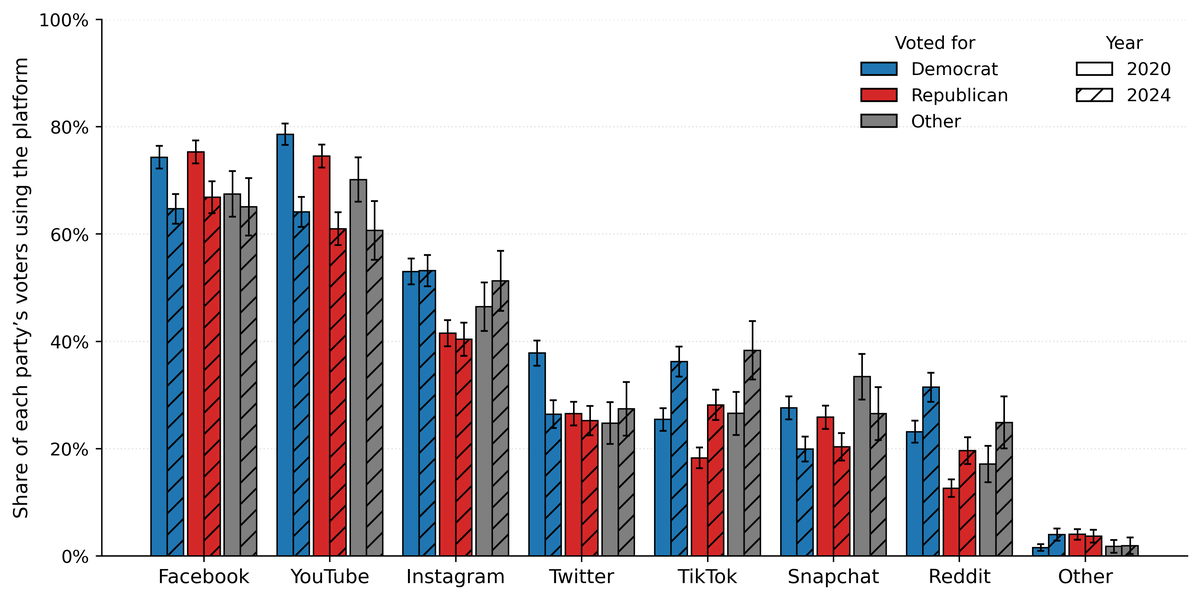
The graph below summarizes the results of a survey on platform usage before and after the US presidential election. Blue indicates support for Democrats, red for Republicans, and gray for other parties. The dashed lines represent the 2024 survey results, while the clear lines represent the 2020 survey results. Despite declining usage, Facebook and YouTube still boast high usage rates. TikTok and Reddit saw notable increases in usage between 2020 and 2024, and are used by both Democratic and Republican supporters.
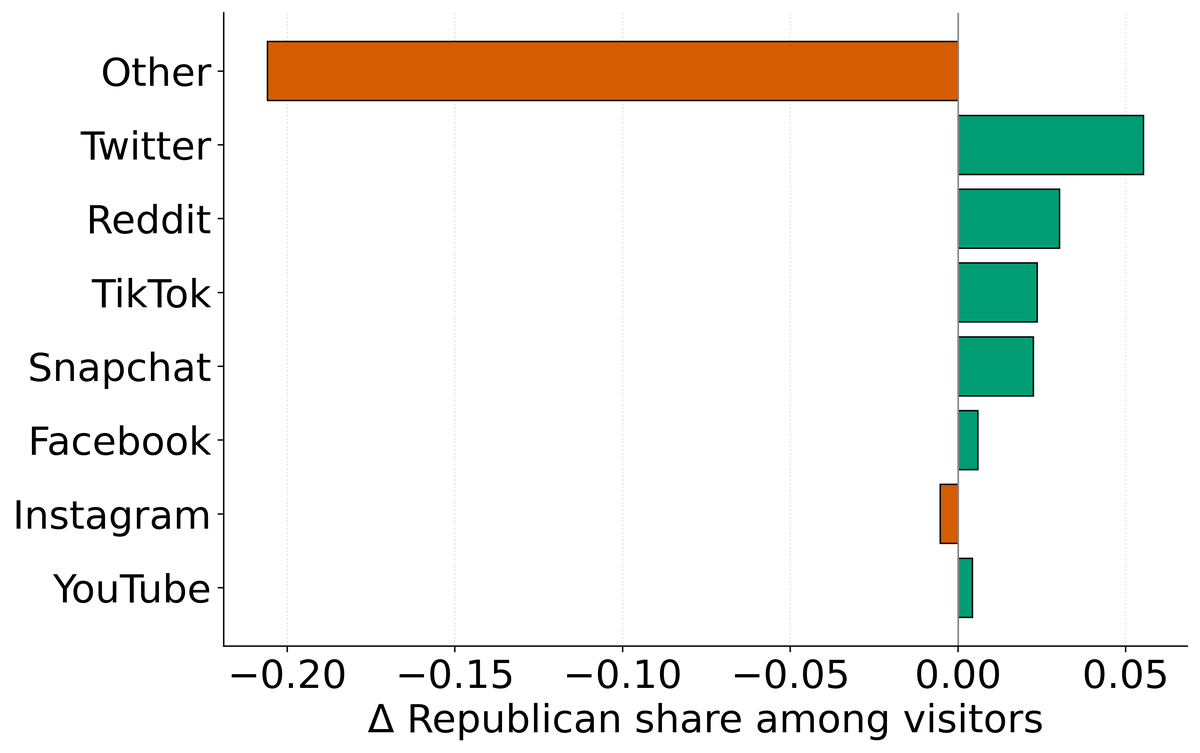
The graph below summarizes the change in the proportion of Republican supporters by platform from 2020 to 2024. While the proportion of Republican supporters decreased on Instagram and other platforms, the proportion of Republican supporters increased across the board on other platforms.
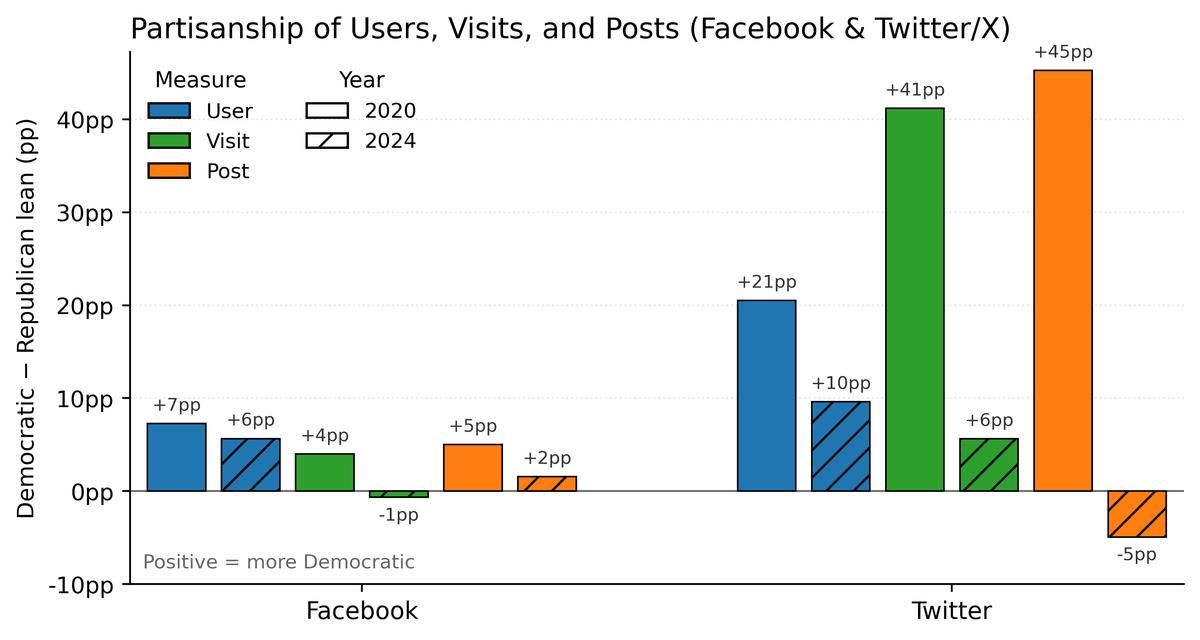
This graph shows the difference in the percentage of Democratic supporters and Republican supporters for 'users,' 'visits (viewing content),' and 'posts' on Facebook and X (formerly Twitter). The reason for comparing these metrics by visits and posts rather than just users is to 'check the composition of more active participants.' While there hasn't been much change on Facebook, X (formerly Twitter) has seen a massive shift from Democratic supporters to Republicans in all metrics: users, visits, and posts.
The graph below shows the relationship between political posts on Facebook and
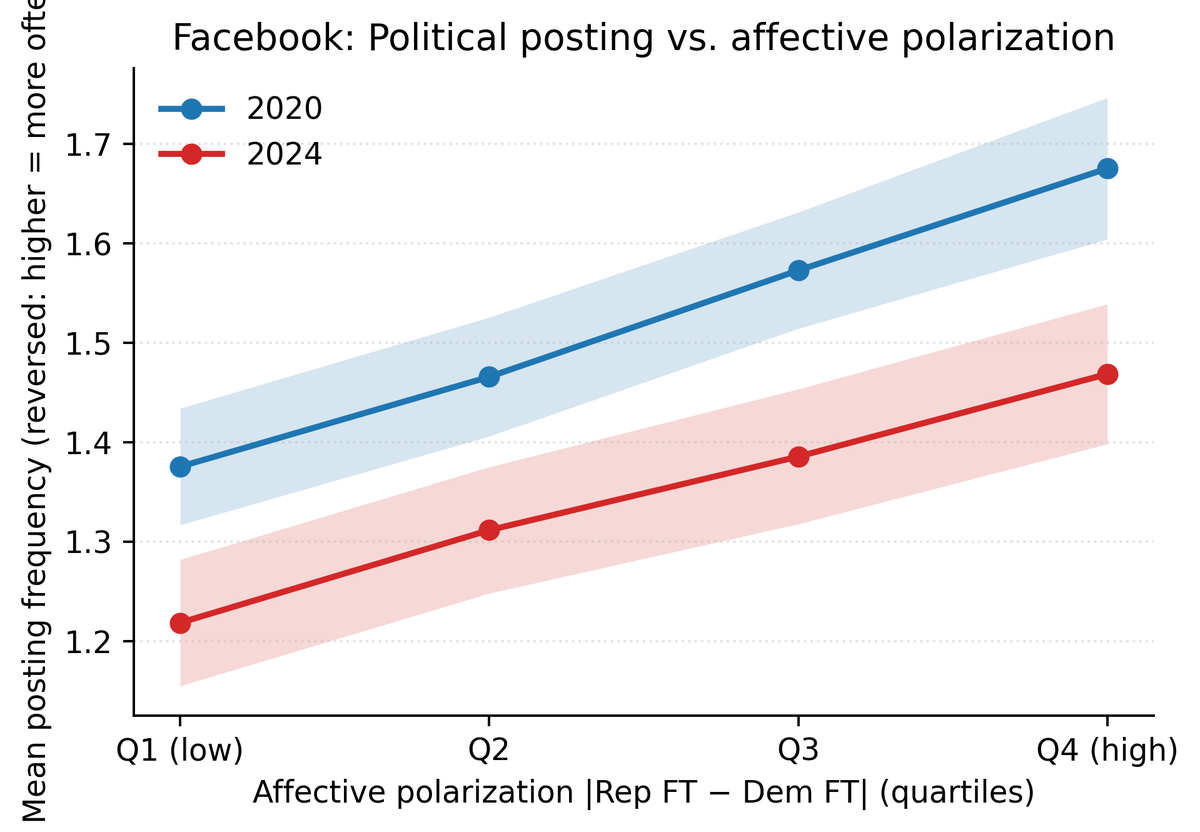
This trend was also seen on X (formerly Twitter).
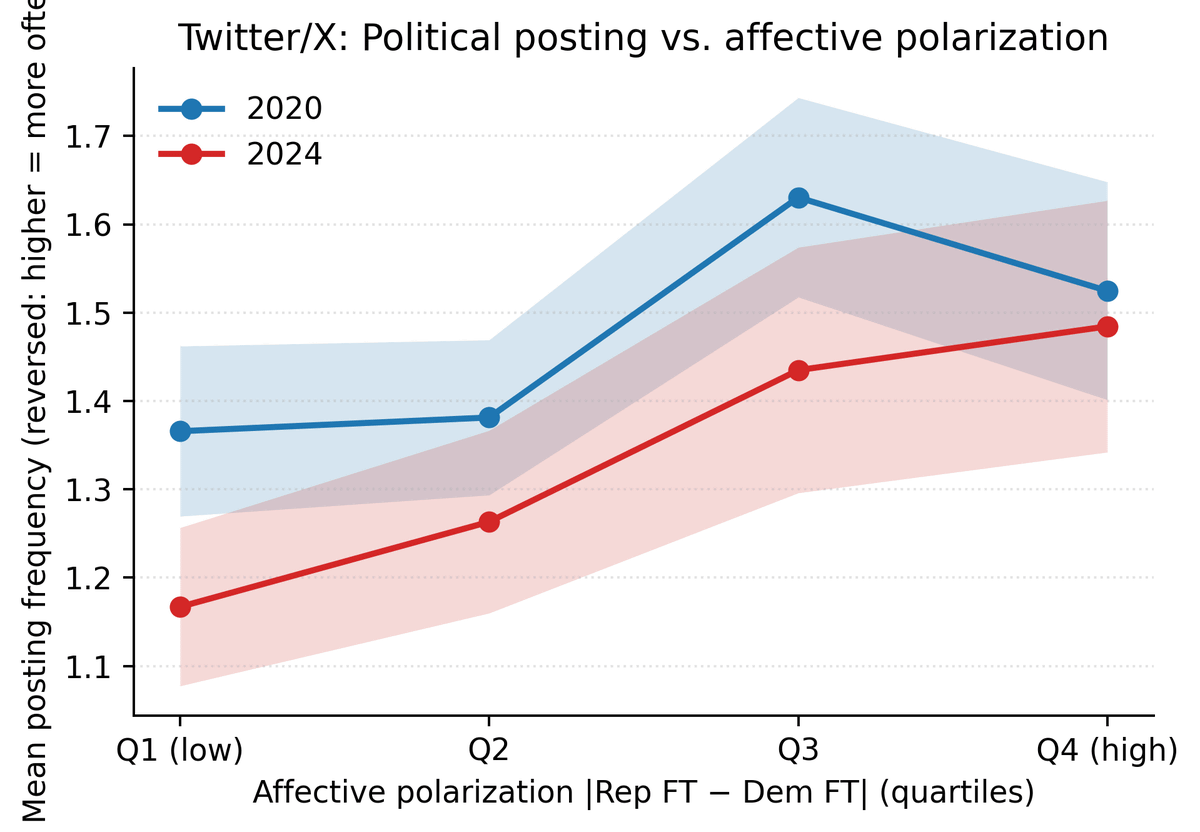
Social media users are also becoming older, slightly more educated, and more diverse. Politically, the proportion of Republican users is increasing across most platforms, but Democrats remain the most popular party.
The researchers point out that as average users leave social media and polarized partisans continue to speak out louder, smaller, more radical, and more ideologically extreme posts are becoming more prominent on social media.
Related Posts:






in Science, Posted by logu_ii