Memory begins to decline in middle age.

Memory loss, such as 'I can picture their face but can't remember their name' or 'I'm sure I've met them before but can't remember the place and time,' is generally thought to be something that only happens in old age. However, an experiment conducted by a research team at Binghamton University, State University of New York, showed that memory decline may occur earlier than many people think.
Aging shifts hippocampal reactivation from selective reinstatement to category-level misbinding during episodic memory | Cerebral Cortex | Oxford Academic
Memory decline starts earlier than you think, new research suggests - Binghamton News
https://www.binghamton.edu/news/story/6436/memory-decline-starts-earlier-than-you-think-new-research-suggests
A research team led by Associate Professor Ian McDonough and postdoctoral researcher Destau Mekvib of the Department of Psychology at Binghamton University conducted memory tests on subjects ranging in age from young adults to the elderly. The 61 subjects consisted of 17 young adults aged 18-30, 21 middle-aged individuals aged 50-60, and elderly individuals aged 61-74.
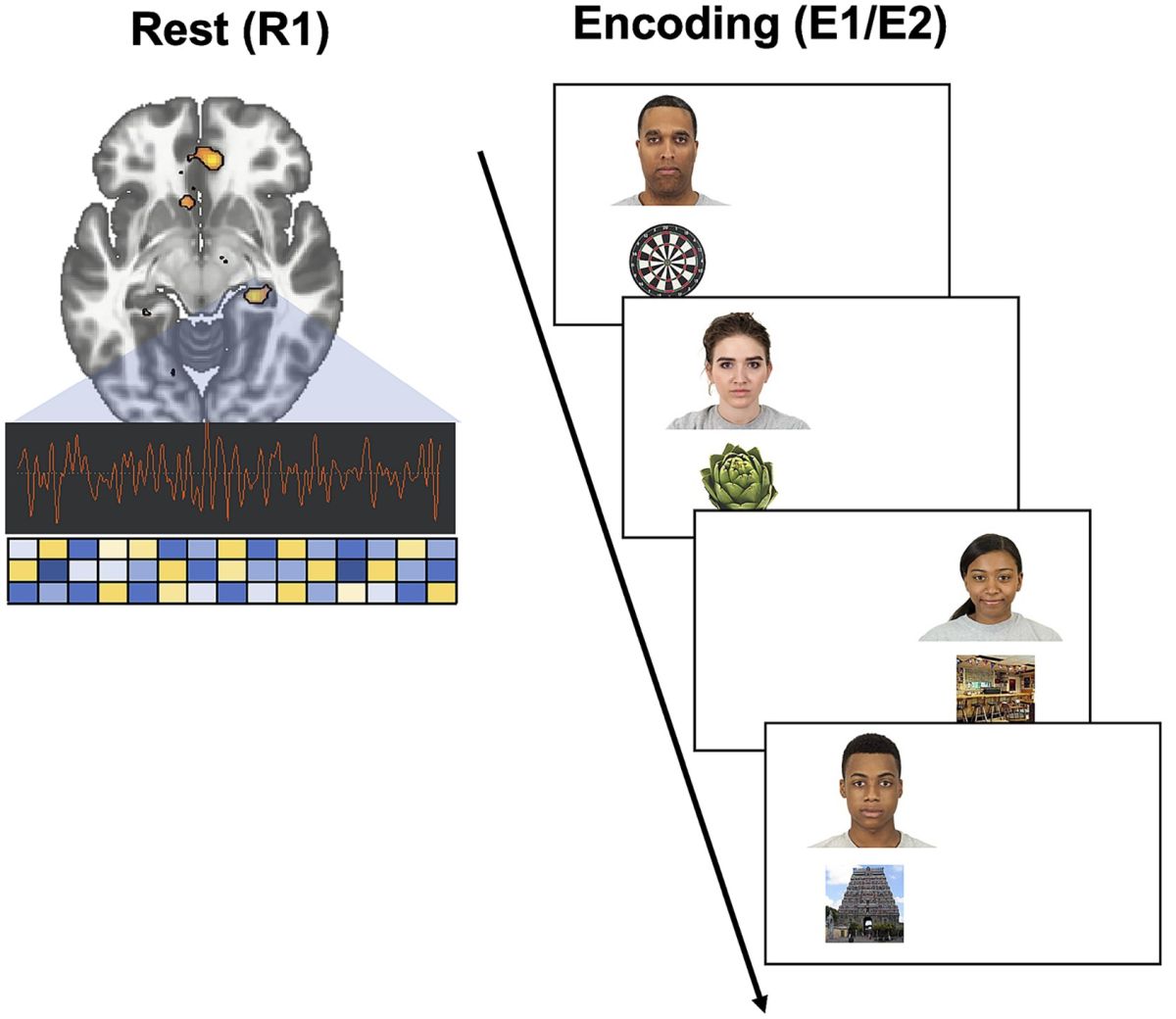
First, participants were shown pairs of 'emotionally neutral facial photographs' and 'specific objects/landscapes,' and instructed to imagine the person in the facial photograph interacting with the object or landscape. This encoding phase was divided into two trials, with participants memorizing 32 pairs in each trial, for a total of 64 pairs.
After a five-minute break, participants were shown four candidate 'specific objects/scenes' that would pair with the 'face photographs' they had seen in the encoding phase, and asked to identify the correct pair. All objects and scenes presented in this
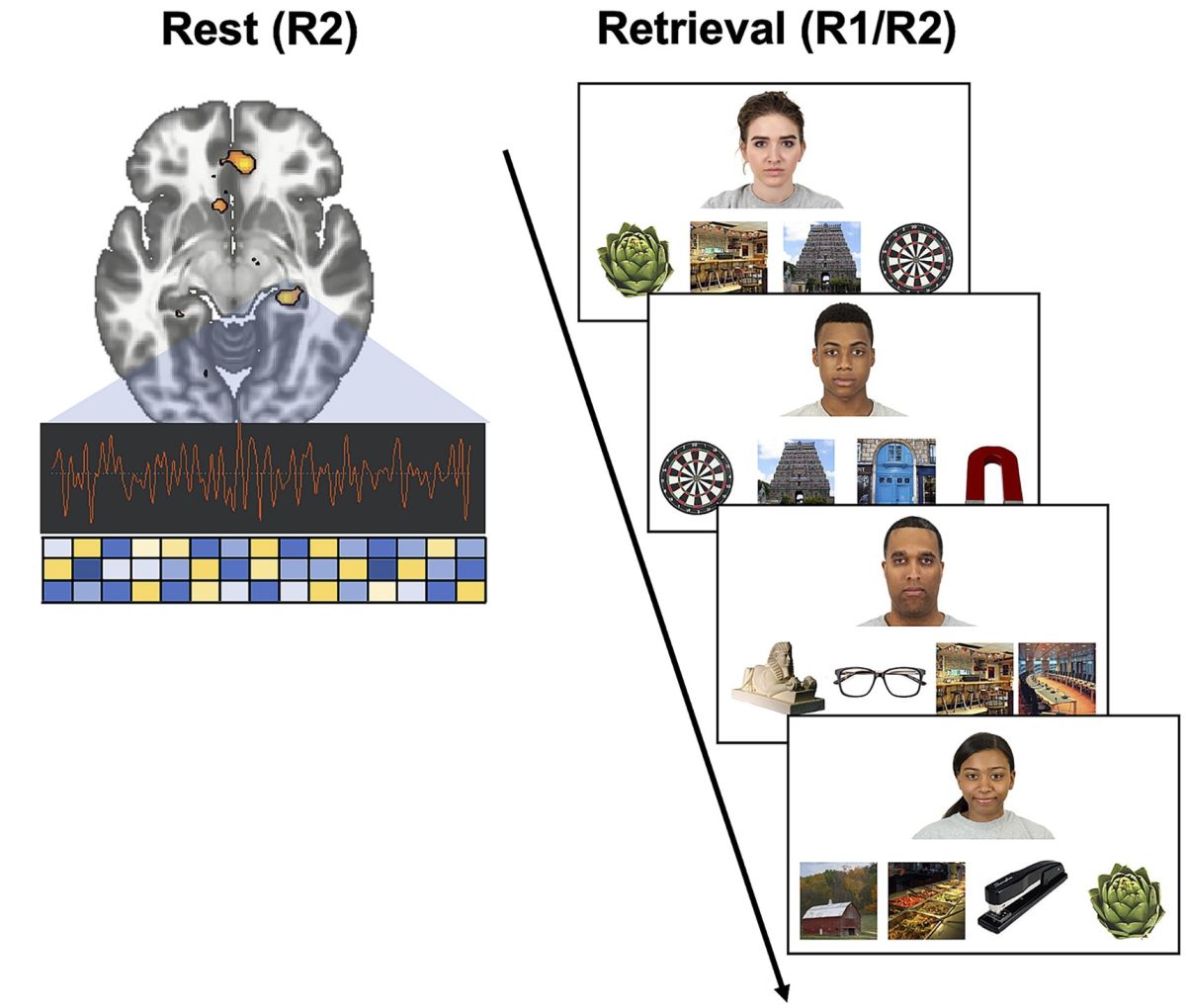
The series of experiments mimicked the memory formation process, which involves the brain learning new memories, stabilizing them through short-term repetition, and recalling them as needed. During the experiments,
The experiment revealed that memory accuracy declines significantly from youth to middle age. McDonough stated, 'Some functions of the hippocampus begin to decline by middle age. This suggests that middle age is indeed a turning point.'
In this experiment, middle-aged participants often associated faces with the wrong objects or landscapes, finding themselves in a situation where they could 'remember what they had seen before, but couldn't figure out which combination was correct.'
McDonough points out, 'The test becomes difficult because all the images displayed on the screen during the test are familiar. They know they've seen these images before, but all they have to remember is the specific association. That's precisely where mistakes become more pronounced as you get older.'

The research team hypothesized that older adults might have weaker hippocampal activity during the retrieval phase than younger adults, but their investigation of hippocampal activity revealed this was not the case. When younger adults made mistakes during the retrieval phase, their brains did not activate the original memory patterns, as the research team had predicted. In contrast, when older adults made mistakes, memory patterns related to encoding were strongly activated.
McDonough explains, 'The more reactivation of the hippocampus related to encoding, the more likely we were to make memory errors. In other words, that reactivation pattern is not associated with improved memory, but rather with memory errors.'
It is still unclear why older adults show strong hippocampal reactivation despite making memory errors. 'We don't fully understand what's happening in middle age scientifically because brain decline isn't uniform, and different parts of the brain decline at different rates. It will be important to pinpoint when these turning points occur,' McDonough said.
Related Posts:







in Science, Posted by log1h_ik