Google warns Android app developers to reduce memory usage, with new thresholds set to begin in February 2027.

Google Play, the official app store for Android, has introduced two new quality requirements: one is to ' reduce app memory usage ,' and the other is to 'provide a safe and seamless device migration experience .'
Android Developers Blog: Elevating app quality: Reducing memory usage and improving device migration

Google tells Android app developers to cool it on memory use, or else | The Verge
https://www.theverge.com/tech/985679/google-play-android-17-memory-limit
Lagavendra Harish Pothamseti , Senior Engineering Director at Google and General Manager of Developer and Monetization for Google Play, explains two new quality requirements being introduced to Google Play.
◆ Reduce the memory usage of apps
The first requirement, 'Reduce app memory usage,' is a quality requirement stemming from memory shortages caused by increased demand for semiconductors. Android addresses this challenge by setting broader memory limits to prevent apps from using excessive memory and slowing down the entire system, thereby protecting the overall user experience.
Google Play has set performance thresholds to help developers continue delivering the premium experience users expect through their apps. These include new thresholds for dynamic memory usage, bitmap usage, and code optimization to prevent unexpected performance drops and app crashes on devices.
Details of the newly established performance thresholds are as follows:
Dynamic Memory Usage (Anonymous RSS + Swap): Tracks memory used for your app's private data storage, including both active and compressed memory. Files stored on the device, such as code and assets, are excluded. Dynamic memory usage is evaluated across various app states and device performance categories, including when the app is in use and running in the background.
Bitmap memory usage: Evaluate the amount of memory a bitmap consumes. While a bitmap will occupy memory when the app is in the foreground, it should not be kept in memory for extended periods when the app is hidden, such as in the background or cache.
Optimized DEX Code: A properly optimized Android app bundle uses less memory, starts faster, reduces ANR (Not Responding to Application) occurrences, and improves rendering and runtime performance. To ensure an optimal footprint, apps published on Google Play should be optimized to a minimum 25% coverage using tools such as R8 or other compression tools, combining optimization, compression, and obfuscation.
Further details on performance thresholds can be found on the following page.
Play Console technical quality requirements - Play Console Help
Furthermore, new tools have been made available on the Play Console to help proactively detect, investigate, and optimize apps and games to meet new cheating standards.
Dynamic memory usage and bitmap memory usage can be monitored directly within Android Vitals. This allows you to pinpoint exactly where memory bloat is occurring.
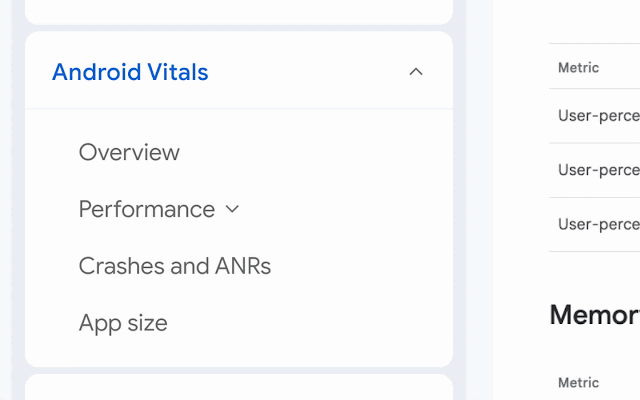
A new filter has also been added to track crashes caused by insufficient memory. This makes it easier to pinpoint when the device's memory load became severe and the OS terminated the app.
Detailed optimization insights are now displayed for every new app bundle you upload to Play Console. If your compression tool shares optimization metadata, you can easily assess the efficiency of your code and find areas for improvement.
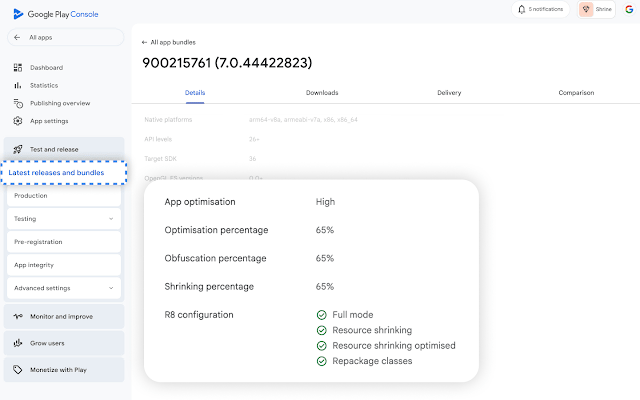
When an app or game exceeds a new threshold for malfunction, a warning will appear directly on the Android Vitals overview page. Warnings will also appear if Android Vitals detects unoptimized bitmaps, DEX optimization limitations, or split bundle usage limitations, further promoting performance and memory savings.
Furthermore, in the second half of 2026, additional diagnostic tools will be available, including metrics on the time apps spend in each state and more detailed information on the Android memory limiter, which prevents individual apps from excessively using device memory. Pothamseti explained, 'Through our continued investment in these enhancements, Google aims to continuously optimize users' device footprint and improve the experience we provide to them.'
Google explains that 'developers will need to meet newly established performance thresholds starting in February 2027.' Similar to existing Android Vitals metrics, exceeding these limits will result in poorer app performance and an increased likelihood of Android apps crashing on devices.
◆Provides a safe and seamless device migration experience
Another quality requirement is to 'provide a safe and seamless device migration experience.'
The Zero-Tap Sign-In requirement mandates that all apps supporting user sign-in use the Android Restore Credentials API to automatically restore the sign-in state when a user moves between Android devices. This API allows users to sign in to their accounts securely and quickly without any additional taps, even when opening the app for the first time on a new Android device.
Starting in April 2027, Google Play will require apps to meet Zero-Tap Sign-In requirements to maintain full publishing functionality and optimal display on Google Play. As of the time of writing, game apps are exempt from the Zero-Tap Sign-In requirement, but dedicated guidance and solutions for the complex authentication use cases of game apps will be available from 2027. Pothamseti wrote, 'For games that support single-account sign-in, we strongly recommend using the credential recovery API to support the Zero-Tap Sign-In requirement.'
Related Posts:






in Software, Smartphone, Posted by logu_ii