NVIDIA has released details of its Vera CPU for AI agents, which features 88 custom-designed cores and boasts a 2.2x performance compared to Sapphire Rapids according to DeepInfra's real-world tests.
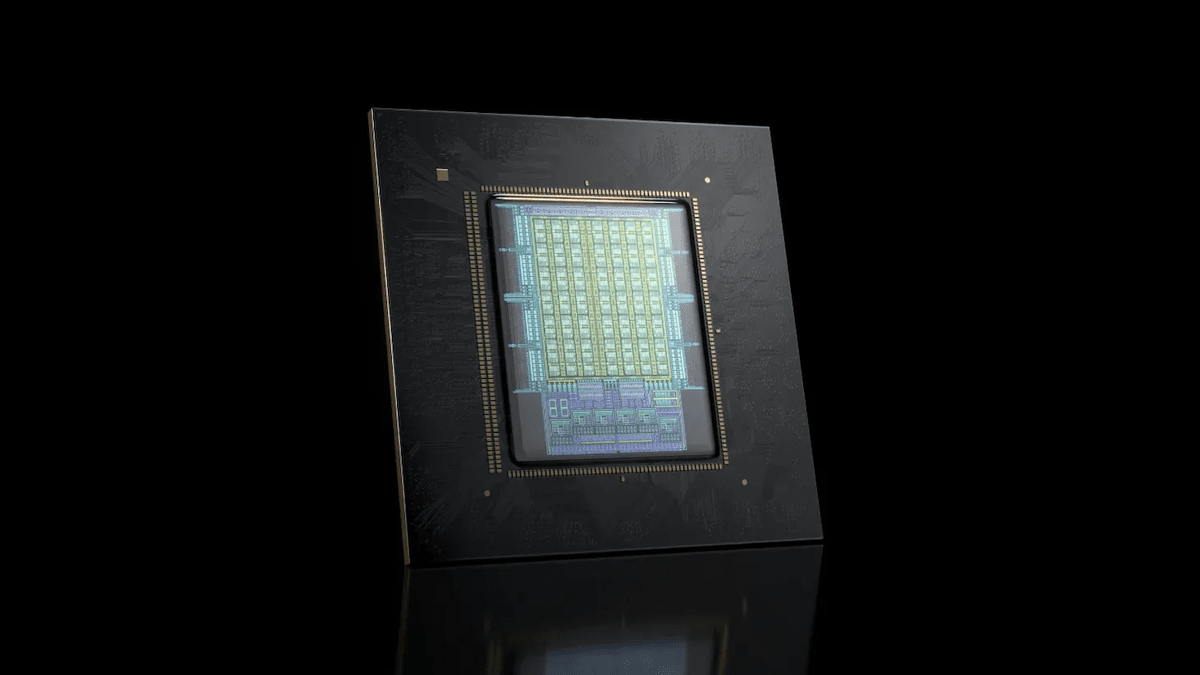
NVIDIA has released detailed design information for its 'NVIDIA Vera CPU,' developed for AI agents and AI data centers. Vera features 88 of NVIDIA's proprietary 'Olympus' data center CPU cores, capable of processing a total of 176 threads. Vera is already in mass production and is scheduled to be available through system manufacturers and cloud providers from the fall of 2026. Benchmark results from DeepInfra and CoreWeave have also been released.
NVIDIA Vera Rubin Driving Performance Per Watt, Lowest Token Costs for Partners Worldwide | NVIDIA Blog
NVIDIA Vera CPU: Olympus Cores Built for Maximum Single-Thread Performance in Agentic AI | NVIDIA Technical Blog
https://developer.nvidia.com/blog/inside-nvidia-vera-cpu-olympus-cores-built-for-maximum-single-threaded-performance-in-agentic-ai
In AI agents, the GPU is responsible for calculating the AI model, while the CPU primarily handles tasks such as calling external tools, managing processing order, and moving data. If the CPU processing takes a long time, the expensive GPU will have to wait longer for the next data. NVIDIA's AI infrastructure division explained to X that 'the speed of the AI agent depends on the CPU speed, so we redesigned the CPU.'
AI agents are only as fast as the CPU powering them — so we redesigned the CPU.
— NVIDIA AI Infrastructure (@NVIDIAAIInfra) July 21, 2026
NVIDIA Vera with Olympus Cores delivers up to 1.8x higher factories on agentic workloads, with the memory bandwidth and per-thread speed to keep AI running at full tilt.
Read more:… pic.twitter.com/qniPqbG7oA
NVIDIA already offers the 'NVIDIA Grace CPU' for data centers. While Grace used Arm's Neoverse V2 core, Vera uses NVIDIA's own Olympus core. The product name Vera and basic specifications such as 88 cores had been announced previously, but the announcement on July 21, 2026, revealed more details about the internal structure of the Olympus core, memory configuration, and actual performance.
NVIDIA announces details of its AI-focused GPU 'Rubin' and AI-focused CPU 'Vera,' with the AI rack 'Vera Rubin NVL72' boasting a processing performance of 2400 TFLOPS in FP64 precision and integrating Groq's high-speed inference chip - GIGAZINE
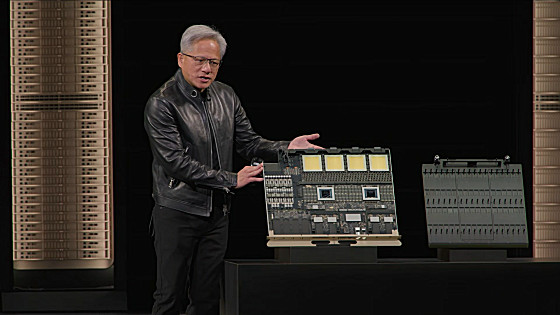
In AI agent control processing, the next tool to be called is changed depending on the search results, and the next step is advanced after waiting for the execution result of the code. Unlike processing that involves a large number of identical calculations, there are many processes with conditional branching and dependencies, so the processing speed per thread is important, as is the number of cores.
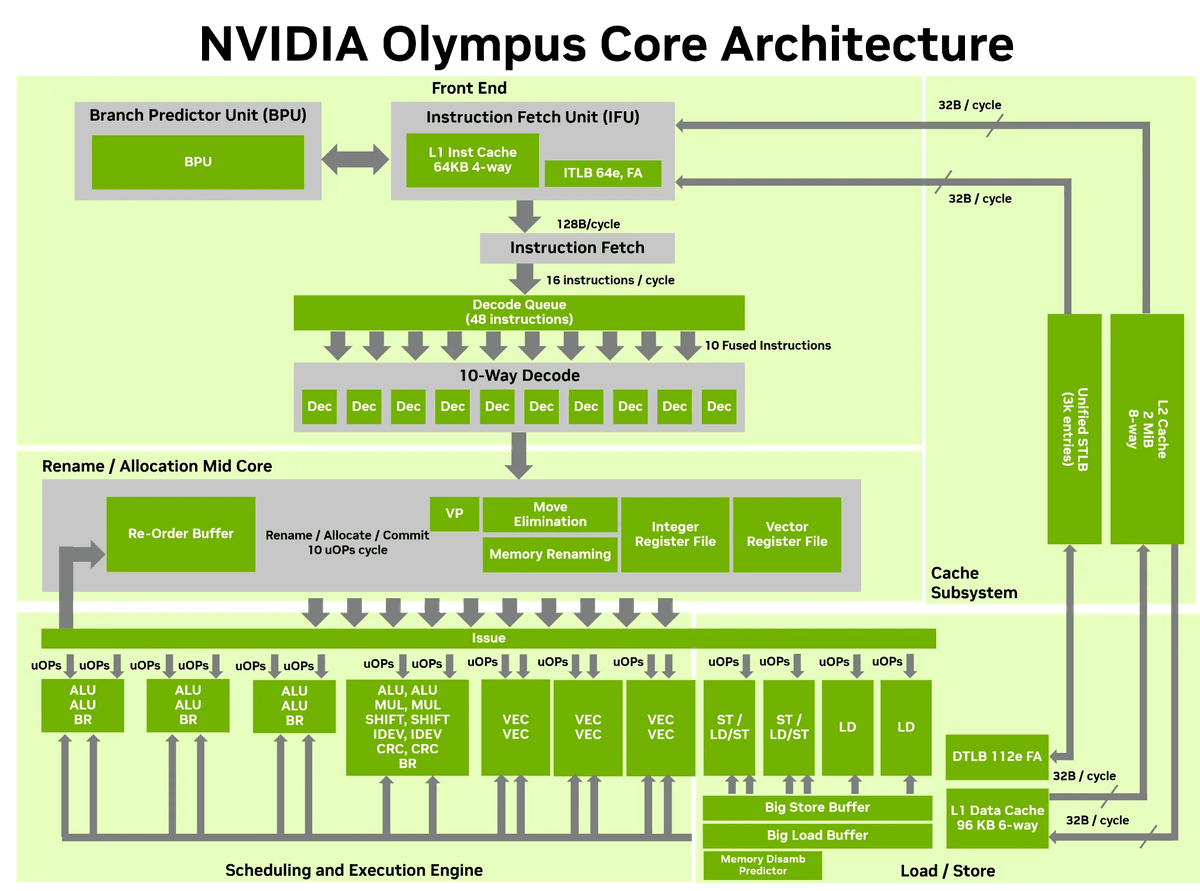
Olympus features a mechanism that decodes up to 10 instructions per clock cycle and a neural branch prediction mechanism that predicts where processing should branch. It also supports out-of-order execution, which advances executable instructions without waiting for the previous instruction to finish. It also has a dedicated mechanism for pre-fetching graph-like data structures, aiming to reduce waiting times when traversing databases and search indexes.
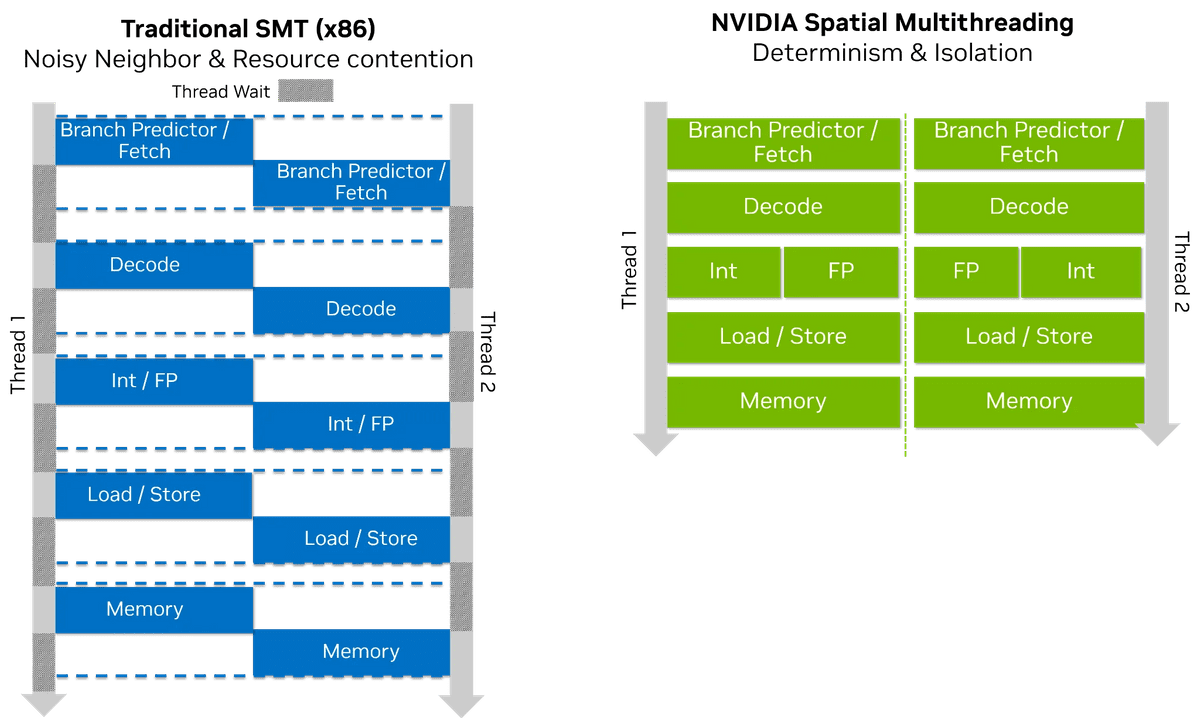
Servers running a large number of AI agents need to handle communication, logging, and memory management simultaneously with the processing of the agents themselves. Vera employs 'NVIDIA Spatial Multithreading,' which runs two threads on a single Olympus core, supporting a total of 176 threads across 88 cores.
In typical simultaneous multithreading, two threads may compete for the same resources within the core, potentially slowing down the processing of one of them. Spatial Multithreading, however, divides the resources within the core and allocates them to each thread, mitigating the problem of unstable processing times even under heavy load.
Even with high-speed CPU cores, processing will stop if data cannot be received from memory. Vera features 'NVIDIA Scalable Coherency Fabric,' which connects 88 cores, cache, and memory controllers, ensuring a maximum data transfer bandwidth of 3.4 TB/s on the die. The L3 cache shared by all cores is 164 MB.
The main memory uses replaceable SOCAMM2 format LPDDR5X, supporting a maximum capacity of 1.5TB and a bandwidth of 1.2TB/s. This configuration allows for memory module replacement in case of failure or capacity changes, while still utilizing the low-power LPDDR5X. Compared to a single Grace CPU, the maximum memory capacity is approximately three times greater, and the bandwidth is approximately 2.4 times greater.
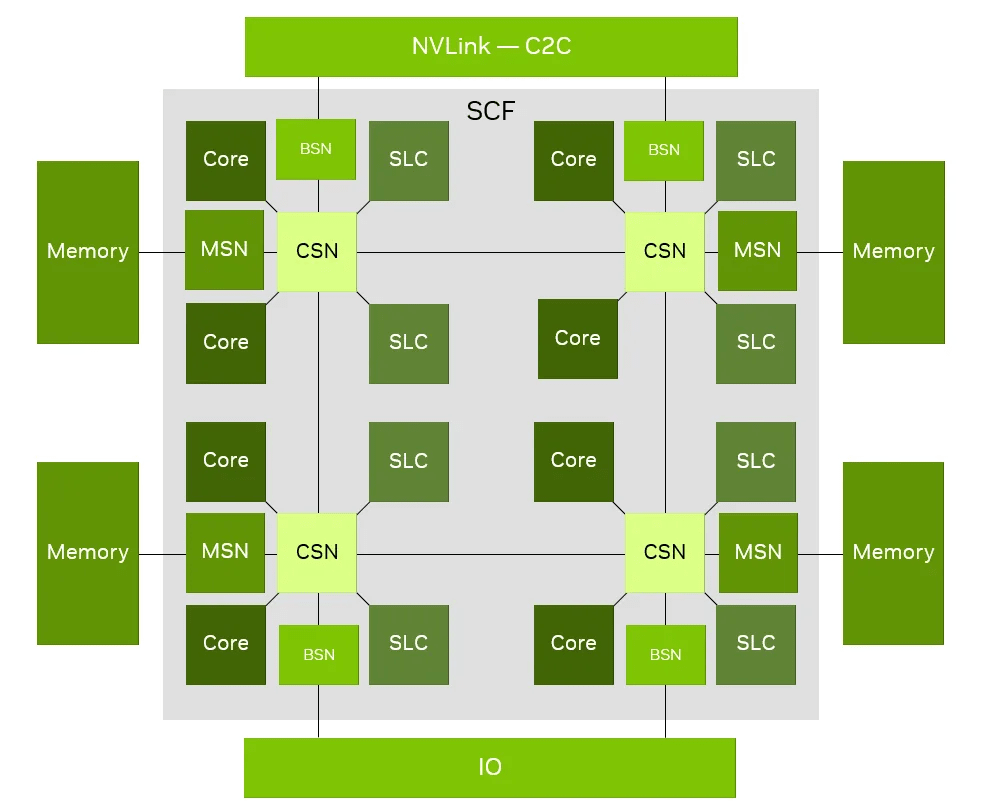
Vera can be installed in standalone CPU servers, but it is also used as the host CPU for AI data center systems combined with Rubin GPUs. The second-generation NVIDIA NVLink-C2C connects the CPU and GPU at up to 1.8TB/s, reducing the burden of repeatedly copying data between the CPU and GPU. The rack-mount system 'NVIDIA Vera Rubin NVL72' houses 36 Vera CPUs and 72 Rubin GPUs.
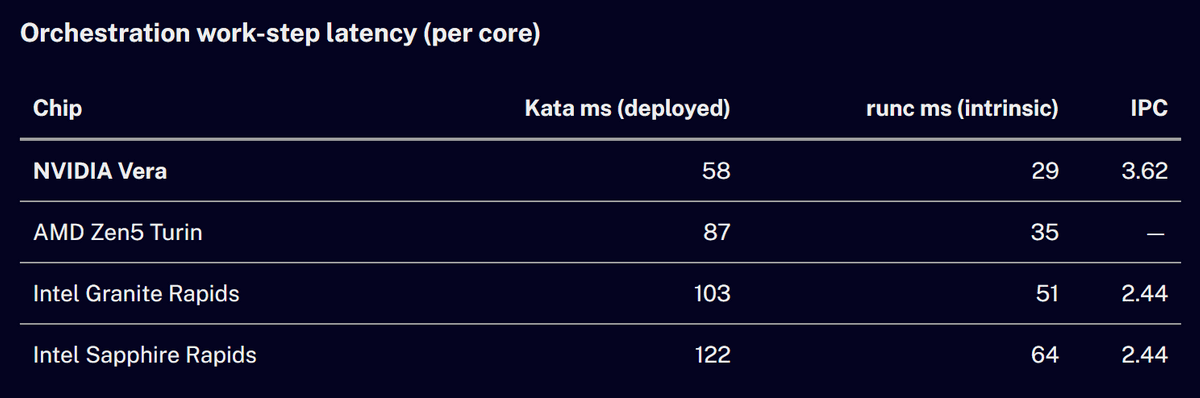
To verify actual performance, DeepInfra, which operates an AI cloud, compared Vera with AMD Zen 5-based Turin, Intel Granite Rapids, and Intel Sapphire Rapids.
We run agents in production. So when NVIDIA built Vera CPU for agents, we benchmarked it ourselves. @nvidia Vera CPU hit 2.2× the best x86 on agentic orchestration and was the fastest of all four architectures we tested.
— DeepInfra (@DeepInfra) July 21, 2026
Methodology locked before the hardware arrived 👇
The…
DeepInfra plays back the processing of AI agents recorded in actual services, measuring branching control processes, startup of code execution environments, and data processing that consumes memory bandwidth. During the measurement, no new tokens are generated by the large-scale language model to prevent variability in model output from affecting the results.
The comparison targets were all physical 20-core processors with 1 core per thread. In an environment close to bare metal, the time taken to control the AI agent was 29 milliseconds for Vera, 35 milliseconds for AMD Zen 5, 51 milliseconds for Granite Rapids, and 64 milliseconds for Sapphire Rapids. Vera recorded performance approximately 2.2 times faster than Sapphire Rapids and approximately 1.2 times faster than the AMD Zen 5, which was the fastest of the x86 CPUs compared.
In a test investigating the number of AI agents that could run simultaneously while maintaining the same response quality, Vera handled 256 agents, compared to 160 agents for comparison, with Granite Rapids reaching 192 agents in its best measurement. Vera's entire single socket could run over 574 agents without exceeding the set response time, and enabling Spatial Multithreading increased processing capacity under heavy load by 20.5%.
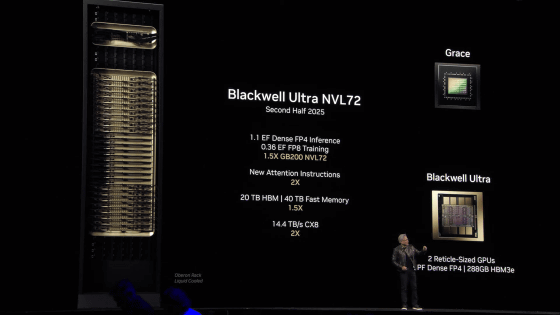
CoreWeave has published the results of actual measurements of the entire Vera Rubin NVL72 rack, not just the Vera CPUs themselves. Using the inference model 'DeepSeek-R1,' and comparing them while maintaining a similar level of user-perceived response speed, the Vera Rubin NVL72 achieved up to 10 times faster token generation per megawatt compared to the conventional NVIDIA GB200 NVL72. This figure demonstrates that more AI processing can be performed without increasing power supply.
The first-ever measured silicon numbers for @NVIDIA Vera Rubin NVL72 are in 😲
— CoreWeave (@CoreWeave) July 21, 2026
First measured performance shows 10x more tokens per megawatt than Blackwell.
No projections. Real results from live hardware. pic.twitter.com/I7GBu02JKK
NVIDIA is expanding production of the Vera Rubin NVL72, and CoreWeave, Google Cloud, Microsoft Azure, and Oracle Cloud Infrastructure are already conducting rack validation and preparing for deployment. Vera-equipped systems are expected to be available through system manufacturers and cloud providers starting in the fall of 2026. CoreWeave says it will continue to optimize the system based on these measurements and will publish any new results.
Related Posts:


in Hardware, Posted by log1d_ts