Vantablack, the world's blackest paint, is shown to have the potential to prevent light pollution from satellites.
In recent years, the number of artificial satellites in
Reducing the impact of satellite brightness for astronomy: laboratory characterization and simulations | Monthly Notices of the Royal Astronomical Society | Oxford Academic
https://academic.oup.com/mnras/article/550/1/stag1136/8722194
World's darkest coating could reduce satellite light pollution | University of Surrey
https://www.surrey.ac.uk/news/astrophysicists-show-how-worlds-darkest-coating-could-protect-night-sky-satellite-light-pollution
Vantablack: World's Blackest Paint Could Solve A Major Problem For Astronomy : ScienceAlert
https://www.sciencealert.com/the-worlds-blackest-paint-could-stop-satellites-ruining-astronomers-views
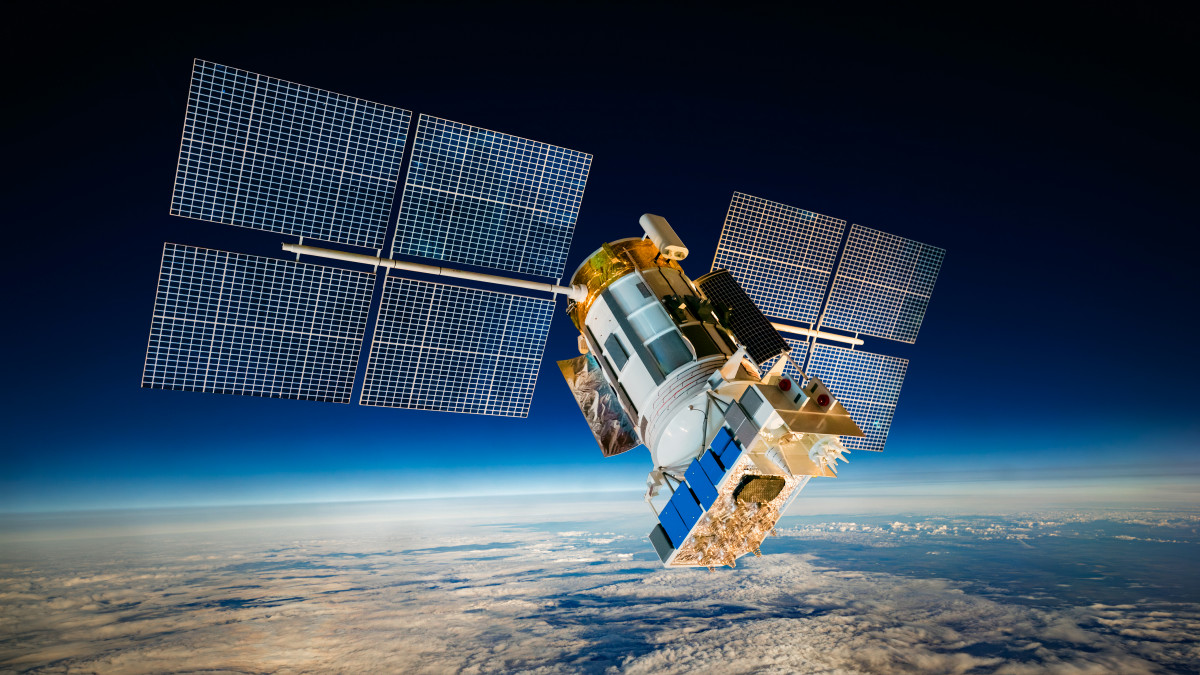
According to the European Southern Observatory (ESO) , the number of satellites orbiting the Earth has surged since 2019, exceeding 14,000 by July 2026. The majority of these are communication satellites for Starlink, a satellite internet service operated by SpaceX, which plans to launch another 1 million satellites for space data centers. Including those planned by other companies, a total of more than 1.7 million satellites are expected to be placed into orbit in the next few years.
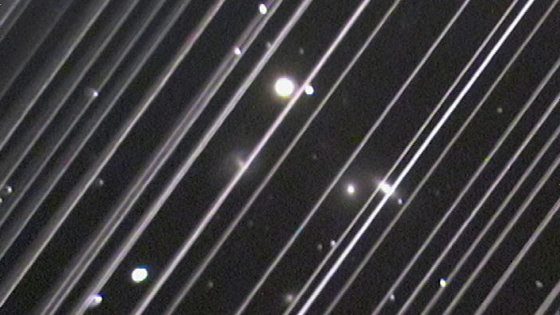
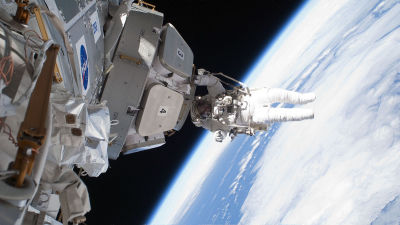
However, it has been pointed out that this surge in artificial satellites will cause devastating 'light pollution' for modern astronomy. Reflected light from satellites is already negatively affecting many images taken by observatories, and this problem is expected to worsen in the future.
NASA warns that too many satellites could contaminate most of the images from space telescopes - GIGAZINE
Therefore, research teams from the University of Surrey in the UK and Surrey NanoSystems, a company spun off from the University of Surrey, investigated the ability of Vantablack 310, a new paint developed by Surrey NanoSystems, to reduce light pollution caused by artificial satellites.
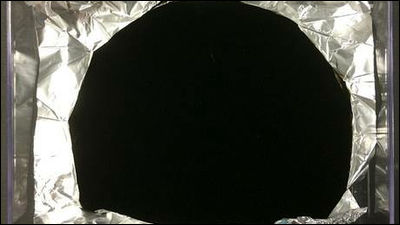
Vantablack 310 is a coating developed based on Vantablack, the world's blackest substance, and is designed with ease of application and durability in mind. The research team measured how Vantablack 310 reflects light under various lighting and observation conditions, and used these measurements to simulate how a satellite coated with Vantablack 310 would appear from the ground.
As a result, it was confirmed that coating a satellite with Vantablack 310 reduces the reflection of incident light to only 2%. Furthermore, because the small amount of reflected light is dispersed more diffusively, flashes that tend to occur on the highly reflective surface of satellites are also reduced.
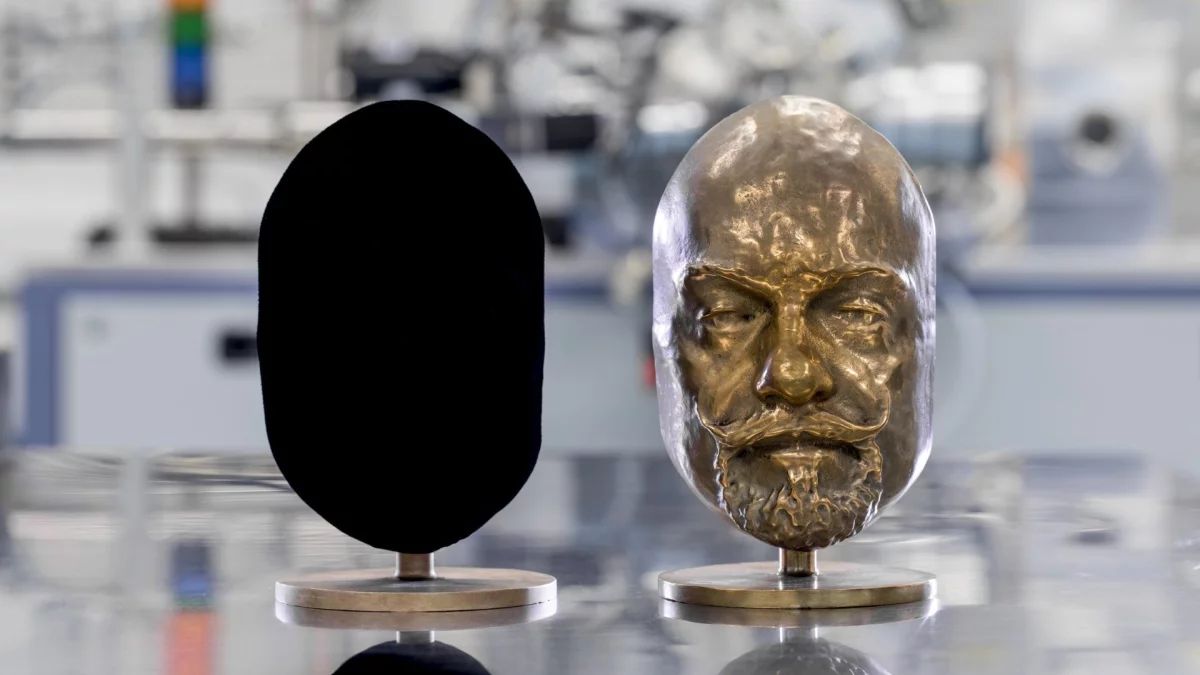
Below are photos comparing a bronze face mold painted with Vantablack 310 (left) and one that was left unpainted (right). When Vantablack 310 is applied, almost everything appears completely black, and from the front, even the contours of the face are indistinguishable.
In terms of
The AB magnitude of uncoated SpaceX satellites is '3.7,' which is significantly brighter than satellites coated with Vantablack 310. SpaceX has also tested methods to reduce the light from satellites such as 'DarkSat' and 'VisorSat,' and Vantablack 310 has been reported to be as effective as, or even better than, these methods.
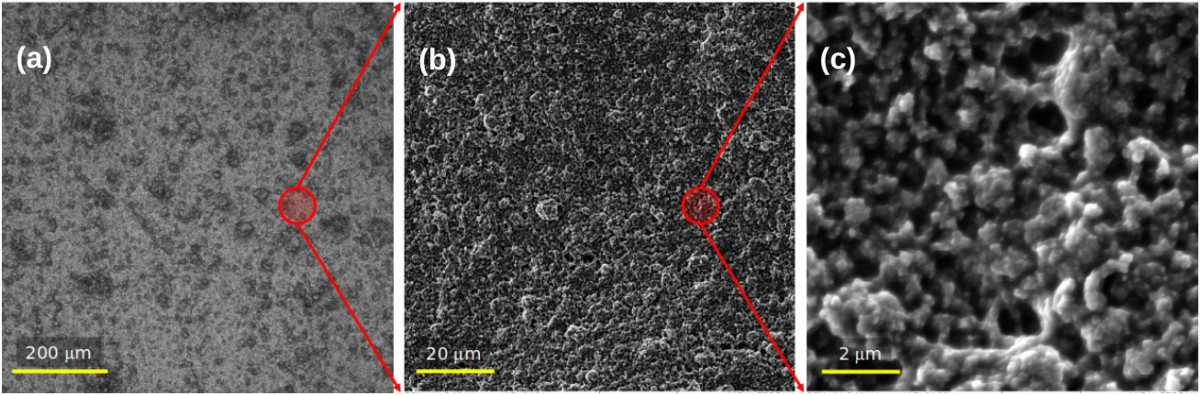
Furthermore, the research team used an electron microscope to evaluate the surface of satellites coated with Vantablack 310. They found that Vantablack 310 creates a 'coral-like structure with hollow depressions,' which they concluded demonstrates a physical property that traps light.
It should be noted that this study focused solely on the optical performance of Vantablack 310, and further research is needed regarding its thermal behavior, durability, and integration into satellite systems in the operational environment of artificial satellites.
Further experiments are planned for Vantablack 310, and it will be applied to Jovian-1 , the first satellite mission under the JUPITER university collaborative program for on-orbit training, education, and research. This experiment will verify the coating performance of Vantablack 310 in space and whether changes in the satellite's brightness can be measured from the ground.
Noelia Noel, a co-author of the paper and an astrophysicist at the University of Surrey, said, 'The universe is becoming increasingly crowded, posing a challenge not only for astronomers but for everyone who cherishes the untouched night sky. What's encouraging about this research is that it not only identifies the problems but also guides us toward developing practical, evidence-based solutions.'
Related Posts:


in Free Member, Science, Posted by log1h_ik