Research suggests that the rate of human aging is influenced by 'where in the world one lives.'

Human aging is influenced by a wide range of factors, including genes, lifestyle, and stress. A new study led by Stanford University School of Medicine has found that a person's ethnicity and 'where in the world they live' also influence the rate of aging.
A comparison of deep multiomics profiles across ethnicity, geography, and age: Cell
Stanford Medicine-led research links human molecular, microbial diversity with geography, ethnicity
https://med.stanford.edu/news/all-news/2026/05/microbial-ethnic-geographical-diversity.html
Where You Live May Affect How Rapidly You Age, Sweeping Study Finds : ScienceAlert
https://www.sciencealert.com/where-you-live-may-affect-how-rapidly-you-age-sweeping-study-finds
Humans lead incredibly complex lives, and various factors such as genes inherited from ancestors, geographical factors, and lifestyles shape their biological characteristics. Furthermore, humans' ability to migrate across the globe has increased dramatically in recent centuries, and it is not uncommon for people to live in environments completely different from those in which their ancestors were born, raised, and adapted.
Therefore, a research team led by Professor Michael Snyder, a geneticist at Harvard University, attempted to elucidate the differences between genetic and environmental pressures on biological characteristics by utilizing the differences in people's ethnicity and the regions in which they actually live.
Snyder stated, 'For the first time, we have conducted detailed profiling of people around the world. This allows us to understand which characteristics, such as metabolites and microorganisms, correlate with ethnicity, and which characteristics correlate with geographical factors.'

The research team recruited 322 subjects from various regions around the world, with ancestry from Europe, East Asia, and South Asia. The study included the analysis of a wide range of health biomarkers, including not only DNA but also proteins, fats, gut bacteria, immune markers, and metabolites, and combined these to comprehensively understand the subjects' biological characteristics.
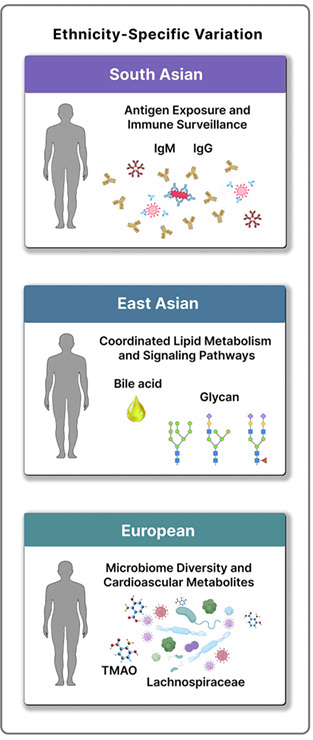
The research revealed that subjects sharing a common ethnicity, regardless of where they lived in the world, shared fundamental characteristics such as genes, gut bacteria, and metabolism.
For example, it was found that people of South Asian descent had enhanced immune surveillance functions as their exposure to pathogen
Professor
Furthermore, it was found that living far from one's hometown also affects a person's biological characteristics. One of the most noteworthy findings concerned biological aging, which indicates how much a person's body's cells and tissues are aging, rather than their chronological age.
For example, studies have shown that people of East Asian descent experience faster biological aging when they live outside of East Asia. The opposite phenomenon is observed in people of European descent, with Europeans living in North America showing slower biological aging compared to Europeans living in Europe.
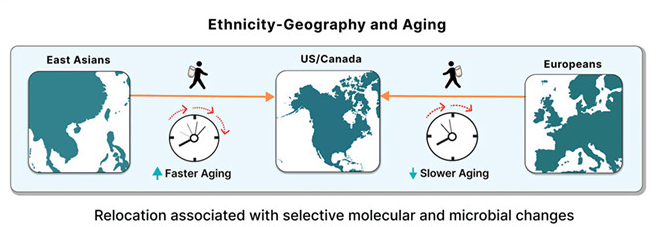
The research team believes that the reason why place of residence influences a person's biological aging is due to a combination of factors, including diet, exposure to air pollution, access to healthcare, stress, lifestyle, and the gut microbiome after relocation.
Furthermore, this study revealed that certain gut bacteria are associated with changes in a type of lipid called sphingolipid , which is linked to genes located at the ends of chromosomes that are involved in maintaining telomeres , a process that affects aging. In their paper, the research team states, 'Elevated sphingolipid levels are associated with an increased risk of cardiovascular disease, insulin resistance , arteriosclerosis, and neurodegeneration.'
The findings of this study suggest that medical and nutritional advice should not rely on one-size-fits-all models, but should take into account factors such as an individual's ethnicity and place of residence. 'What this study clearly shows is that our biological functions are shaped by a combination of both our genetic ancestry and our place of residence,' said Unwin.
Related Posts:





in Free Member, Science, Posted by log1h_ik