There is a possibility that strange climate cycles existed during the 'Snowball Earth' period, when the Earth was completely covered in ice.
During
Repeated snowball–hothouse cycles within the Neoproterozoic Sturtian glaciation | PNAS
https://www.pnas.org/doi/10.1073/pnas.2525919123
Snowball Earth may hide a far climate stranger cycle than anyone expected
https://sciencex.com/news/2026-04-snowball-earth-stranger-climate.html
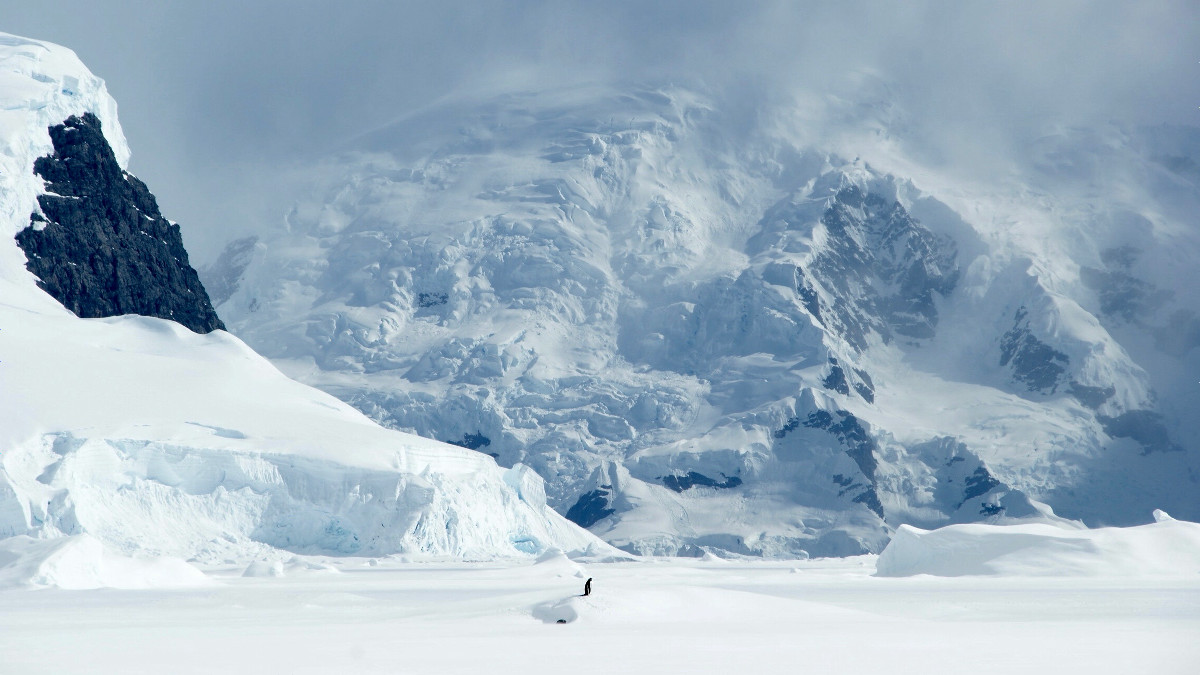
There are various theories regarding the exact duration of the Sturtian glaciation, but it is generally believed to have lasted for a long period of approximately 56 million years, between about 717 million and 643 million years ago. The Earth during this period has been explained by two scenarios: one in which it was a 'snowball Earth,' completely covered in ice, and the other in which it was a 'slashball Earth,' with only thin ice and small bodies of water remaining in tropical regions. However, these theories are said to have contradictions.
Global climate change that causes ice ages is related to the carbon and oxygen cycle, and one of the systems that removes carbon from the atmosphere is called the ' carbonate-silicate cycle .' The carbonate-silicate cycle is a cycle in which carbon dioxide is removed from the atmosphere when silicate- composed rocks react with carbon dioxide and water as they weather.
During ice ages, this carbonate-silicate cycle slows down significantly, or even stops completely. As a result, volcanic carbon dioxide accumulates in the atmosphere, causing temperatures to rise. Once a certain temperature is reached, glaciers begin to melt, marking the end of the ice age.
A research team at Harvard University points out that the timescale of this ice age cycle is about 4 million years, and that in the Slashball Earth scenario it would be even shorter. This contradicts the theory that the Sturtian glaciation lasted for about 56 million years. Furthermore, they suggest that if the ice age lasted too long, oxygen would be depleted, and life would not have been able to survive for 56 million years under normal circumstances.
The research team simulated Earth's climate, carbon, and oxygen cycles to find a model that fits geological and biological observations of the Sturtian glaciation. They also tested various parameters related to volcanic activity, silicate rock weathering rates, and the scale of
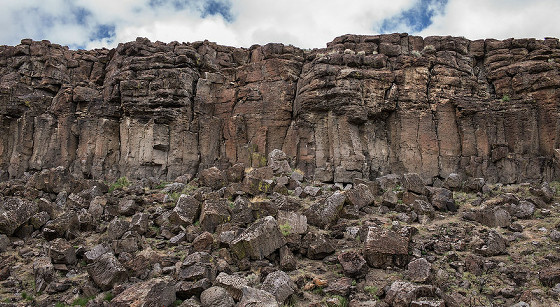
FLIP is a large igneous rock region in the Canadian Arctic. The research team believes that the significant weathering of igneous rocks in this region consumed a large portion of the world's carbon dioxide, triggering a global ice age.
In their paper, the research team states, 'The acceleration of weathering by massive igneous rock regions has long been recognized as an important climate change factor throughout geological time. FLIP formed approximately 717 million years ago, roughly coinciding with the start of the Sturtian period (within 1 to 2 million years). It may have supplied enough fresh basalt to absorb carbon dioxide and trigger global ice ages.'
The model showed that a cyclical process repeats: when carbon dioxide is removed from the atmosphere by the weathering of FLIP, an ice age occurs; when weathering stops, carbon dioxide accumulates; and when it warms up, the weathering of FLIP begins again. This cycle continued for 56 million years, which is what constituted the Sturtian glaciation.
The research team stated, 'Even if only a portion of FLIP was destroyed by weathering in the early stages of the snowball, the remaining basalt would continue to weather after the glacial melt. Then, under the warmer climate of the interglacial period, carbon dioxide absorption would begin again, triggering the next snowball, and the cycle would repeat. This cycle of alternating between extreme climates likely continued until the unweathered basalt of FLIP was depleted.'
by Richard Droker
It should be noted that this model is a simplified version and does not cover all possible processes. However, it does explain some inconsistencies in the explanations of snowball earth and slashball earth.
Related Posts:


in Science, Posted by log1h_ik