What can we learn by analyzing DNA floating in the air?

The air contains not only pollen and dust, but also DNA from living organisms such as animals, plants, and microorganisms. The scientific journal Nature has compiled a report on the growing research into collecting and studying this airborne DNA.
The air is full of DNA — here's what scientists are using it for
Research on environmental DNA (eDNA) , or DNA left in the environment, has primarily been used to estimate what kinds of organisms existed by examining DNA left in water and soil. However, in recent years, this method has been expanded to land, and research is progressing on treating air itself as a medium for carrying DNA. In 2021, a research team led by Elizabeth Clare, a senior lecturer at Queen Mary University of London, conducted an experiment to collect eDNA from the air and succeeded in collecting DNA from indoor air.
Experiment to extract animal DNA from the air succeeds, potentially useful for research in hard-to-reach environments - GIGAZINE
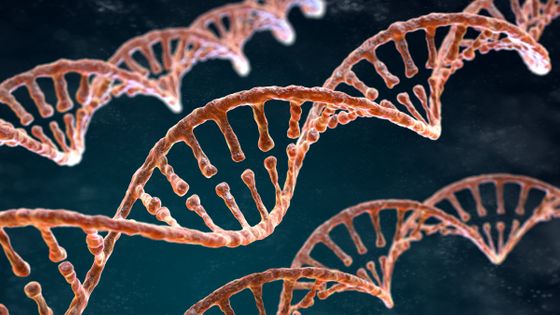
One of the factors that brought this field of research to widespread attention was a study published in 2022 by Clare et al. In this study, DNA from 25 species of mammals and birds was detected in air samples collected at Hammerton Zoo in the UK.
Furthermore, a 2022 study by Christina Lingard and colleagues detected DNA from 49 vertebrate species in air samples collected at the Copenhagen Zoo in Denmark. This demonstrates, as of 2022, that it is possible to read traces of animals in a location or its surroundings simply by examining the air.
Incidentally, both research teams were conducting very similar studies, but they were unaware of each other's existence.
Several teams are conducting research to identify 'organisms living in the surrounding area' from DNA in the air - GIGAZINE

Subsequently, research on DNA in the air progressed from simply confirming whether animal DNA could be found in the air to continuously investigating a much wider range of samples.
In a 2025 study by Orianne Tournerre and colleagues, using the UK's air monitoring network to survey the air nationwide, they detected more than 1,100 taxonomic groups, including vertebrates, invertebrates, protists, fungi, and plants. Tournerre and colleagues state that 'combining DNA analysis with existing air monitoring equipment could allow us to study a wide range of biodiversity at a relatively low cost.'
In the same study by Tournerre et al., in addition to invasive species such as muntjacs and eastern gray squirrels , conservation-important species such as the common hedgehog and skylark were also detected. Tournerre et al. commented that 'the study using airborne DNA was more effective at detecting hard-to-find taxa than observation records from general participants.'
The study also showed that the DNA signals in the air reflected relatively nearby locations, and that there was not a large amount of DNA from organisms in distant locations mixed in.
In a 2025 study , Alexis Sullivan and colleagues analyzed aerosol filters that had been stored for 34 years. By examining the DNA remaining in these filters, they traced how more than 2,700 genera increased and decreased over that 34-year period.
Studying an entire ecosystem in the same way for decades, as Sullivan and his colleagues did, is not easy because it is expensive and time-consuming. However, Sullivan and his team's research has shown that it is possible to track long-term changes in ecosystems using DNA in the air.
Furthermore, in a 2023 study by Liam Whitmore and colleagues, human eDNA was accidentally detected in environmental samples originally collected to study green sea turtles. Whitmore and his team stated, 'We were not able to identify an individual from the DNA in the natural environment. However, if someone compares this sequence to publicly available genetic data, they may be able to learn more specific private information about an individual.'
What are the genetic privacy concerns of technology that can extract human DNA from natural environments such as sand and air? - GIGAZINE

Nature points out that while using airborne DNA is becoming a widespread method for studying ecosystems, it could lead to privacy violations as people's DNA is being collected without their knowledge.
Related Posts: