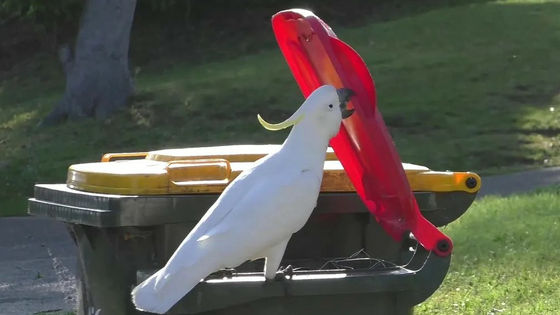
Research reveals raccoons solve puzzles for entertainment.
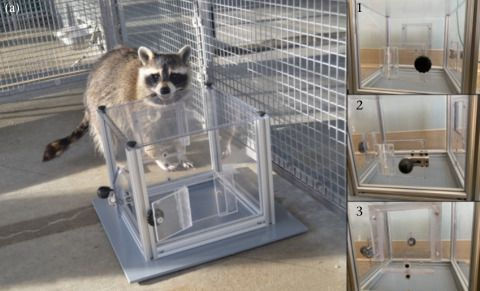
Raccoons are known for their ability to open even trash cans with latches. A study published in the academic journal 'Animal Behaviour' showed that raccoons open trash cans not only when searching for food, but also simply to satisfy their intellectual curiosity.
Raccoons optimally forage for information: exploration–exploitation trade-offs in innovation - ScienceDirect
Raccoons solve puzzles for the fun of it, new study finds
https://phys.org/news/2026-03-raccoons-puzzles-fun.html
Hannah Griebling and her colleagues at the University of British Columbia prepared boxes with various opening mechanisms, such as latches and knobs, and placed food inside. Each box had three doors with different opening mechanisms, allowing raccoons to try as many different methods as they liked. Three boxes were prepared, providing a total of nine different opening methods.
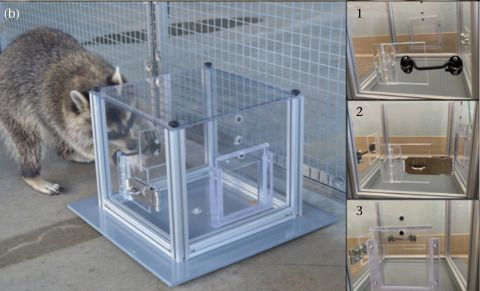
In the experiment, the raccoon was observed opening one door and eating the food, then exploring how to open the remaining two doors. It was clear that there was no more food in the box, but it continued to try to open the doors that had not yet been opened.
When a door was easy to open, the raccoon would explore widely, try multiple methods, and even change the order in which they opened them. On the other hand, as the difficulty increased, it began to prioritize doors that it already knew were easy, but even at the most difficult levels, it still explored multiple solutions.
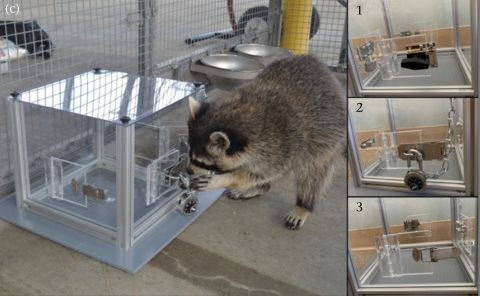
Griebling said, 'I didn't expect to open all three doors in a single attempt.'
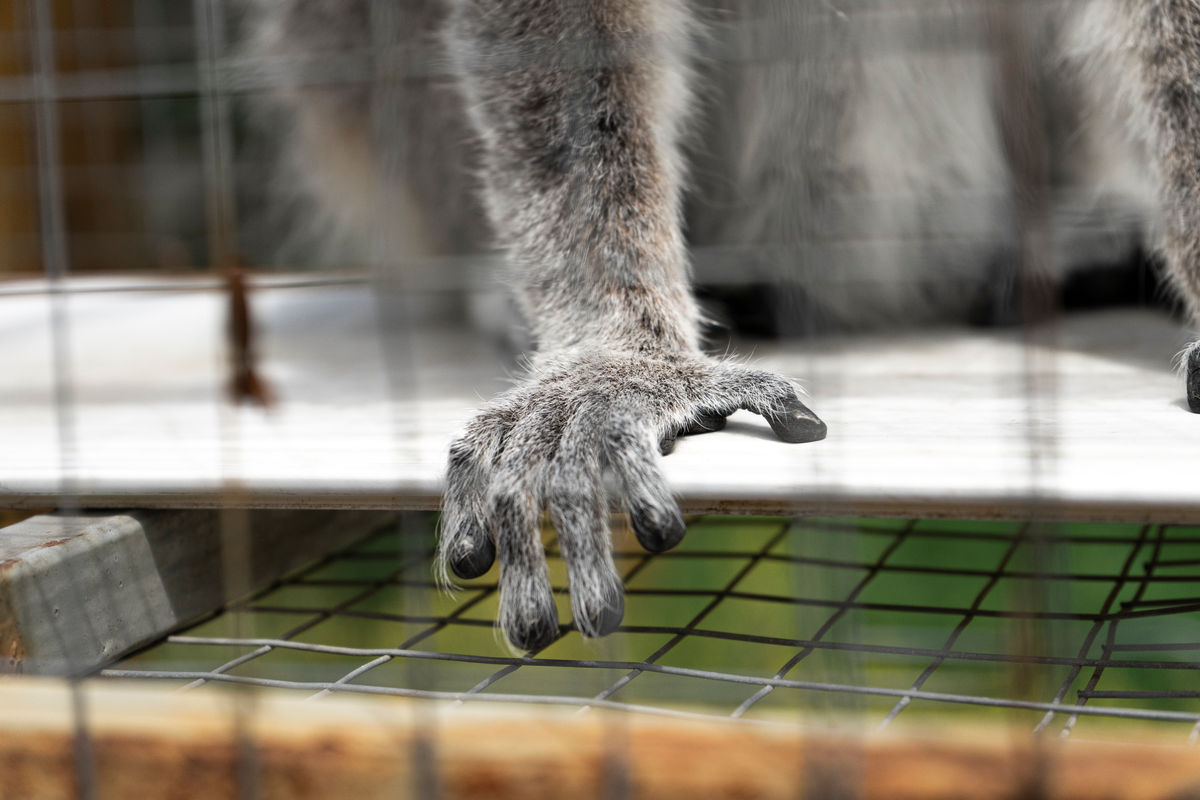
Raccoons have brains with a high density of nerve cells, giving them excellent problem-solving and trial-and-error abilities. Their forepaws, rich in sensory nerves and well-suited for foraging near water, are also highly efficient at operating fasteners and handles, allowing them to easily open even human-sized trash cans.
Griebling et al. suggest that raccoons attempting to open doors may help them cope with new problems they might encounter in the future. For example, if a raccoon living in an urban area tackles the challenge of opening a lidded trash can, it might discover new food sources and avoid competition with other raccoons that can occur with open trash cans. Thus, raccoons may instinctively understand that tackling new problems and gathering information can sometimes lead to future rewards.
Griebling and his colleagues speculate that the ability to adapt to urban heterogeneity by flexibly solving new problems may be one reason why raccoons are able to live successfully in urban areas outside their natural habitat.
Related Posts: