Social media and the media use 'negative information' to attract people's attention; how can you regain your own attention?

In today's world, the widespread use of the internet means that negative news—such as incidents, disasters, and conflicts happening all over the globe—continues to flood our smartphones and PCs. While this can be beneficial in that it provides opportunities to consider social issues we previously overlooked, it also carries the risk of being overwhelmed by the news, experiencing anxiety, and losing focus on work or hobbies. Therefore,
Digital media is using negativity to steal our attention — here's how to reclaim it
https://theconversation.com/digital-media-is-using-negativity-to-steal-our-attention-heres-how-to-reclaim-it-274101
When you browse social media, you're bombarded with all sorts of negative news, from incidents and accidents happening in your neighborhood and outrage over political issues to tragic news of wars happening far away on Earth. Shipman points out that this feeling of being overwhelmed by negative news is intentionally amplified by the way digital platforms and their profit-driven algorithms are designed.
Many people use the internet to relieve stress or escape reality, but the content that most strongly captures people's attention is that which incites anger, fear, and indignation. Negative headlines tend to get more clicks than positive headlines, so media outlets have an incentive to publish negative news.
A 2023 study found that social media users are about twice as likely to share news articles that evoke strong negative emotions compared to those that do not. When users like or share negative articles, it sends a signal to the algorithm that 'similar content should be shown again.'
As a result, social media platforms increasingly recommend negative content to attract users to their platforms. The more users react to negative content, the more content creators will post negative content to maximize engagement. This feedback loop ensures that negative content is constantly visible on social media.

It is said that people are strongly drawn to content that evokes anger because of an instinctive nature. Humans have evolved to
These reactions have helped humans protect themselves from the occasional threats they face in the natural world. However, in recent years, with the proliferation of smartphones and the internet, we now live in a world where negative stimuli are constantly at our fingertips. Shipman points out that digital media such as social media exploit human neurological biases and steal people's attention for the sake of corporate profit.
People don't have unlimited attention spans, and when studying in places with many distractions or trying to handle multiple tasks simultaneously, their attention spans become insufficient and their performance suffers. Therefore, if you get distracted by negative content on your smartphone, the attention that you could have used for studying, working, or hobbies is stolen from you.
Furthermore, the endless influx of negative content leads to chronic stress, further reducing attention span and performance. Even when people try to relieve stress and distract themselves, the content flowing through social media is often negative, creating a vicious cycle where attention span remains low.
Compulsively viewing negative content on a platform is called ' doomscrolling ,' and studies have shown that it can cause psychological distress and worsen mental health .
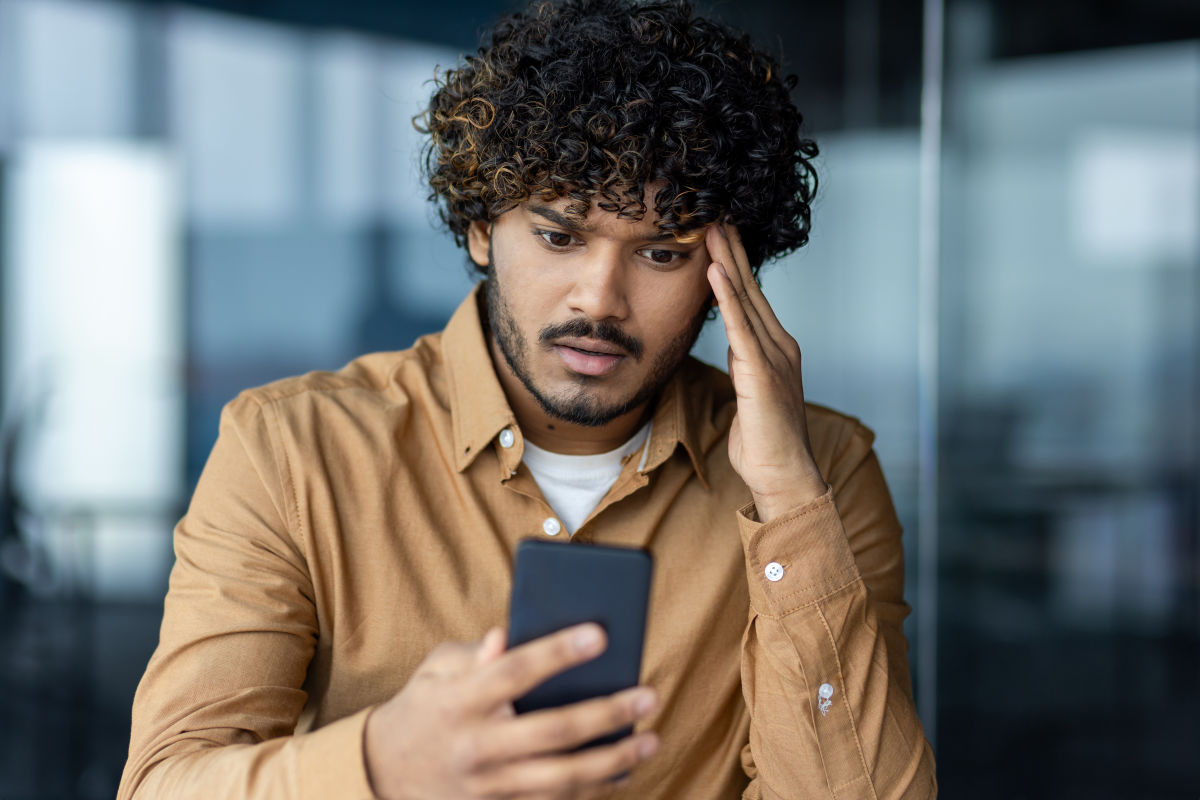
Shipman argues that in today's world, where complex crises such as climate change, economic instability, and political extremism are increasing, algorithmic manipulation of emotions is a serious problem. To break the vicious cycle of endlessly viewing negative content on social media, he recommends the following:
1: Reduce the amount of time spent online
To avoid negative content, it's important to escape from the algorithm-driven online space. Excessive screen time is said to negatively affect sleep , and lack of sleep leads to stress, so it's especially best to avoid screens before bed.
2: Replace the screen with another hobby.
According to behavioral economics, engaging in other enjoyable activities is an effective way to reduce undesirable behaviors such as drinking. Therefore, instead of staring at a screen, you might consider riding a bike, working on a puzzle, or taking a cooking class.
3: Reduce stress
Activities such as exercise , meditation , and spending time with friends can reduce stress and may help break the cycle of doom.
4. Understand the company's intentions.
Shipman suggests that perhaps the most important step is to recognize the 'behind-the-scenes forces' that exploit people's instinctive emotions and compete to grab attention. 'While we shouldn't completely distance ourselves from the news media, we need to be more prepared to protect ourselves from anything that threatens our attention and well-being,' he said.
Related Posts:





in Note, Posted by log1h_ik