There is a strong possibility of another heatwave in 2026, and some predict it will develop into a Super El Niño.
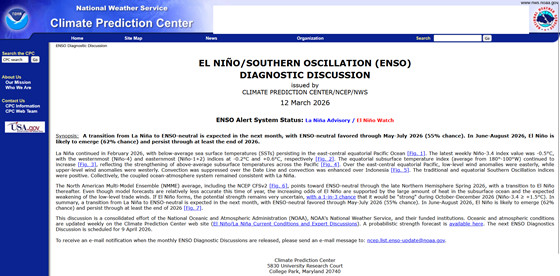
The summer of 2026 is also likely to be extremely hot. The National Oceanic and Atmospheric Administration (NOAA) predicts a 62% chance of
Climate Prediction Center: ENSO Diagnostic Discussion
https://www.cpc.ncep.noaa.gov/products/analysis_monitoring/enso_advisory/ensodisc.shtml
'Super El Niño' could push global temperatures to unprecedented highs, forecasters say | Live Science
https://www.livescience.com/planet-earth/weather/super-el-nino-could-push-global-temperatures-to-unprecedented-highs-forecasters-say
According to the ENSO Diagnosis, an analysis of ocean and atmospheric conditions published on March 12, 2026, by the National Oceanic and Atmospheric Administration's Center for Climate Prediction, while sea surface temperatures in the equatorial Pacific remain below average as of February 2026, similar to a La Niña phenomenon, the forecast predicts a transition to normal conditions (neither El Niño nor La Niña) within the next month, followed by a 62% probability of an El Niño event occurring between June and August. Furthermore, if an El Niño event does occur, it is expected to last at least until the end of 2026.
While the U.S. National Oceanic and Atmospheric Administration (NOAA) states that the strength of the El Niño phenomenon is 'highly uncertain,' it estimates there is a one-third chance of a 'strong El Niño' occurring between October and December 2026. In other words, what is certain at this point is that there is a high probability of transitioning into an El Niño phenomenon in the summer, but it is still impossible to determine how strong it will become.
Meanwhile, science media outlet Live Science, citing the forecast of the National Oceanic and Atmospheric Administration (NOAA) and the weather information company AccuWeather , mentioned the possibility of a 'super El Niño' developing. Defining a super El Niño as a condition where sea surface temperatures are more than 2 degrees Celsius higher than average, Live Science points out that 'such levels could be reached by the end of the 2026 hurricane season (June to November).'
It should be noted that while 'Super El Niño' is generally used to refer to an extremely strong El Niño, it is not a strict classification used in official forecasts or other official documents.
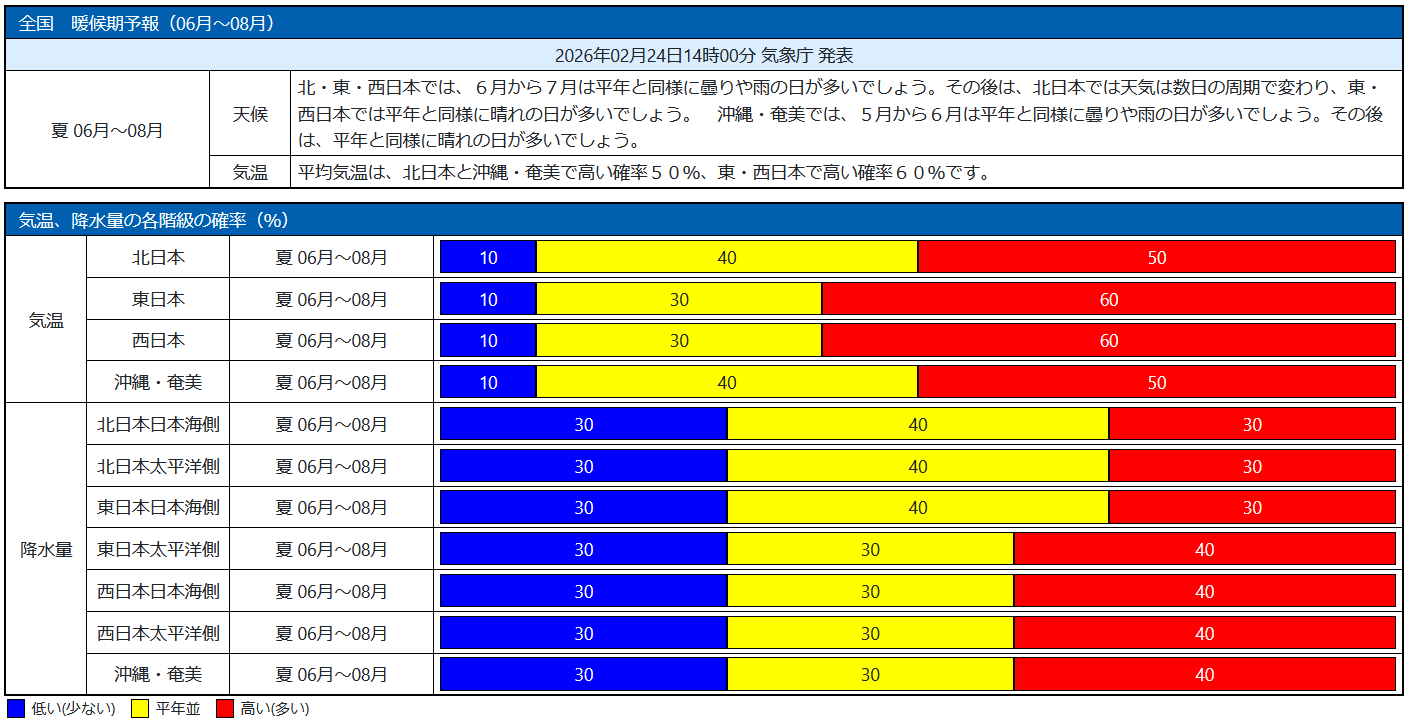
According to the warm season forecast released by the Japan Meteorological Agency on February 24, 2026, summer temperatures in 2026 are expected to be 'high nationwide.' This forecast is attributed to the overall temperature of the Earth's atmosphere being high due to the effects of global warming, as well as the possibility of an El Niño phenomenon occurring. Even looking only at Japan's long-range forecast, it can be said that summer 2026 will be a time when we should be wary of extreme heat.
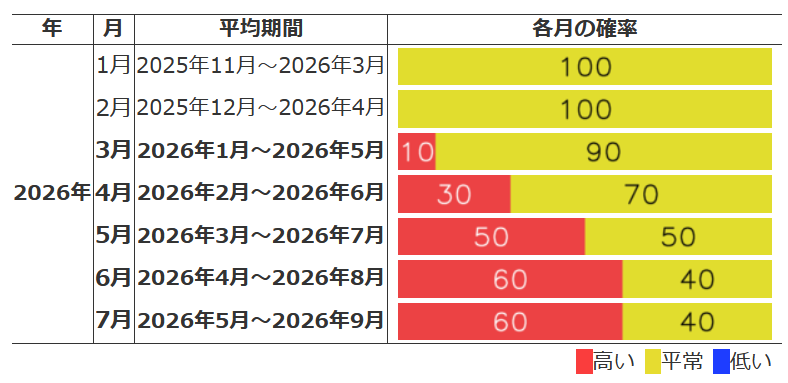
Furthermore, the Japan Meteorological Agency's '
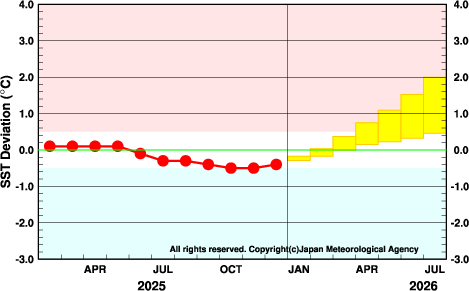
Furthermore, the report states that there is a 50% chance of an El Niño phenomenon occurring during the spring, and a 50% chance of normal conditions continuing. While there is also a 40% chance of normal conditions continuing during the summer, the probability of an El Niño phenomenon occurring is higher, at 60%.
Live Science points out that, given the record-breaking global temperatures experienced during the previous strong El Niño event from 2023 to 2024, another strong El Niño event in 2026 could push global temperatures up even further.
Of course, El Niño is not the only factor that determines whether or not we will experience a heatwave. Live Science predicts that because global warming itself is continuing, the trend of persistently high temperatures will persist regardless of whether or not El Niño occurs.
Since both the National Oceanic and Atmospheric Administration (NOAA) and the U.S. National Weather Service have indicated that there is a high probability of an El Niño event occurring in the summer, it would be wise to prepare for another heatwave in 2026.
Related Posts:






in Science, Posted by log1b_ok