The 'GDELT Project,' which collects and analyzes news and social media in over 100 languages worldwide, has also released experiments such as using AI to translate 25 years' worth of television news.

The GDELT Project continuously collects and archives broadcast, newspaper, and web news from around the world in over 100 languages. By connecting people, organizations, places, themes, news sources, and events from all over the globe into a single, massive network, it provides a daily database of what is happening around the world, what is behind it, who is involved, and how people feel about it, as well as publishing the results of its analysis and experiments.
The GDELT Project
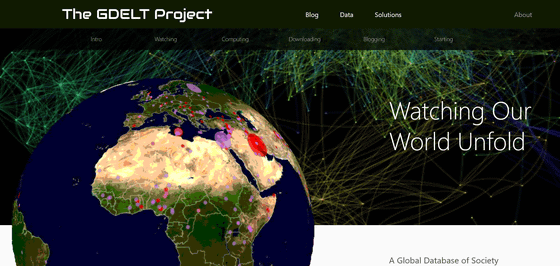
The GDELT project, founded by data scientist Kalev Rietal and political scientist Philipp Schroth , collects data from all kinds of news and social media from 1979 to the present. GDELT stands for 'Global Database of Events, Language and Tone,' and its aim is to conduct large-scale analyses of what is happening around the world based on news. By coding social events and people's reactions to them as quantitative data, it provides a foundation for analyzing global trends.
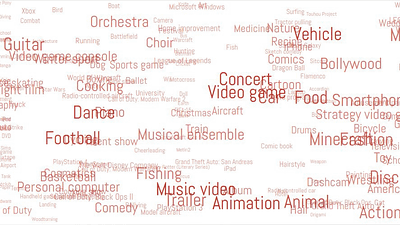
The GDELT project has released a massive dataset of trillions of data points, which researchers and journalists use as foundational data to analyze global political, economic, and social trends. The dataset has three main data streams, which are updated every 15 minutes: 'a coding of physical activities around the world into more than 300 categories,' 'a record of the people, places, organizations, millions of themes, and thousands of emotions underlying those events and their interrelationships,' and 'a coding of the visual narratives of news images from around the world.'
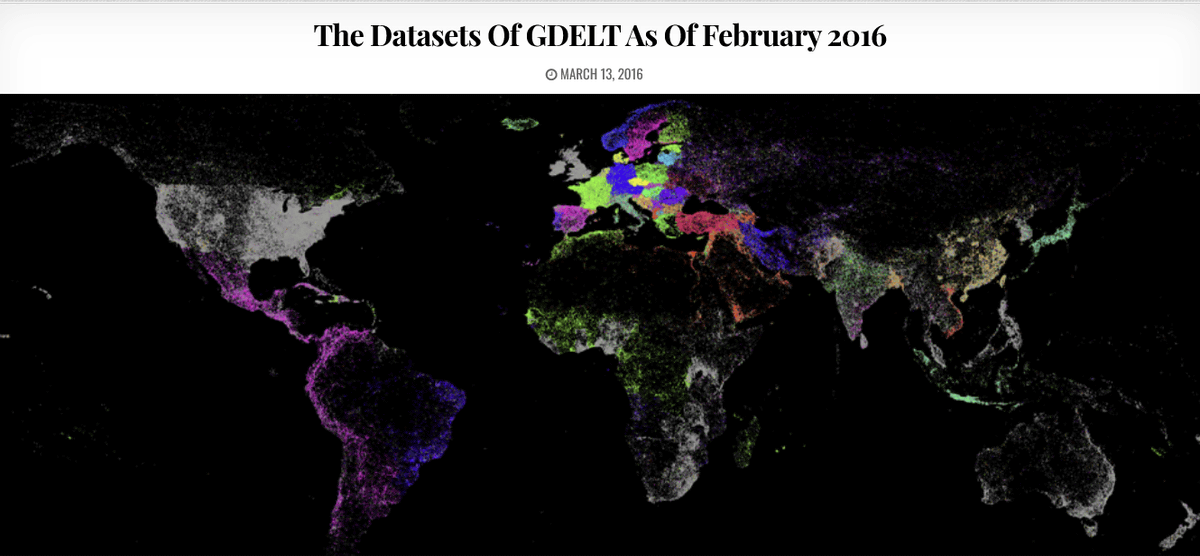
Furthermore, the 'translation' of news from around the world is another distinguishing feature of the GDELT project. The GDELT project utilizes the '
The official blog publishes various analyses and insights based on the GDELT project's vast dataset.
The GDELT Project
https://blog.gdeltproject.org/

For example, on February 3, 2026, the GDELT project unveiled an experiment using Google's AI, Gemini 3 Flash, to analyze news from around the world, automatically extracting announcements about changes in government and corporate leadership and organizing them as a knowledge graph. This initiative not only summarizes personnel change information from news articles, but also uses AI to infer the political and economic meanings behind these changes and generate reports that analyze shifts in the global power structure.
The GDELT project also demonstrated loading the massive 2026 U.S. National Defense Authorization Act (NDAA), a bill spanning approximately 3,100 pages and 510,000 words, into the Gemini 3 Pro and converting the entire bill into a single infographic. Further analysis and experimentation have resulted in experiments where the system performs a thematic analysis of the entire bill, explains specific areas, organizes related bills, and even generates questions that lawmakers might anticipate. By converting the PDF to text, removing line numbers, and performing text cleanup, the entire document was reduced to approximately 810,000 tokens, allowing the AI to analyze the bill as a single document.

In a blog post dated February 11, 2026, they reported on the results of translating approximately 3 million television news broadcasts spanning 25 years using Gemini. According to the blog, the translation, which amounted to 'over 62 billion characters' and 'a total of 6 billion seconds of broadcast time,' consumed 109 billion input/output tokens using Gemini 2.5 Flash Non-Thinking. The cost of the translation was $74,634 (approximately 12 million yen), and considering the volume of text, it is thought that it would have previously cost several million dollars (hundreds of millions of yen), so the blog reports that the cost of large-scale translation has been significantly reduced.
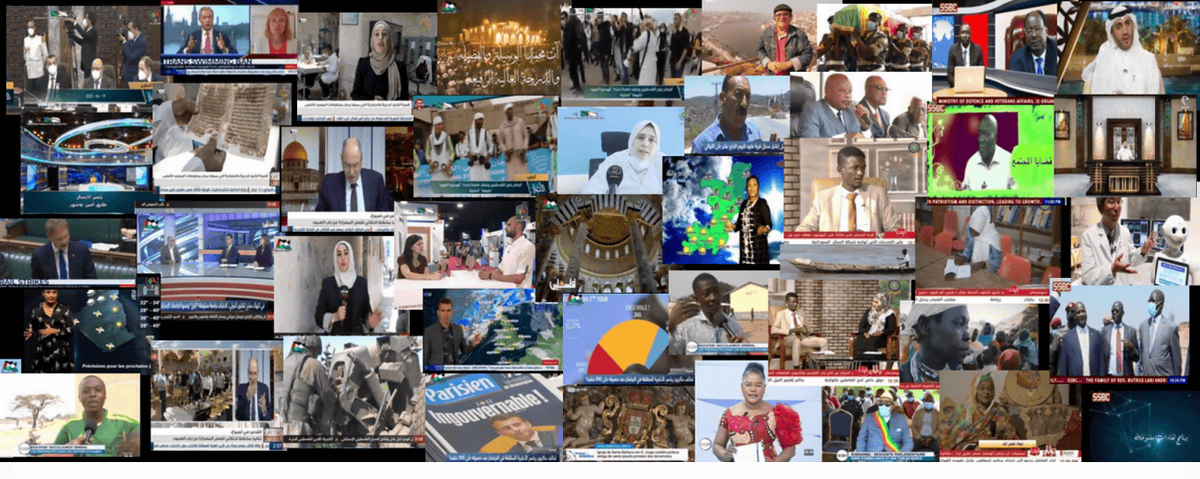
These efforts by the GDELT project demonstrate the potential of AI to analyze vast amounts of news and government documents across different sources, potentially enabling the analysis of information on a scale previously unattainable by researchers and journalists.
Related Posts:



in AI, Web Service, Posted by log1e_dh