A universal vaccine that works against viruses, bacteria, and allergies by simply spraying it into the nose is currently under development
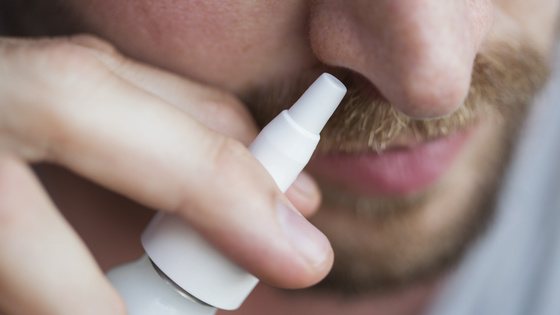
A joint research team from American research institutes has reported that they have successfully developed a universal vaccine that protects the respiratory tract from a variety of threats, including viruses, bacteria, and allergens. The vaccine, a nasal spray, is currently in the experimental stage in mice. It works by strengthening the body's immune response rather than targeting specific pathogens, providing broad and sustained protection.
Mucosal vaccination in mice provides protection from diverse respiratory threats | Science
https://www.science.org/doi/abs/10.1126/science.aea1260
Universal Vaccine Blocks Viruses, Bacteria, And Allergies With a Nasal Spray : ScienceAlert
https://www.sciencealert.com/universal-vaccine-blocks-viruses-bacteria-and-allergies-with-a-nasal-spray
The research was led by Stanford University microbiologist Professor Bali Prendran, who is the corresponding author of the paper, and included scientists from the university and several other specialist institutions across the United States.
The nasal spray vaccine developed, 'GLA-3M-052-LS+OVA,' focuses on strengthening the body's own defense system rather than targeting a specific pathogen.
In this study, the researchers established a method to activate the innate immune system, the first line of defense, for several months, which would normally lose its effectiveness in a short period of time. This method is based on knowledge gained from tuberculosis vaccine research, and involves synthesizing and mimicking specific signals emitted by T cells, which are responsible for adaptive immunity, and imprinting the information on alveolar macrophages, a type of white blood cell known as immune cells.

In experiments using mice conducted by the research team, the drug was shown to have a sustained protective effect of more than three months against not only the new coronavirus (SARS-CoV-2), but also severe acute respiratory syndrome (SARS), other coronaviruses, and even drug-resistant bacteria such as Staphylococcus aureus and Acinetobacter baumannii.
Professor Prendran predicts that this technology could one day be a game changer for healthcare, allowing a single spray in the fall to protect against COVID-19, influenza, and even spring allergies.
Jonathan Ball, a molecular virologist who was not involved in the research, said the findings are promising, but cautioned that 'we need to thoroughly confirm safety through human clinical trials to ensure that putting the immune system on constant high alert does not cause side effects such as mistakenly attacking the body's own cells.'
The research team plans to move on to human clinical trials, and if all goes well, the universal vaccine could be available within five to seven years.
Related Posts:


in Science, Posted by log1i_yk