In the United States, solar power generation will increase 35% year-on-year by 2025, finally surpassing hydroelectric power generation.
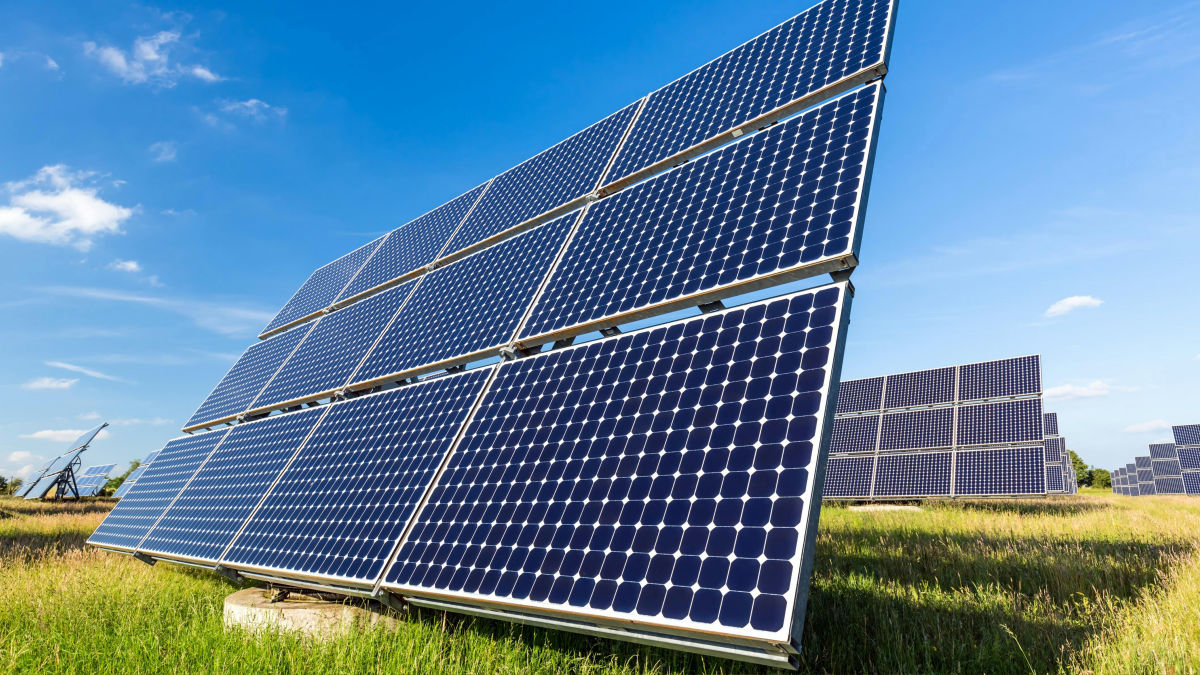
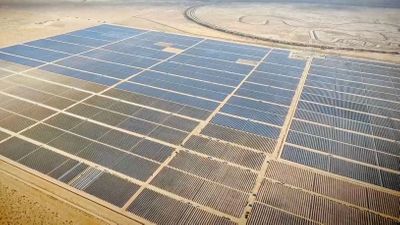
On February 24, 2026, the US Energy Information Administration (EIA) released full-year data on electricity generation in the US for 2025. The data revealed that solar power generation achieved a record growth of approximately 35% compared to the previous year, finally surpassing hydroelectric power generation.
Electric Power Monthly - US Energy Information Administration (EIA)
Following 35% growth, solar has passed hydro on US grid - Ars Technica
https://arstechnica.com/science/2026/02/final-2025-data-is-in-us-energy-use-is-up-as-solar-passes-hydro/
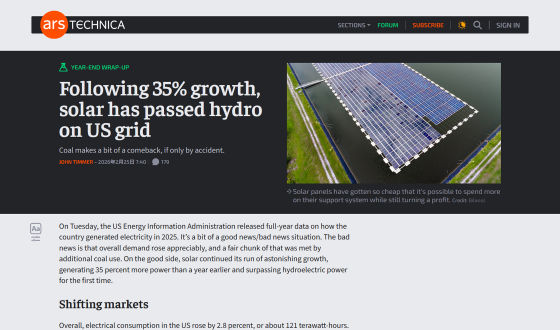
EIA data shows that by 2025, electricity generation from large-scale solar power plants will increase by 34.5% year-over-year, surpassing conventional hydroelectric power generation for the first time. In 2025, the share of energy sources in the U.S. total electricity generation will come from natural gas (41%), coal (17%), wind (10%), solar (7%), and hydroelectric (6%).
In recent years, solar and wind power generation has been promoted worldwide, and the cost of generating electricity has been falling. It has already been reported that in Europe, the amount of electricity supplied by wind and solar power has surpassed that of fossil fuels.
Finally, wind and solar power generation surpasses fossil fuel power generation in Europe - GIGAZINE
In addition, US electricity consumption in 2025 is expected to increase by 2.8%, or approximately 121 TWh, compared to the previous year. Electricity consumption has remained roughly flat over the past few decades, with power efficiency improvements and industrial decline offsetting the effects of population growth and economic growth.
Factors that change electricity consumption include annual temperature fluctuations that increase or decrease heating and cooling demand, and global pandemics. Technology media outlet Ars Technica points out that while the increase in electricity consumption in 2025 is somewhat concerning, there are no clear signs that there are any major factors driving electricity consumption. Additionally, electricity demand may increase as a result of replacing fossil fuels with more efficient systems, such as switching to heat pumps and electrifying transportation.
Ars Technica focuses on the power generation methods used to meet increased electricity demand in 2025. Of the 121 TWh of electricity demand that increased in 2025, 85 TWh was met by the expansion of solar power generation facilities of various sizes, while the remaining approximately one-third was met by fossil fuels.
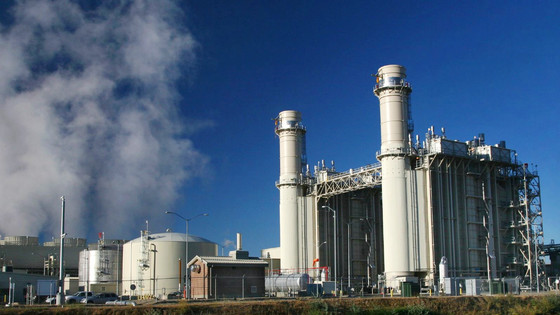
The fossil fuel market is becoming increasingly complex. Because the United States has abundant natural gas reserves, its growing electricity demand has long been met primarily by increasing natural gas-fired power generation. However, tariffs imposed by Donald Trump have increased the cost and delayed delivery of the equipment needed for natural gas power generation. In addition, President Trump has authorized the construction of liquid natural gas export facilities, creating international competition for natural gas and driving up prices.
The combination of these factors has made coal-fired power generation more economically advantageous in the United States, with coal-fired power generation projected to increase by 13% by 2025 compared to the previous year. Meanwhile, natural gas-fired power generation is projected to decline by 3.3%. Secretary of Energy Chris Wright has ordered the continued operation of several coal-fired power plants that were scheduled for closure, and President Trump's natural gas policies are impacting demand for fossil fuels.

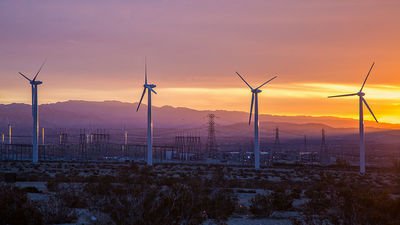
Despite President Trump's hostile stance toward renewable energy, an EIA analysis estimates that solar power capacity in the United States will increase by 43 GW in 2026, exceeding the 27 GW in 2025. In addition, wind power capacity is expected to increase by 12 GW, and renewable energy is expected to continue to account for a larger share of America's electricity supply.
Another factor driving renewable energy growth is the expansion of battery storage facilities to store excess solar power. The EIA projects that 24 GW of battery storage will be added to the grid in 2026, with the majority of this coming from projects in Texas (53%), California (14%), and Arizona (13%).
Ars Technica argues that solar and wind power generation is growing rapidly in the US and is likely to reach levels sufficient to meet growing demand within the next few years, but points out that policy and market forces are also increasing coal-fired power generation, which could offset the trend toward reducing carbon emissions.
Related Posts:




in Note, Posted by log1h_ik