'Claude Sonnet 4.6' has been released, outperforming Gemini 3 Pro and GPT-5.2 in multiple tests.
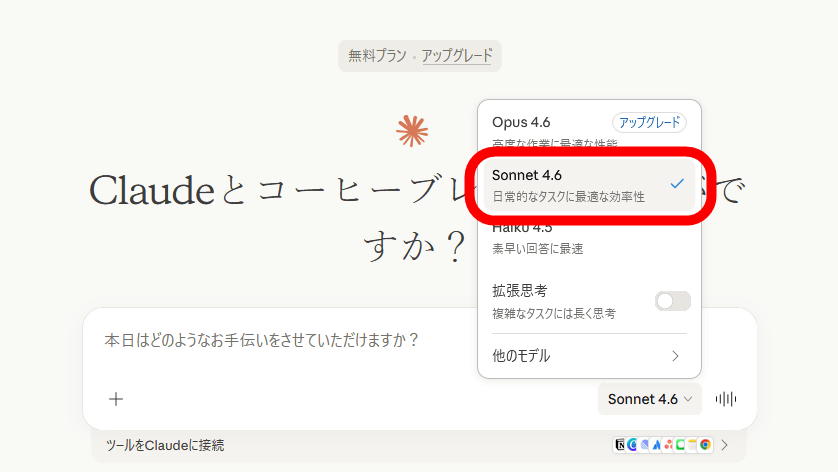
Anthropic released the AI model ' Claude Sonnet 4.6 ' on February 17, 2026. Compared to the previous generation model, Claude Sonnet 4.6 has improved coding performance and PC usage performance, and also supports long inputs of up to 1 million tokens.
Introducing Sonnet 4.6 \ Anthropic
Claude models are divided into the high-performance but slow Opus series, the balanced Sonnet series, and the Haiku series, which prioritizes speed over performance. The newly released Claude Sonnet 4.6 is a balanced model, but in some benchmark tests it has outperformed Claude Opus 4.6 .
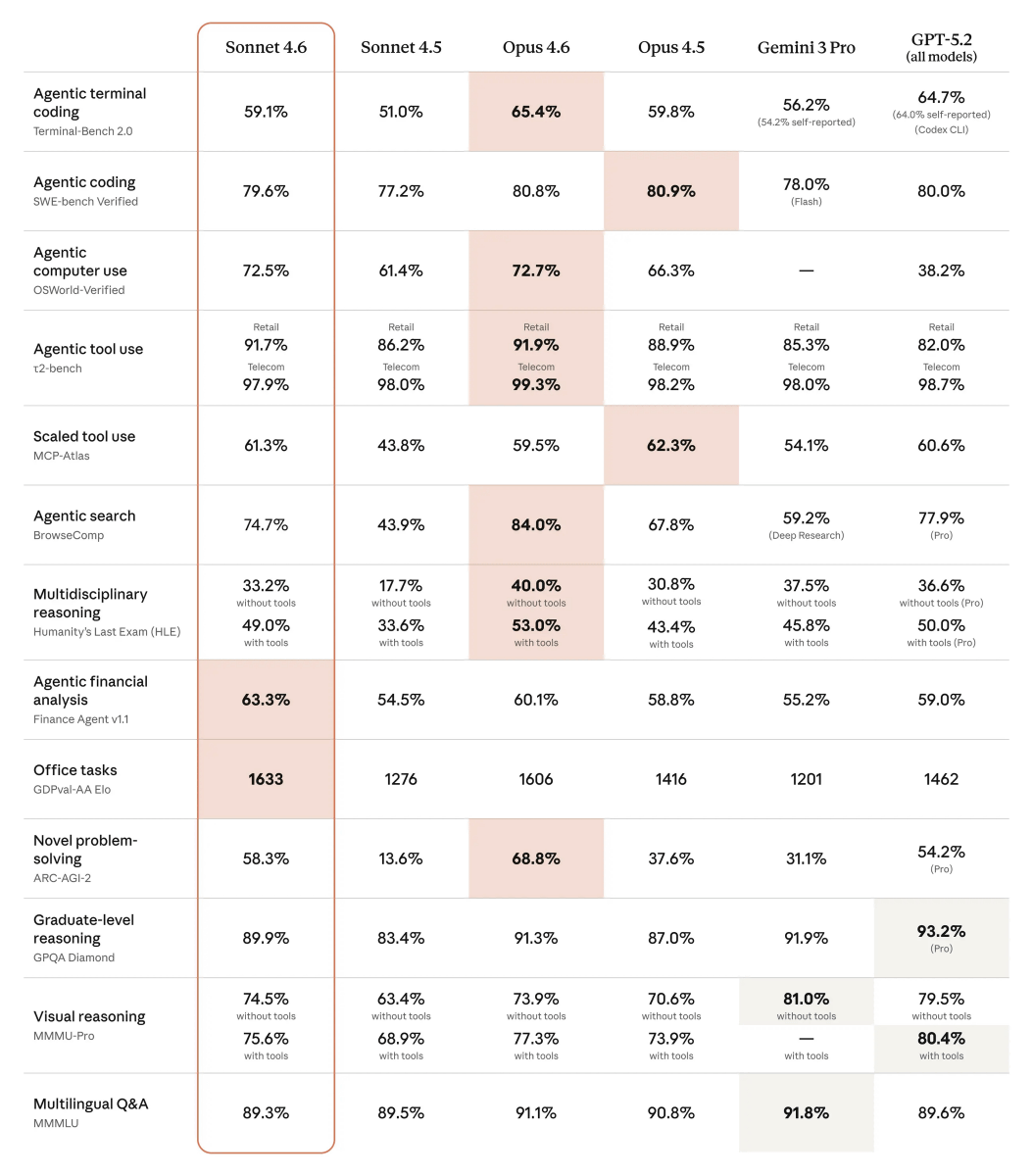
Below is a table listing the benchmark results for 'Claude Sonnet 4.6,' 'Claude Sonnet 4.5,' 'Claude Opus 4.6,' 'Claude Opus 4.5,' 'Gemini 3 Pro,' and 'GPT-5.2.' In most tests, it outperformed the previous-generation model, Claude Sonnet 4.5, and showed the best performance among all models in office tasks, which measure the PC's internal processing performance.
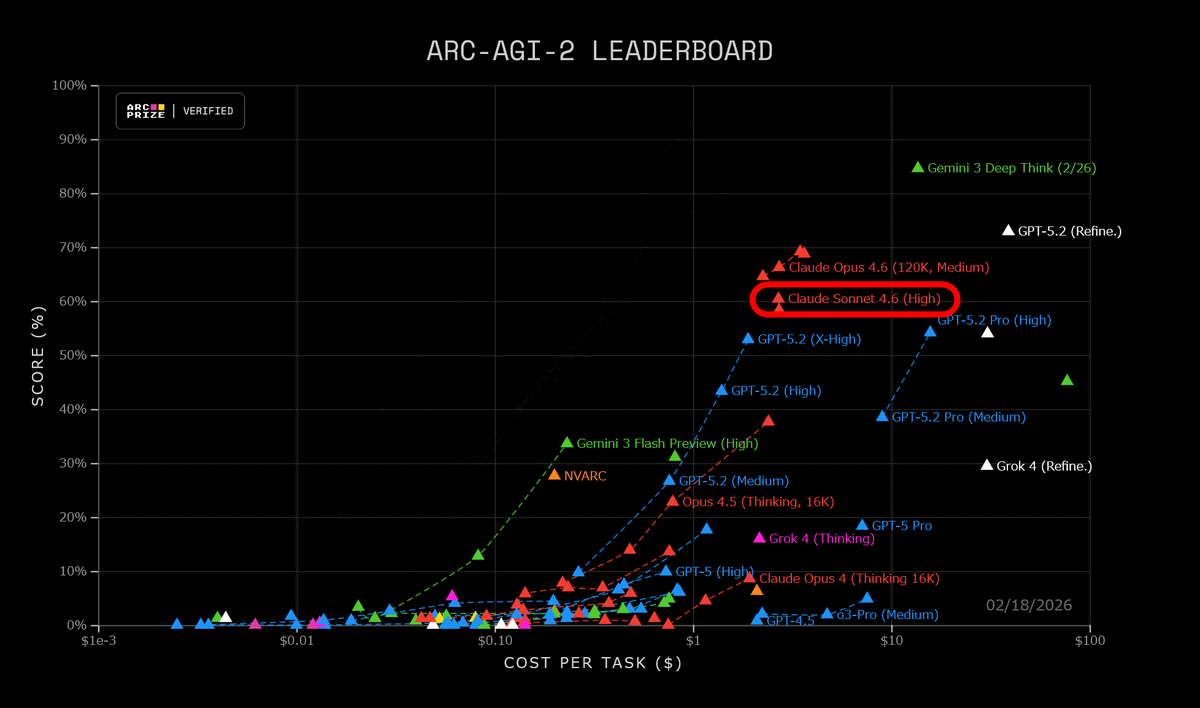
On the ARC-AGI-2 test, which measures AI intelligence, Claude Sonnet 4.6 achieved a higher score than GPT-5.2 Pro at a lower cost. 59% of users who participated in the initial test rated Claude Sonnet 4.6 as superior to Claude Opus 4.5.
Claude Sonnet 4.6 performs particularly well on PC tasks.
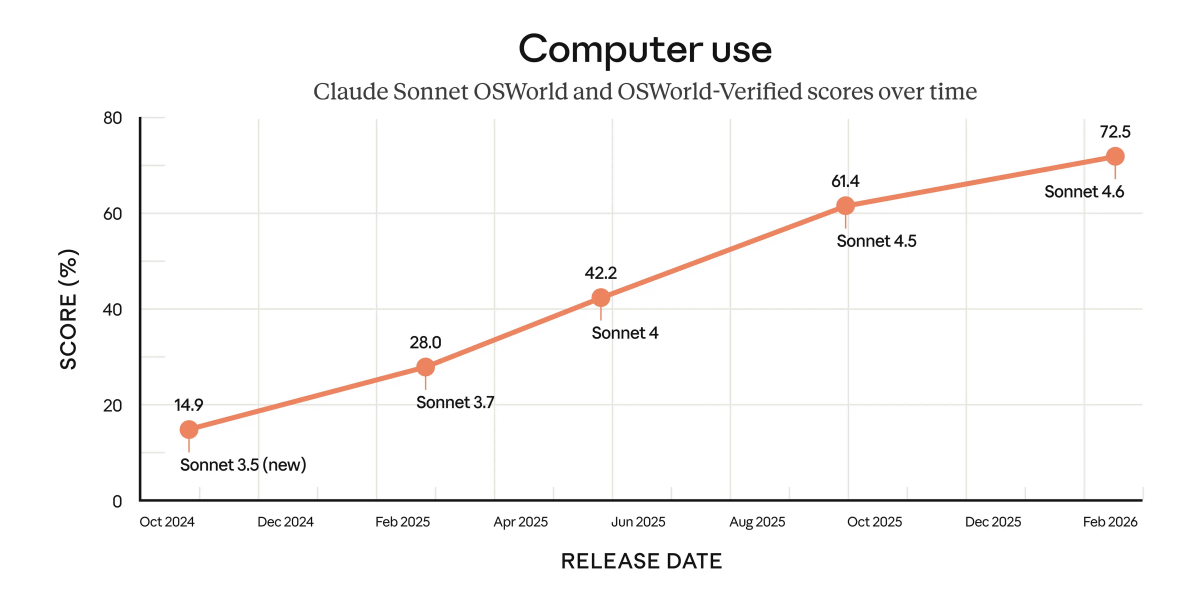
You can see examples of browser operations using Claude Sonnet 4.6 in the video below. Security measures have also been emphasized, with significantly improved resistance to prompt injection attacks compared to previous generation models.
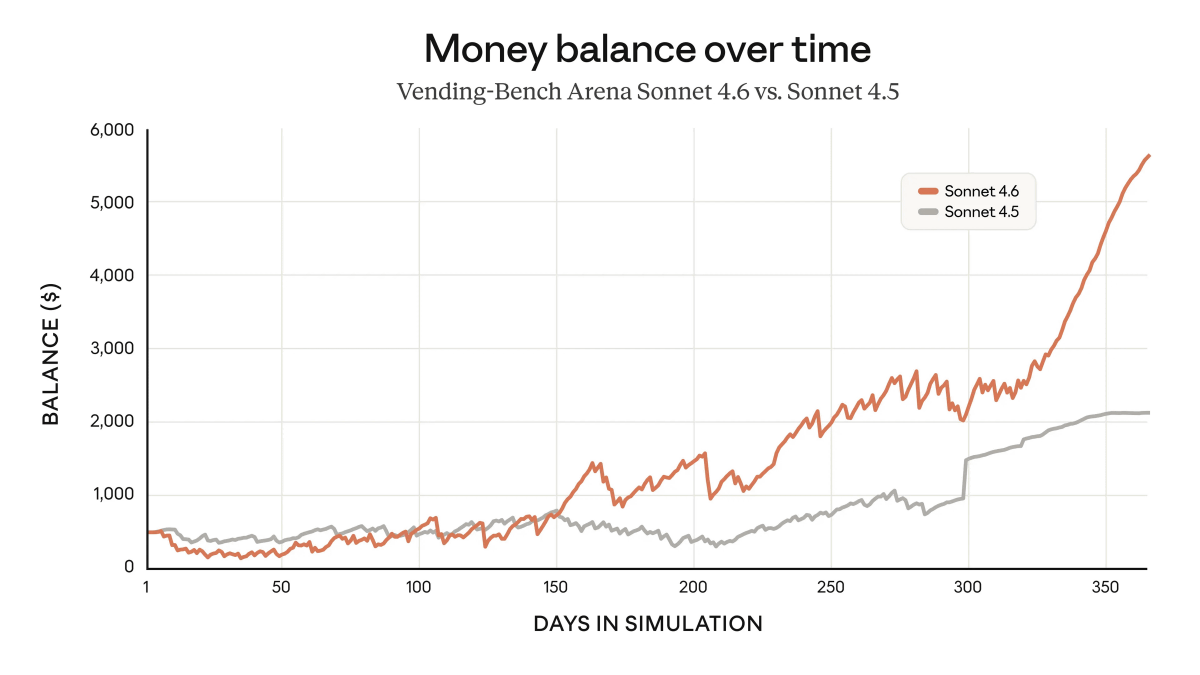
Claude Sonnet 4.6 supports input of up to 1 million tokens, allowing it to read and reason over entire codebases, lengthy contracts, and dozens of research papers at once. This significantly improves long-term planning capabilities, and Vending-Bench Arena , a virtual vending machine operator, has successfully implemented a strategy of significant capital investment early on, achieving significantly higher profits than Claude Sonnet 4.5.
Claude Sonnet 4.6 is available to all users, including free users, with a fee of $3 per million tokens for input and $15 per million tokens for output.
Related Posts: