Vitamin D and omega-3 fatty acids have a greater effect on depression than antidepressants

Nikki Case, a game developer and science communicator, explains that
Vitamin D & Omega-3 have a larger effect on depression than antidepressants
https://blog.ncase.me/on-depression/
Antidepressants
According to a meta-analysis published in 2018 examining the effectiveness of antidepressants for depression, the effect size of the best antidepressant for depression is approximately 0.4 compared to a placebo.
◆Omega-3 fatty acids
In contrast,

This is consistent with the results of
Another meta-analysis also concluded that taking 1-2g of an omega-3 fatty acid supplement with EPA content of 60% or more is optimal for treating depression, but the effect size in this study was 0.43.
Based on these research results, Case notes that 'taking 1,500 mg of an omega-3 fatty acid supplement with EPA content of 60% or more per day is the most effective way to combat depression.'
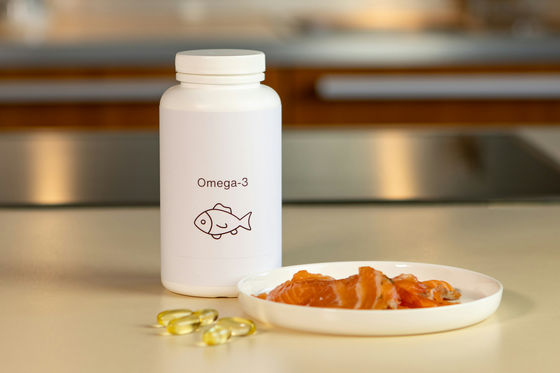
Most official medical organizations recommend that healthy adults consume 250-500 mg of EPA and DHA combined per day, which is one-third of the recommended intake for optimal depression benefits.
Additionally, research has shown that consuming 1500mg of omega-3 fatty acids per day can improve overall cognitive performance.
Vitamin D
The dose-response curve obtained from a meta-analysis examining the effects of vitamin D on depression is shown below. The vertical axis represents the effect size, and the horizontal axis represents the amount of vitamin D supplement intake. The dashed line represents the 95% confidence interval , and the negative effect size indicates that the graph measures the reduction in depressive symptoms. The effect size for a daily intake of 5,000 IU (0.125 mg) of vitamin D is 1.82, and the 95% confidence interval ranges from 0.98 to 2.66. Even at the lower limit of 0.98, it is clear that vitamin D is more effective against depression than antidepressants.
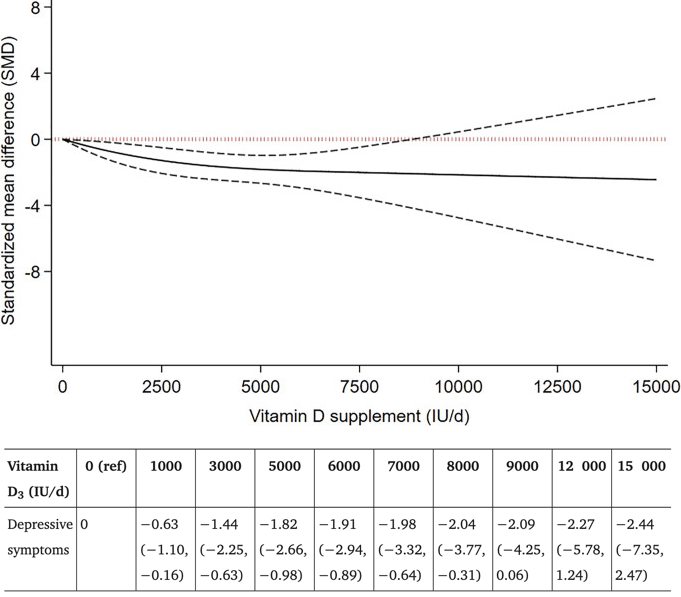
Other meta-analyses examining the relationship between vitamin D and depression have shown similar effects. For example, one study found an effect size of 0.407 for 2000 IU (0.05 mg) or more of vitamin D, while another found an effect size of 1.23 for 2800 IU (0.07 mg) of vitamin D per day.
Based on these findings, Case recommends a daily intake of 4000 IU (0.1 mg) of vitamin D, as this is the maximum recommended by most official organizations.
Research has shown that approximately 80% of Japanese people are deficient in vitamin D. Even for those who are not deficient, taking vitamin D has been shown to be effective in treating depression.
'Taking vitamin D and omega-3 fatty acids is a low-risk, high-reward proposition,' Case said. 'It's like a high-value gamble. Vitamin D and omega-3 fatty acid supplements are safe, inexpensive, commercially available, and have positive side effects for COVID-19 and cognitive function.'
Related Posts:






in Science, Posted by logu_ii