Why do shark attacks increase in Hawaii in October?
Researchers have often
'Sharktober': tiger shark parturition drives seasonality in shark bite incidents in Hawaiian waters | Frontiers in Marine Science
https://www.frontiersin.org/journals/marine-science/articles/10.3389/fmars.2025.1587902/full
Sharktober: Study links October shark bite spike to tiger shark reproduction | SOEST, University of Hawaiʻi at Mānoa
https://www.soest.hawaii.edu/soestwp/announce/news/sharktober-tiger-shark-reproduction/
Meyer examined the monthly variation in the number of unprovoked shark attacks recorded around Hawaii between 1995 and October 2024. He found that 32 incidents, or 20% of the total, occurred in October alone, two to four times more frequently than in other months.
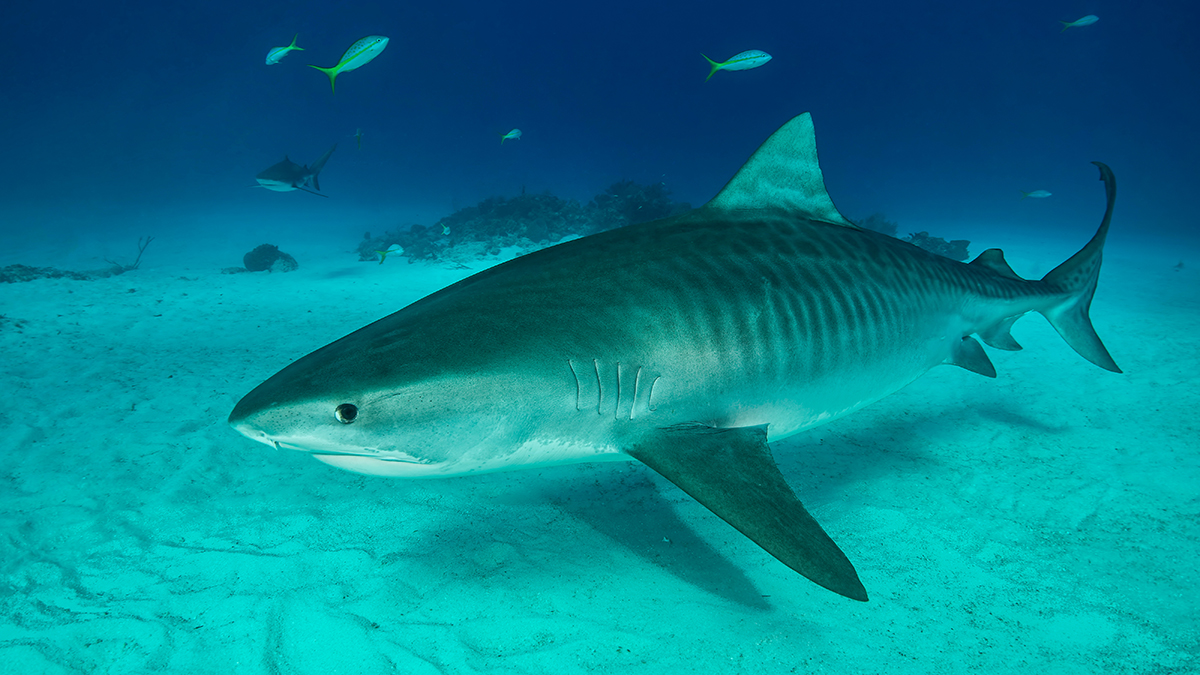
Furthermore, it was found that tiger sharks were the most common shark involved in accidents, accounting for 77 of the 165 accidents that occurred throughout the entire period, or 47% of the total. When limited to accidents that occurred in October, at least 63% of the confirmed accidents were caused by tiger sharks, Meyer reported.

Regarding the question of why tiger shark bites are more common in October, Meyer cites the breeding season as the most likely reason. In Hawaii, tiger sharks are thought to give birth between September and October, and their behavior and distribution may change during this time, potentially increasing the chance of encounters with humans.
Meyer posits that the mechanism by which tiger shark birthing season leads to increased encounters with humans is 'the increase in the number of large females along the coast.' Ecological observation tour records used in a previous 2009 study showed that tiger shark sightings at observation spots on the north coast of Oahu peak in October. A 2013 study also reported that some adult female tiger sharks in the Northwestern Hawaiian Islands tend to move to more populated islands during this time.
Another possible mechanism is that tiger sharks become more active in foraging after giving birth. Tiger sharks give birth to many young, which consumes a lot of energy, so they may become more active in foraging after giving birth to restore their nutritional status.
Meyer analyzes that the combination of these two mechanisms - an increase in the number of large females along the coast and increased feeding activity after giving birth - makes it more likely that bites will occur.
However, Meyer said the increase in bite incidents in October cannot be explained simply by high sea temperatures. The study also considered differences in sea surface temperatures from average years, but even after taking into account the effect of water temperature, the increase in the number of bite incidents in October remained.
Meyer emphasized that even though the statistical risk of tiger shark bites increases in October, bites themselves are 'very rare in absolute terms.'
Related Posts: