The AI boom has caused SSD prices to skyrocket, with the price per weight now comparable to that of gold

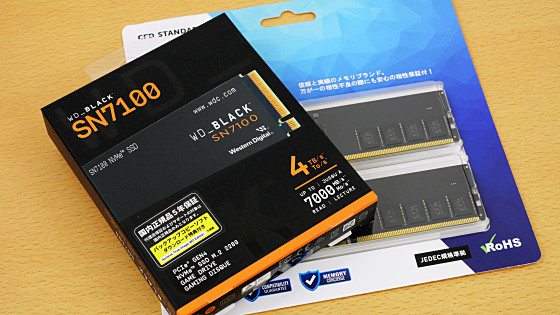
While technology generally sees hardware costs gradually falling due to innovation, the SSD market has seen historic price increases in recent years due to factors such as the boom in AI. Technology media outlet Tom's Hardware reported that 'the price of high-capacity NVMe SSDs is now comparable to that of gold.'
Many high-capacity NVMe SSDs are now as expensive as gold by weight as shortage intensifies — we ran the numbers, here's what we found | Tom's Hardware
SSD Prices Rival Gold in 2026 Due to NAND Shortages and AI Boom
https://www.webpronews.com/ssd-prices-rival-gold-in-2026-due-to-nand-shortages-and-ai-boom/
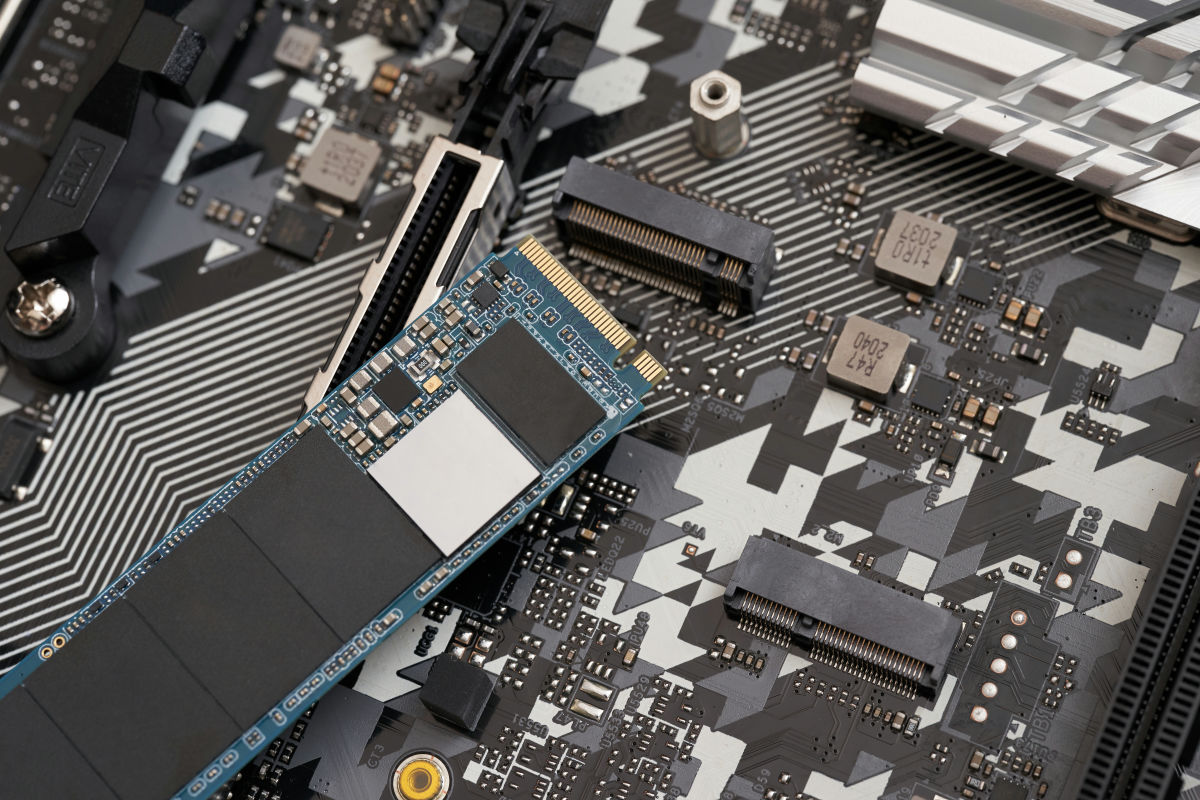
In January 2026, a Reddit user was searching for a high-capacity SSD when they noticed that M.2 SSDs were costing more per pound than gold. Tom's Hardware dug deeper into this report, conducting searches across various online retailers, and collecting over 100 samples using criteria such as 'PCIe 4.0 or 5.0 interface,' 'capacity 4TB or greater,' and 'available or in stock.'
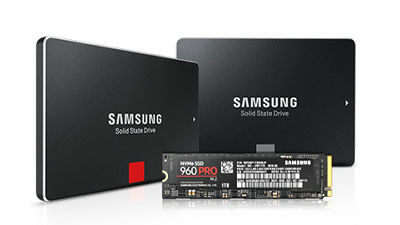
The average weight of these SSDs was calculated, and it was found that there was not much difference in weight between the capacities, with the 8TB SSD weighing in at 8.2g and the 4TB SSD weighing in at 8g. Note that enterprise drives were excluded from the calculation because they are very expensive, and models with heat sinks, which tend to be heavier, were also excluded.
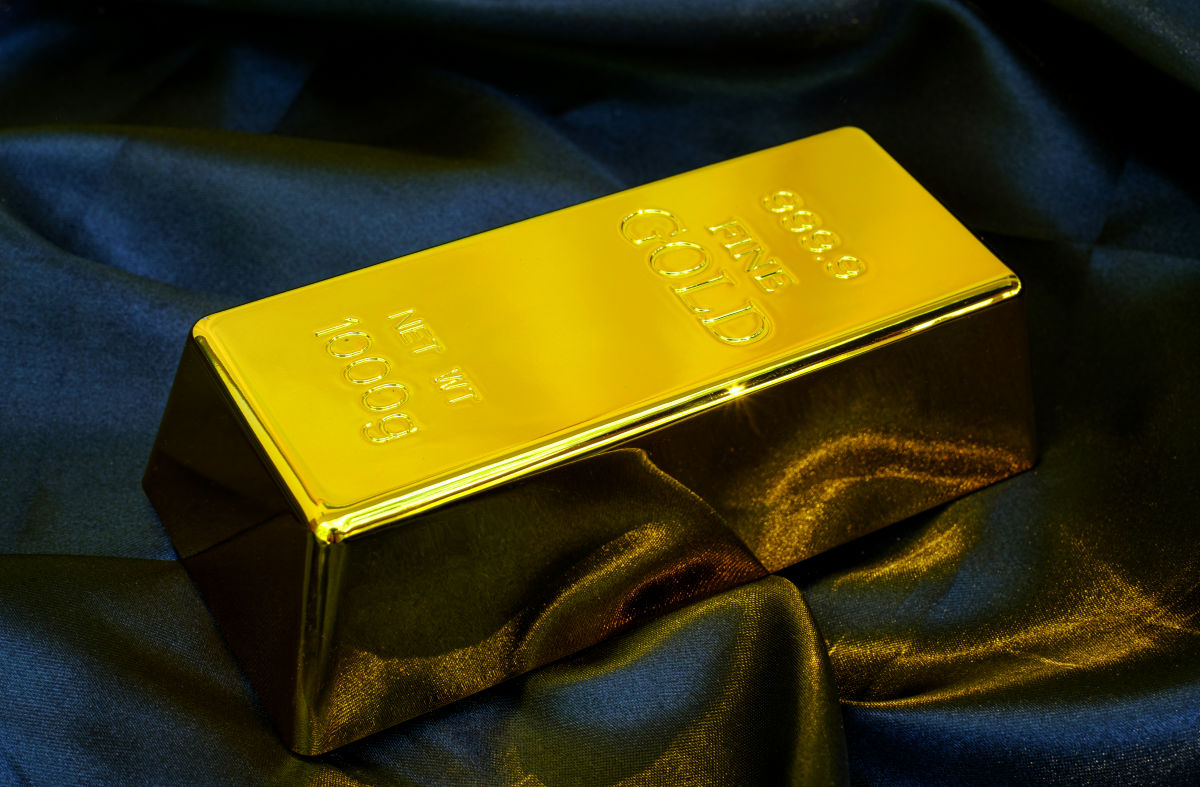
Assuming a price of $148 per gram of gold, 8 grams would cost approximately $1,184. According to a survey by Tom's Hardware, the average price of an 8TB consumer SSD is $1,476, significantly exceeding the price of gold per gram. Some 4TB models are even comparable in price to gold.
Technology media WebProNews points out that the global memory shortage is being exacerbated by the growing demand for data centers due to the AI boom. AI training and inference tasks require huge data sets, which must be stored on high-performance SSDs for fast access.
WebProNews points out that, interestingly, SSD prices are rising while HDD prices remain relatively flat, creating a price gap between the two storage types. WebProNews states, 'This disparity is forcing IT managers to reassess their storage strategies, potentially increasing their reliance on HDDs, despite their slower speeds, when handling large amounts of data.' However, it has also
In addition, factories that manufacture NAND flash memory, which is used in SSDs, are concentrated in regions such as South Korea and Taiwan, and rising tensions in these regions could further disrupt SSD supplies.
WebProNews said, 'Ultimately, the 2026 SSD price surge clearly illustrates the fragility of the technology. The SSD price surge is not just about the hardware. It heralds a broader shift in how we value and allocate digital resources in an AI-dominated era.'
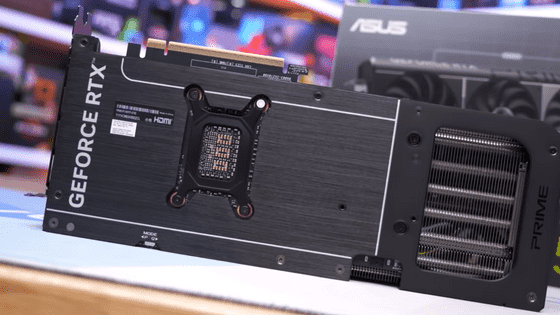
Additionally, technology media Ars Technica has mentioned that multiple media outlets have reported that production of the GeForce RTX 5070 Ti will be discontinued .
RAM shortage chaos expands to GPUs, high-capacity SSDs, and even hard drives - Ars Technica
https://arstechnica.com/gadgets/2026/01/ram-shortage-chaos-expands-to-gpus-high-capacity-ssds-and-even-hard-drives/
NVIDIA has since corrected the report, saying that shipments are continuing but that memory supply is tight, causing inventory shortages. However, Ars Technica points out that since the same basic parts as the GeForce RTX 5070 Ti can be used in more expensive GPUs, prioritizing a different GPU with higher profit margins than the GeForce RTX 5070 Ti would be an attractive option for NVIDIA.
Related Posts:


in Hardware, Posted by log1h_ik