Ancient Romans may have had 'lead-contaminated baths'
Seeing Roman life through water: Exploring Pompeii's public baths via carbonate deposits | PNAS
https://www.pnas.org/doi/10.1073/pnas.2517276122
'Not very inviting': Pompeii bath facilities may have been filthy with lead-contaminated water | Live Science
https://www.livescience.com/archaeology/romans/romans-regularly-soaked-in-filthy-lead-contaminated-bath-water-pompeii-study-finds
Public baths were an important part of Roman culture, where people spent considerable amounts of time and where they served as important social gatherings. As ancient Rome expanded, its bathing culture evolved, and at its height, long aqueducts were built to transport water for bathing and other purposes.
However, before the construction of aqueducts, public baths had limited water availability, so the water used in baths was never fresh or clean. In the early public baths used around 130-30 BC, before the construction of aqueducts in Pompeii, water was pumped from wells or cisterns by slaves using a single pump.
'The water could only be replenished once a day,' said Gül Schümelikhindi, an archaeologist at the University of Mainz in Germany. 'Under these conditions, the water quality would likely have been poor, especially before it was replenished for bathing.'
To assess the water quality of Pompeii's early public baths, Shumelikhindi and his team examined samples of
The analysis revealed a significant decrease in carbon isotopes between the well that supplied water to the bathhouse and the baths people used to bathe in. The lowest carbon isotope levels were found where the bath water was drained, and the research team believes this is likely the result of organic carbon being introduced by microbial activity and the effects of people's sweat, sebum, urine, and oils used to wash their bodies.
Professor Cees Pasche , a geoarchaeologist at the University of Mainz and co-author of the paper, commented, 'These baths were something we don't experience today. People scrubbed themselves with olive oil instead of soap, and some of that oil mixed with the water.'
Although the water in the public baths was contaminated by human waste, the hygienic conditions may not have been very good because the water was only changed about once a day. 'The bathing experience in these small baths was probably not very appealing because of the unhygienic environment,' says Shumerihindi.
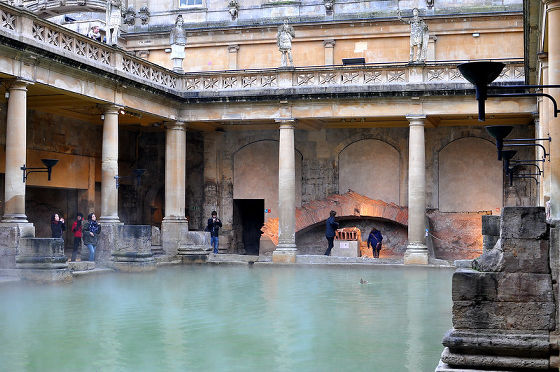
by Tim Milkins
The research team also analyzed trace elements left in the public baths to determine the level of heavy metal contamination. They found that the baths at the time had high levels of lead, which is believed to have been brought in through the lead piping system installed in the baths. Over time, calcium carbonate deposits inside the lead piping gradually reduced the lead concentration in the water.
However, if public baths were extremely unsanitary and smelled bad, people probably wouldn't bother bathing. 'People probably didn't soak in the small, warm baths for long periods of time, but instead just enjoyed sitting and chatting in the warm air of the bathhouse,' Pasche said.
Related Posts:





in Free Member, Science, Posted by log1h_ik