Dental health may predict mortality risk

A research team from Osaka University and other institutions analyzed the dental condition and mortality data of approximately 190,000 people aged 75 and over, and found that the number and condition of teeth may be related not only to oral health but also to overall health and mortality risk.
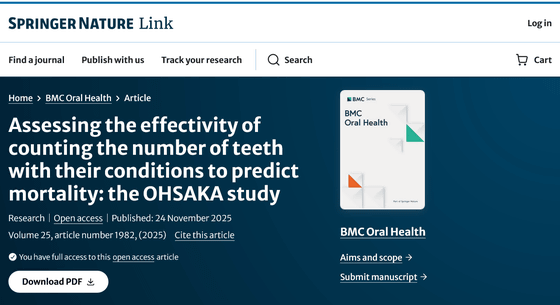
Assessing the effectiveness of counting the number of teeth with their conditions to predict mortality: the OHSAKA study | BMC Oral Health
Dental health is key to predicting mortality! - ResOU
https://resou.osaka-u.ac.jp/ja/research/2025/20251202_3
The State of Your Teeth Could Predict an Early Death, Study Shows : ScienceAlert
https://www.sciencealert.com/the-state-of-your-teeth-could-predict-an-early-death-study-shows
A research team led by Professor Ryohei Yamamoto of the Osaka University Campus Life Health Support and Counseling Center examined the health and dental records of 190,282 elderly people aged 75 and over by combining public dental checkup data and medical insurance data from 2018 to 2020. Teeth were classified into four types: healthy ('sound teeth'), treated ('treated teeth'), decayed ('untreated teeth'), and missing ('missing teeth').
The results of the study showed that people with a higher total number of healthy and treated teeth tend to have a lower risk of death. While several previous studies have shown a relationship between the number and condition of teeth and mortality risk or long-term health factors, they have often simply counted the 'number of remaining teeth' or evaluated oral condition using a single indicator. This study also showed that a combined analysis of these factors provides a higher accuracy in predicting mortality risk than simply counting the number of healthy teeth, treated teeth, or untreated cavities.
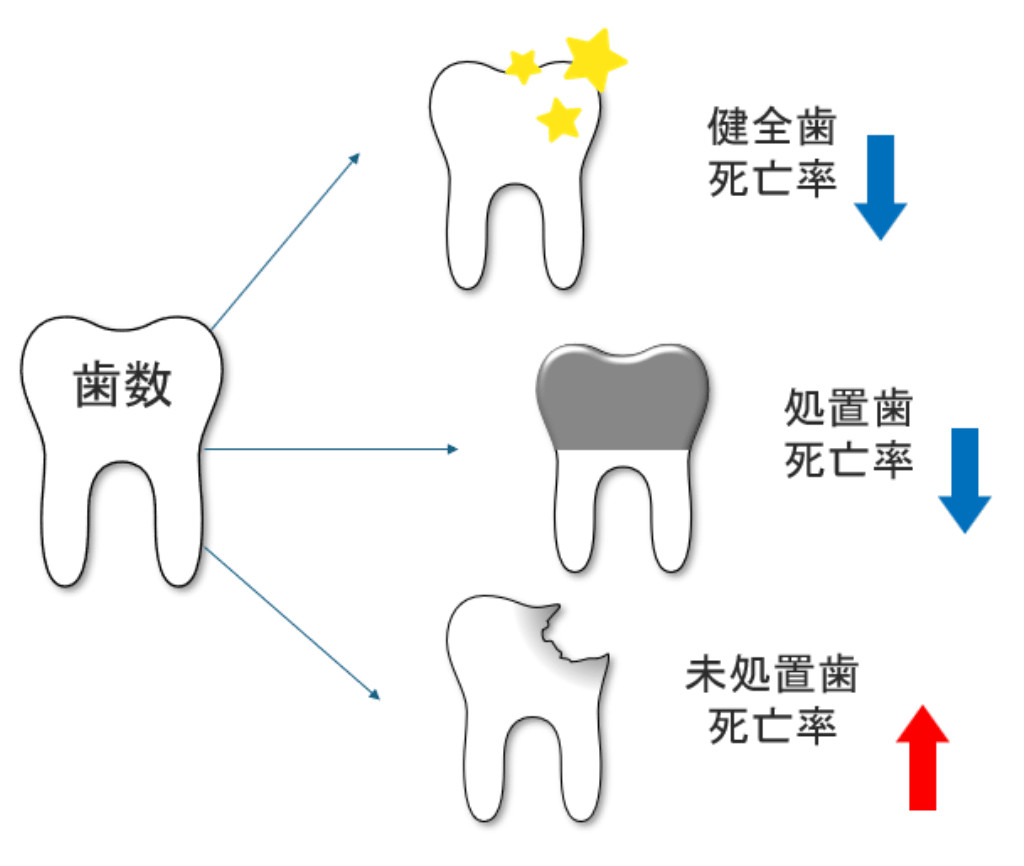
Researchers suggest that missing teeth and tooth decay can cause chronic inflammation that can spread to other parts of the body. Having fewer teeth can also make chewing food more difficult, making it harder to maintain a healthy, nutritious diet. Dental health has also been linked to a variety of systemic diseases, including heart disease, dementia, and diabetes, and is thought to be a potential predictor of long-term health.
In Japan, the Ministry of Health, Labor and Welfare and the Japan Dental Association have been promoting the ' 8020 Campaign ' since 1989, which aims to encourage people to keep 20 or more teeth by the age of 80. The results of this study can be said to scientifically support this idea.
The research team stated, 'Regular dental checkups and early treatment for any teeth that require treatment are important for extending life expectancy. Furthermore, from the perspective of predicting all-cause mortality, we believe that providing feedback from the results of this study to dental clinics will help encourage early treatment and regular dental maintenance, and may contribute to extending the healthy life expectancy of the nation's citizens.'
However, the researchers acknowledged that their results may be influenced by other factors not recorded in their analysis. For example, lack of adequate dental care may reflect lower socioeconomic status, which may affect life expectancy.
Related Posts:







in Science, Posted by log1e_dh