Chimpanzees' 'dangerous tree-walking' behavior peaks in infancy, suggesting a mechanism that makes human adolescence seem dangerous
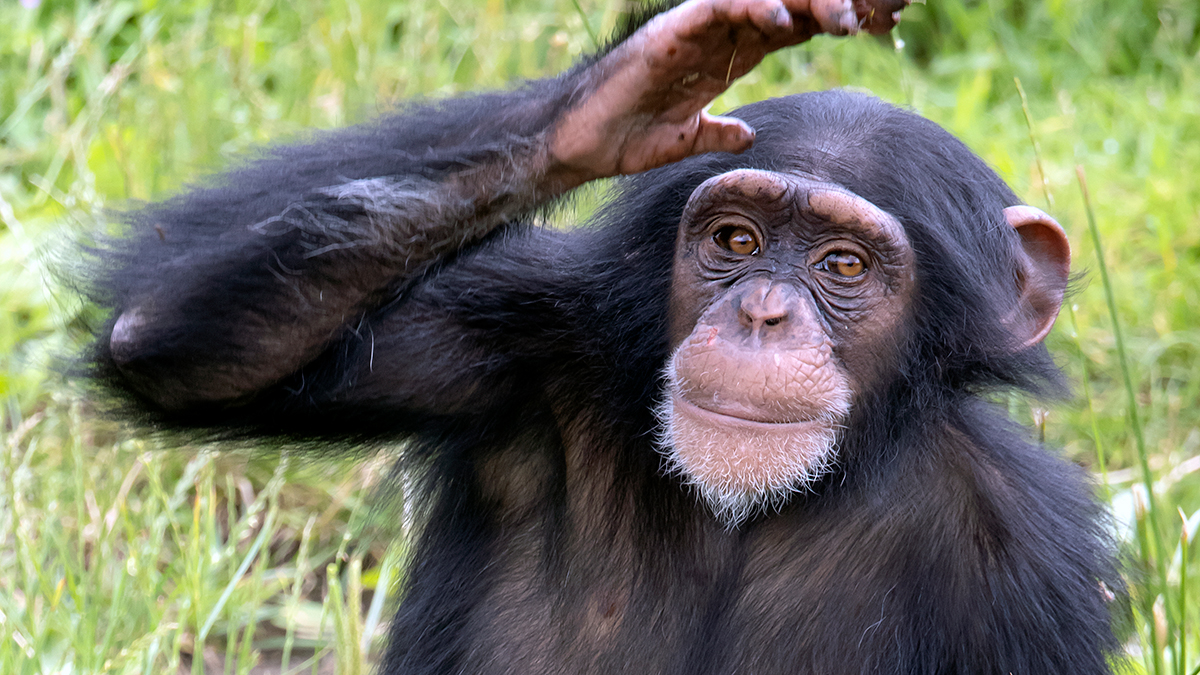
Some people may think that the reason why human children's risky behavior increases during adolescence is because their physical and mental changes make them more likely to behave recklessly. However, research on wild chimpanzees suggests a different perspective on why adolescents appear risky.
Chimpanzee locomotor risk-taking points to the importance of parental and alloparental supervision in humans | iScience
Risks young chimps take as they swing through the trees underscore role of protective parenting in humans | The Conversation
https://theconversation.com/risks-young-chimps-take-as-they-swing-through-the-trees-underscore-role-of-protective-parenting-in-humans-272787
A research team led by University of Michigan anthropologist Laura McClatchy and James Madison University biologist Lauren Sallinghouse is studying the behavior of chimpanzees, an animal closely related to humans, to understand human risk-taking behavior. While it is ethically unacceptable to put humans at risk in order to understand risk-taking behavior, wild chimpanzees, regardless of age, are an excellent alternative research subject because they move through trees.
The research team focused on the movements of chimpanzees that occur when they lose their grip on a branch while moving up a tree. These movements include letting go of the branch completely and jumping, or dropping to a lower branch. McClatchy and his colleagues describe this as 'leaping and dropping.'
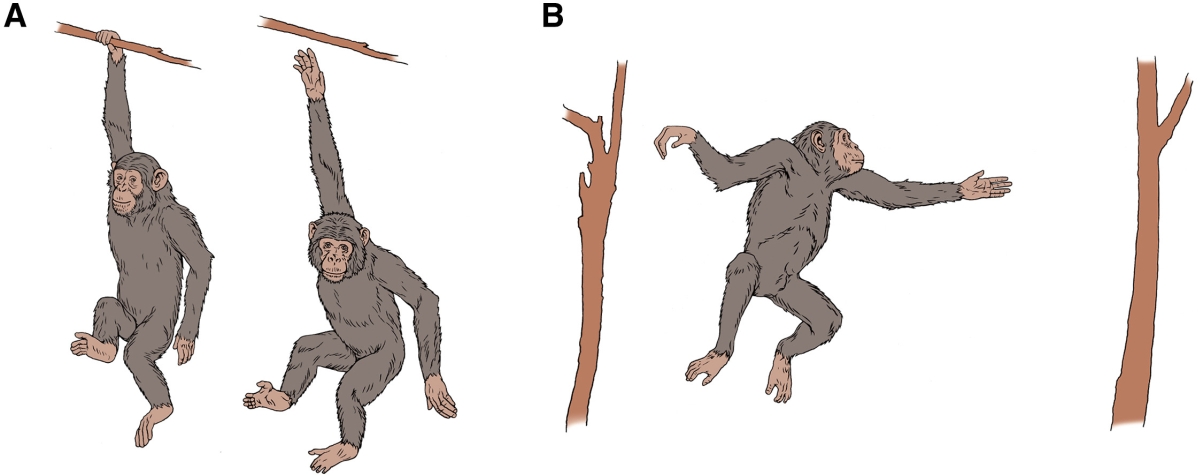
'Leaping and dropping' is used to move between trees, but chimpanzees do not always jump and land successfully. Years of observation have shown that sometimes chimpanzees fail to land properly, resulting in injury or death.
The research team suspected that chimpanzees' patterns of 'leaping and dropping,' which pose a physical risk, might be similar to those of humans. Therefore, they observed wild chimpanzees in Kibale National Park, Uganda, tracking a wide age range of groups and recording their tree movements. They then statistically compared the likelihood of jumping and dropping by age.
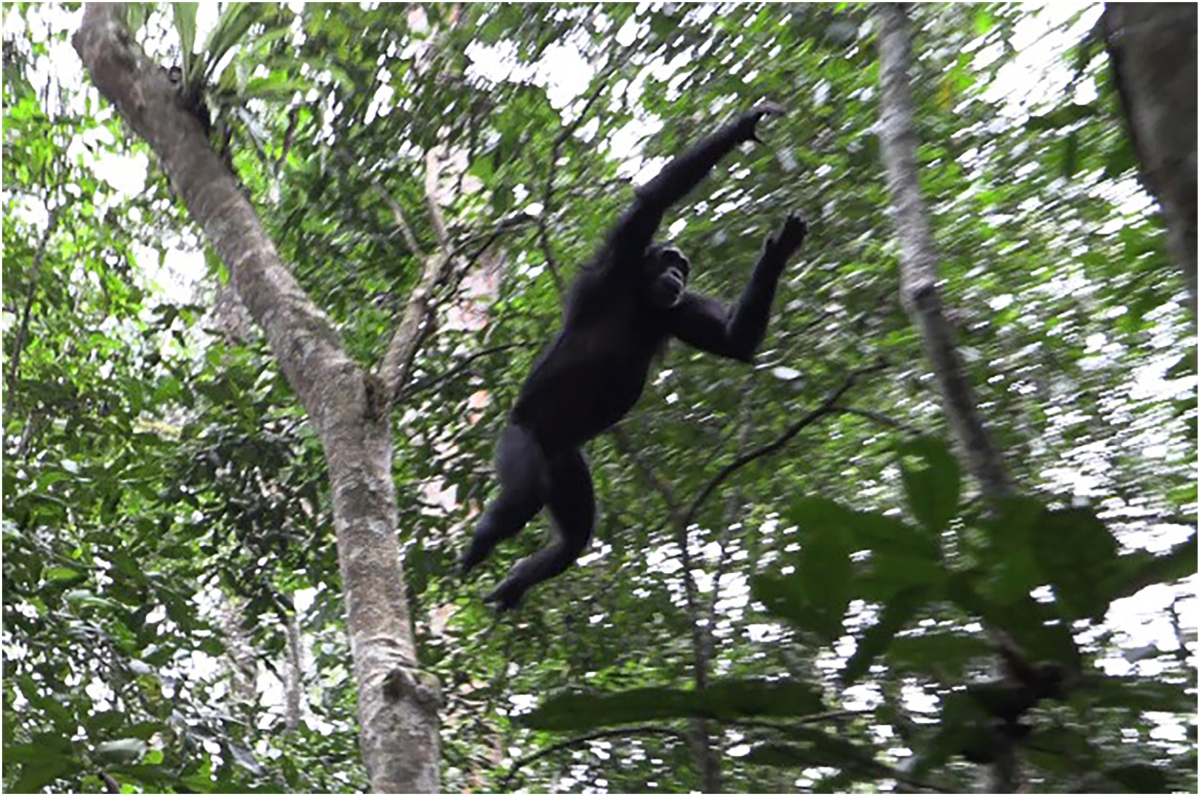
The results were the opposite of the impression that risky behavior in humans tends to increase during adolescence. In chimpanzees, jumping and falling are most common between the ages of 2 and 5, and decrease as they get older. According to the paper, compared to adults aged 15 and over, jumping and falling is about three times more likely in 2-5 year olds, about 2.5 times more likely in 5-10 year olds, and about twice as likely in 10-15 year olds. In other words, jumping and falling does not suddenly increase during adolescence, but rather occurs more frequently in young children and subsides as they grow older.

The paper also showed that the likelihood of jumping or falling cannot be explained solely by gender. For example, it does not fit a simple equation such as 'males are reckless because they are males' or 'males are reckless because they are in a high place,' and it is highly likely that the developmental stage itself plays a major role.
The research team excluded children under the age of two from this analysis because they spend a lot of time clinging to their mothers. However, children between the ages of two and five are more likely to move out of their mother's reach, and in 82% of cases where jumps or falls were observed in this age group, the mother's arm was out of reach. This situation may make children more likely to attempt risky movements from an early age.
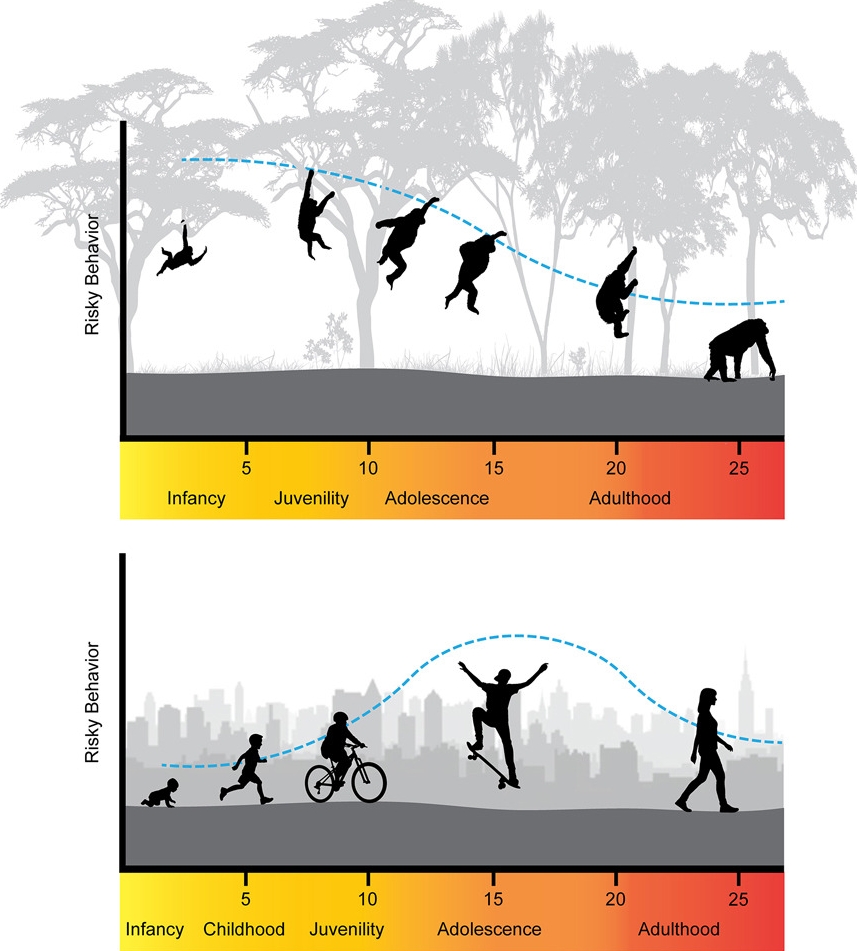
However, this result alone does not necessarily mean that adolescent chimpanzees are not at risk. The paper only considers the physical dangers associated with tree climbing. McClatchy and his colleagues point out that age differences cannot be explained solely by whether or not chimpanzees are able to stop dangerous movements. They also state that 'adults are heavier and their bones are less flexible, which may increase the damage caused by falls.'
McClatchy and his colleagues conclude that the time when risky behavior becomes more noticeable is not determined solely by the child's physical and mental developmental stage, but can also vary depending on environmental factors, such as whether parents are able to stop their children's dangerous behavior.
Related Posts: