Drinking too much alcohol for just three days can damage your intestines

Excessive drinking is known to damage the liver, which breaks down alcohol, but the impact on the intestines, which are closely related to the liver, is less understood. A new study conducted by a US research team using mice showed that just three days of heavy drinking can immediately cause adverse effects on the intestines.
Unraveling the gastrointestinal tract's response to alcohol binges: Neutrophil recruitment, neutrophil extracellular traps, and intestinal injury - Minchenberg - 2025 - Alcohol, Clinical and Experimental Research - Wiley Online Library
Research in Brief: How Binge Drinking Immediately Harms the Gut | Beth Israel Deaconess Medical Center
https://bidmc.org/news-stories/all-news-stories/news/2025/12/research-in-brief-how-binge-drinking-harms-the-gut
Just 3 Days of Binge Drinking Triggers Rapid Gut Damage in Mice : ScienceAlert
https://www.sciencealert.com/just-3-days-of-binge-drinking-triggers-rapid-gut-damage-in-mice
For a long time, the effects of alcohol consumption on the gut were not well understood, but recent research has shown that chronic alcohol consumption is directly linked to disruption of the gut microbiome.
The liver and intestine are closely connected, with the liver communicating with the large intestine by secreting bile acids and immune molecules, and the intestine influencing liver function through microorganisms and food metabolites. Because the liver and intestine are connected by a two-way communication pathway, alcohol's effects on one organ are likely to affect the other.

A research team at
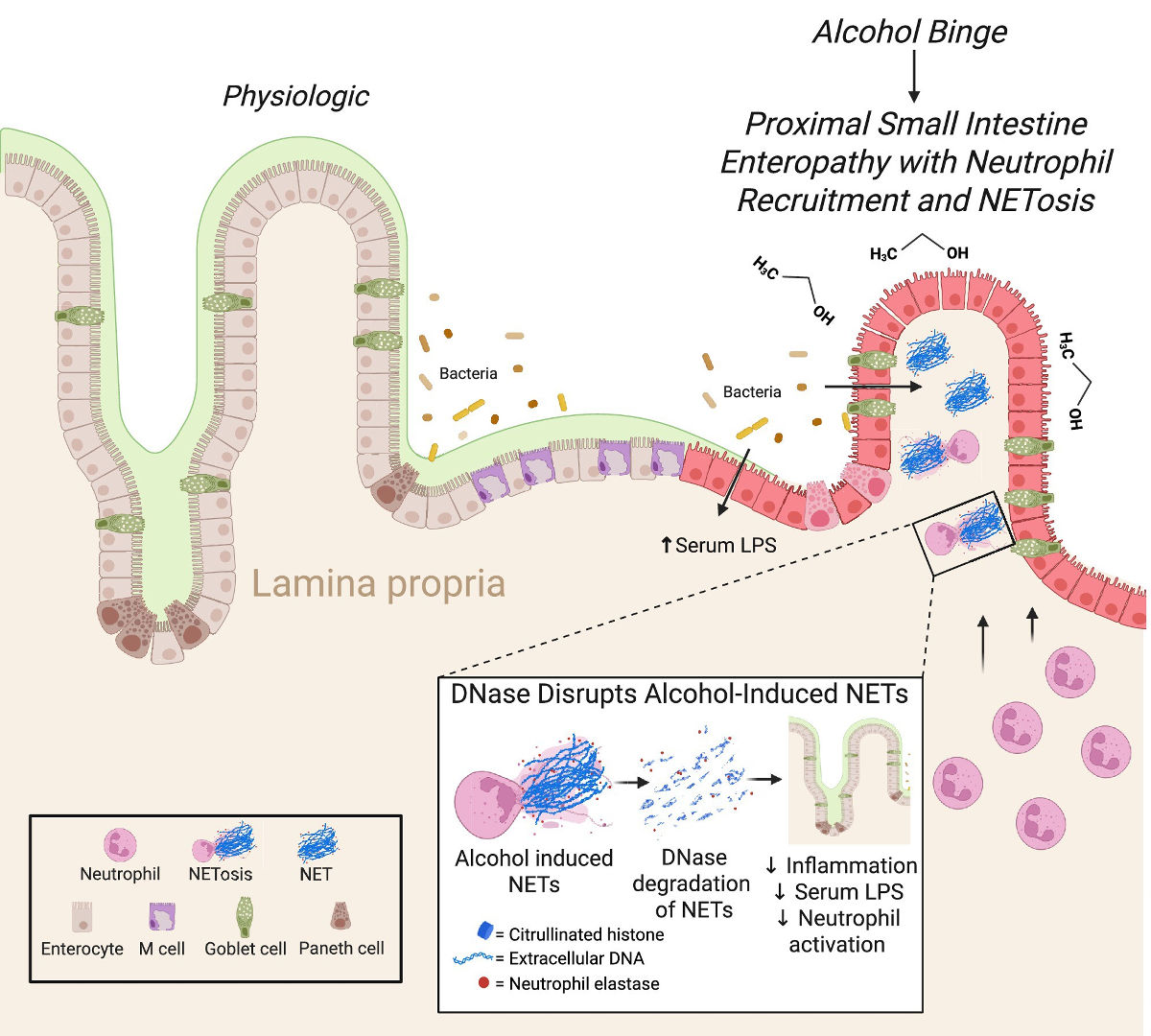
The mice were examined after alcohol consumption, and unlike the mice that consumed alcohol chronically, they did not show any inflammation in the intestines. However, it was confirmed that short-term excessive alcohol consumption damaged the upper small intestine and attracted neutrophils , a type of immune cell.
Neutrophils that gather in the intestinal wall release mesh- like structures called neutrophil extracellular traps (NETs) , which weaken the intestinal barrier at the top of the intestinal wall. When the intestinal barrier is broken, it causes leaky gut , which allows intestinal bacteria and toxins to leak into the tissues.
Leaky gut causes inflammation in the body and damages the liver, which filters blood from the intestinal tract. When the research team inhibited NETs using an enzyme that breaks down NETs, it was reported that the number of neutrophils that gathered on the intestinal wall decreased, and the leakage of intestinal bacteria also decreased.
It's important to note that this study was conducted on mice, not humans. Science Alert points out, 'While the mouse gut shares some similarities with the human gut, it's unclear whether the same effects would be seen in humans who drink heavily. However, chronic alcohol consumption has been linked to leaky gut.'
'Intestinal damage was observed as early as three hours after alcohol consumption and was evident even 24 hours after the last heavy drink,' the research team said. 'These findings provide a better understanding of the effects of alcohol on the gastrointestinal tract and provide a basis for investigating potential strategies to control downstream liver damage.'
Related Posts:




in Free Member, Science, Food, Posted by log1h_ik