DNA analysis reveals that ancient Chinese cats were a completely different species from modern domestic cats
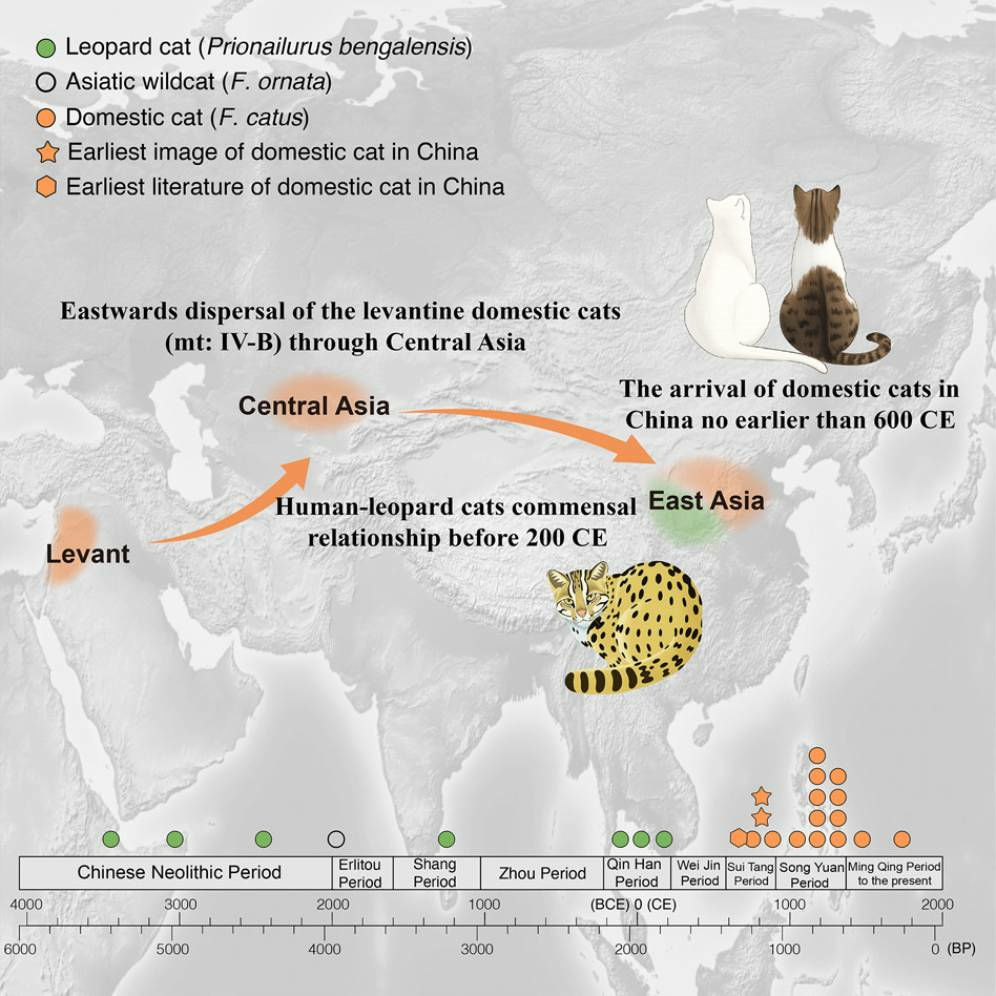
The late arrival of domestic cats in China via the Silk Road after 3,500 years of human-leopard cat commensalism: Cell Genomics
https://www.cell.com/cell-genomics/fulltext/S2666-979X(25)00355-6

DNA Reveals Cats in Ancient China Were a Different Species Altogether : ScienceAlert
https://www.sciencealert.com/dna-reveals-cats-in-ancient-china-were-a-different-species-altogether
Archaeologists have unearthed small cat bones from Chinese ruins dating back to around 3400 BC , and it is known that humans and cats lived side by side in ancient Chinese rural settlements. However, it is speculated that modern domestic cats may have been transported east across Eurasia to China much more recently.
A research team led by evolutionary scientists from Peking University examined feline bones excavated from 14 Chinese archaeological sites dating from 3400 BC to 1800 AD. Analysis of mitochondrial DNA from a total of 22 bones revealed that domestic cats were not present in China until recently.
The bones identified as those of 14 domestic cats, dating from around 730 to 1800 AD, were excavated from seven archaeological sites spanning a wide period, including the Tang , Song , Yuan , Ming , and Qing dynasties.
On the other hand, of the seven specimens found in ruins dating from 3400 BC to 200 AD, six were Bengal wildcats , which are different from domestic cats, and the remaining one was a species with genetic characteristics of the steppe wildcat or gray cat .

by Wikimedia Commons
The Bengal leopard cat is a wild cat that lives in South Asia, Southeast Asia, and East Asia, and
This suggests that for thousands of years, leopard cats, a completely different species from domestic cats, may have enjoyed a semi-domesticated lifestyle in ancient China. Science Alert, a science media outlet, states, 'They likely roamed freely while receiving food and relatively safe shelter from agriculturalists.'
Interestingly, no interbreeding between leopard cats and domestic cats is thought to have occurred: there is no trace of leopard cat DNA in the domestic cat genome, and there is a gap of several centuries between the last leopard cat bones found in 200 AD and the earliest domestic cats found in 730 AD.
The team's genome reconstruction suggests that the earliest domestic cats in China were likely short-haired and entirely white or partially spotted white, which is consistent with depictions of cats in Chinese artwork and literature that have clearly changed since the time of the domestic cat's emergence.
'The earliest written records clearly describing domestic cats also date back to this period, including a story about an empress of the Tang dynasty giving pet cats to her ministers. These historical records suggest that domestic cats were considered exotic pets and may have been kept among the elite in ancient China. This reflects the relatively recent introduction of cats to China,' the research team wrote in their paper.
Domestic cats were likely introduced to China via the Silk Road during this period, where they likely took over the leopard cat's place in human society, which had declined during dynastic turmoil centuries earlier.
The research team stated, 'Because the two species occupy a similar ecological niche, the arrival of domestic cats may have prevented the recolonization of leopard cats in human settlements. Furthermore, the rise of poultry farming in ancient China after the Han dynasty may have exacerbated conflicts between humans and leopard cats, further hindering the return of leopard cats to human environments, as leopard cats have a habit of preying on chickens.'
Related Posts:





in Free Member, Science, Creature, Posted by log1h_ik