NASA warns that too many satellites could contaminate most space telescope images
With the spread of satellite internet, including SpaceX's
Satellite megaconstellations will threaten space-based astronomy | Nature
https://www.nature.com/articles/s41586-025-09759-5
Almost All Space Telescope Images Could Soon Be Contaminated, NASA Warns : ScienceAlert
https://www.sciencealert.com/almost-all-space-telescope-images-could-soon-be-contaminated-nasa-warns
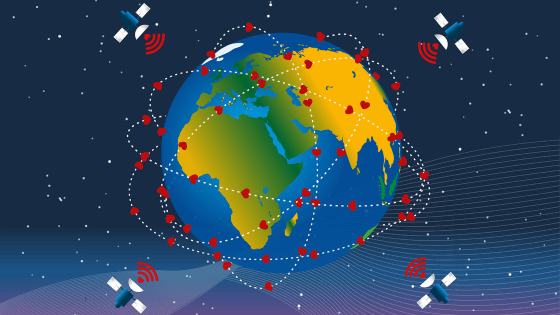
According to a NASA survey, the number of satellites in low Earth orbit has increased dramatically since 2019, from approximately 2,000 to 15,000. Many of these are part of the Starlink satellite constellation , but other satellite internet services are also expected to increase their satellite numbers.
According to lead author Alejandro Borlaff of NASA's Ames Research Center , at the time of writing, Starlink accounts for roughly three-quarters of all satellites in low Earth orbit. However, as competition among satellite internet services intensifies, that percentage is expected to decline, with Starlink's share expected to be around 10% in 20 to 30 years.
If all satellite launch plans submitted to regulatory authorities at the time of writing are implemented, the number of satellites orbiting Earth will reach 560,000 by the end of 2030. Borav argues that this increase in satellites poses a very serious threat to space telescopes.
by
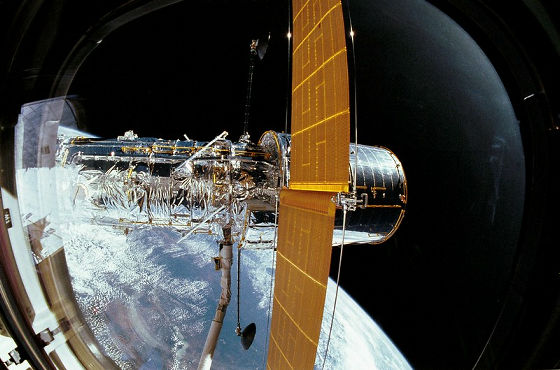
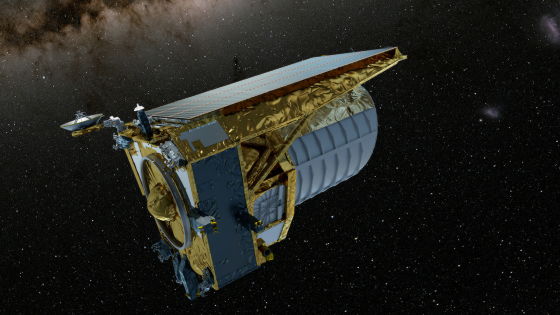
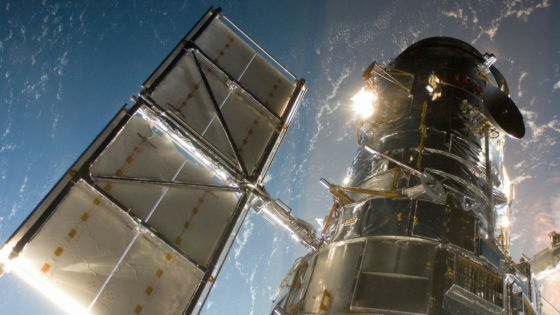
Borav and his team simulated the impact of the 560,000 satellites scheduled for launch at the time of writing on four space telescopes: NASA's SPHEREx and Hubble Space Telescopes, the European Space Agency 's ARRAKIHS space telescope , and China's upcoming Xuntian space telescope .
The simulation results showed that reflected light from satellites affected 96% of images taken by the SPHEREx Space Telescope, the ARRAKIHS Space Telescope, and the NASA Space Telescope. Although the Hubble Space Telescope was relatively less affected due to its narrow field of view, it still contaminated about one-third of the images.
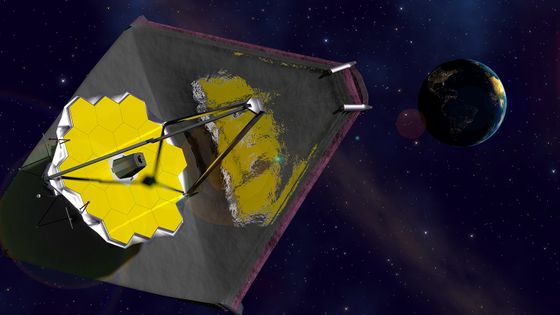
The James Webb Space Telescope , which will be launched in 2021, is located at the Lagrange point (L2) , about 1.5 million km from Earth, so it will not be affected by satellites.
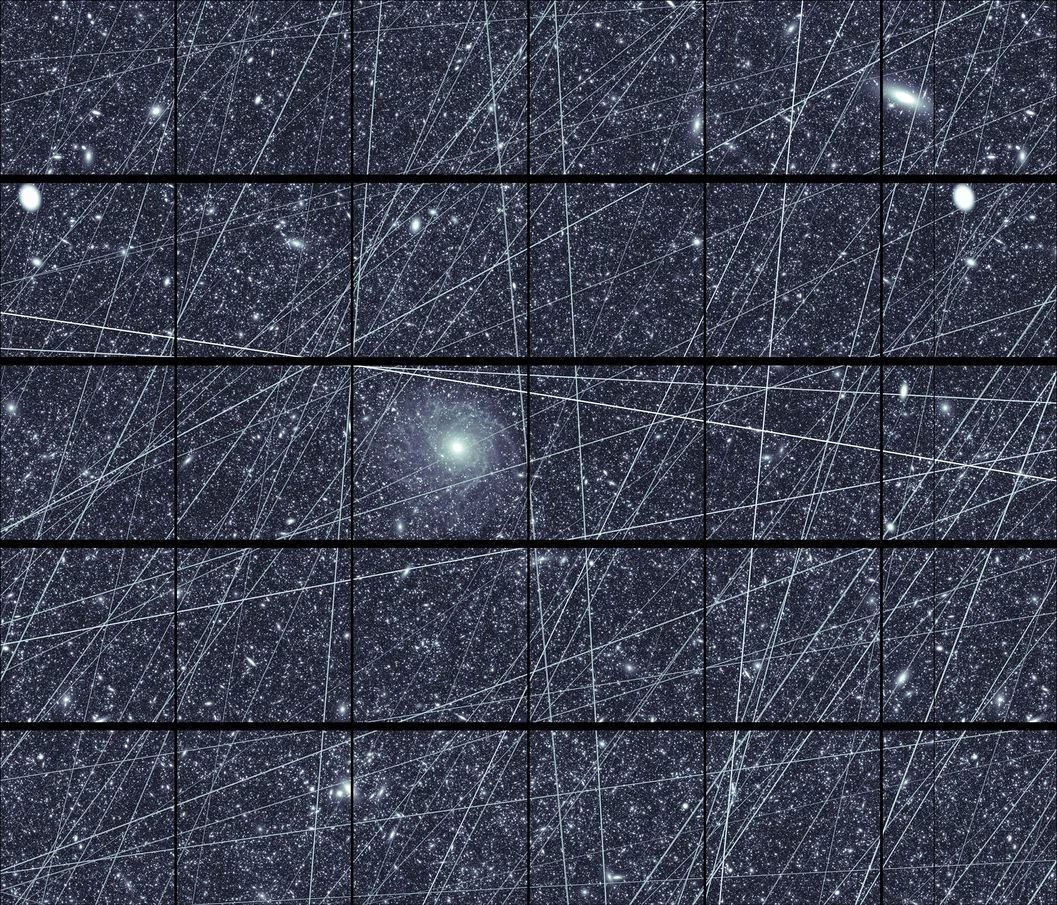
The image below is a simulated exposure of the ARRAKIHS space telescope, showing the orbits of satellites as white lines. As you can see, a huge number of satellites are captured.
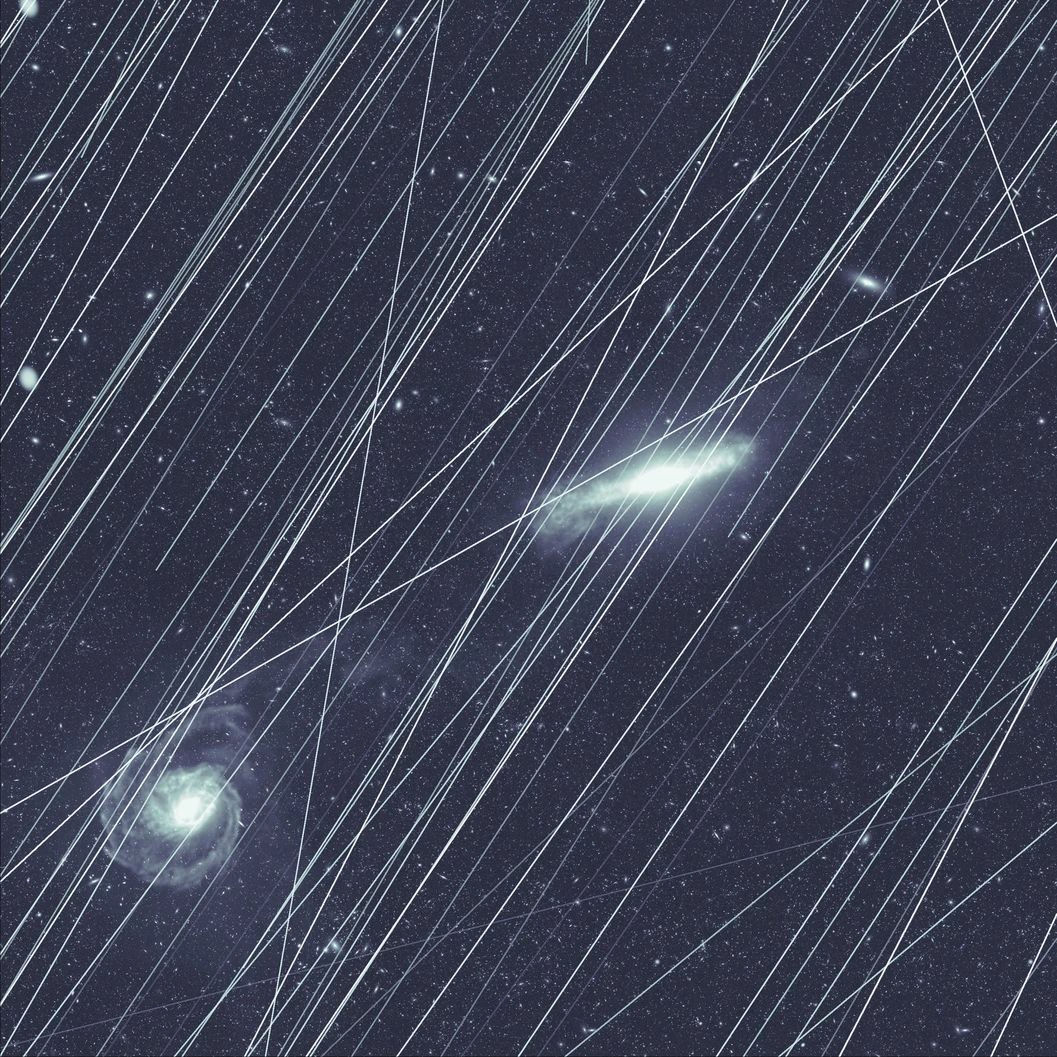
The exposure simulation of the orbiting space telescope looks like this. It shows that the impact of the satellite is enormous.
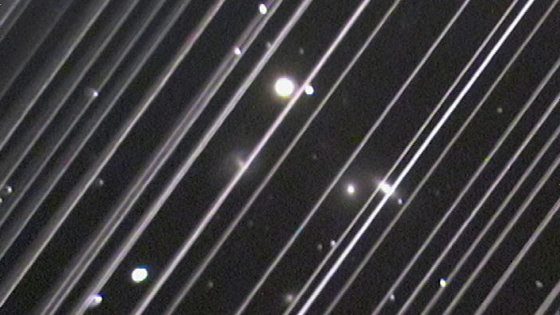
Contamination of images taken by space telescopes could affect all kinds of scientific endeavors. 'Imagine trying to find asteroids that could potentially be harmful to Earth,' Borav said. 'They're crossing the sky and they look exactly like satellites. ... It's really hard to tell which ones are dangerous.'
One solution to this problem would be to deploy satellites at a lower altitude than space telescopes, but doing so would likely damage the Earth's ozone layer. The simplest solution would be to reduce the number of satellites launched in the first place, but given the increasing competition among satellite internet services and the growing demand due to the AI boom, this is unlikely to happen.
Another problem, Borav points out, is the increasing size of satellites. To the naked eye, a 100m² satellite appears as bright as 'the brightest star in the night sky,' and at the time of writing, there are plans to build 3,000m² satellites to meet the data requirements of the AI boom. Borav adds that these large satellites could appear as bright as planets.
Related Posts:
in Science, Posted by log1h_ik