How to make your own original 'snowflake fossil'
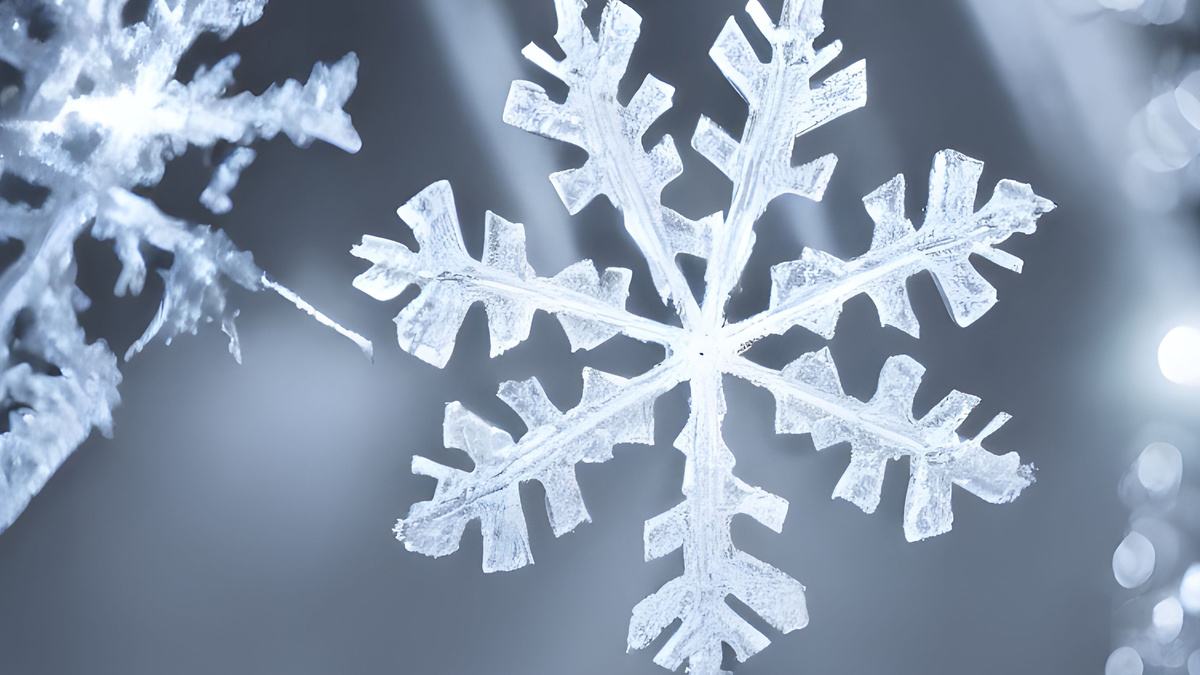
Snow crystals have complex shapes that are known
SnowCrystals.com
https://www.snowcrystals.com/
Preserving Snow Crystals
https://www.its.caltech.edu/~atomic/snowcrystals/preserve/preserve.htm
Looking at snow under a microscope allows us to closely examine its crystalline structure, but prolonged observation is difficult because the crystals melt when the temperature of the room or the microscope slide rises even slightly.
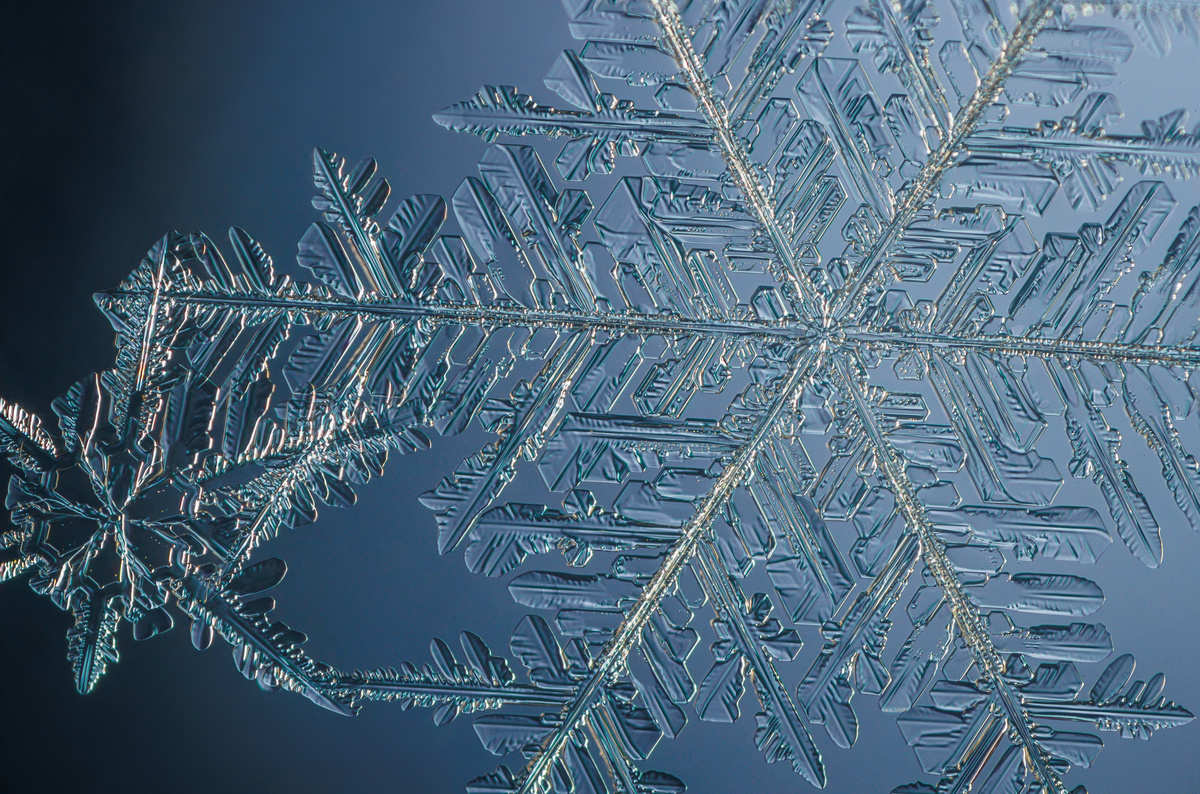
Professor Libbrecht explains how to preserve snow as fossils, based on a method proposed by chemist Tryggve Emilsson.
First, collect snowflakes while it's snowing by first cooling a microscope slide and cover slip to the same temperature as the outside air. Then, drop the snowflakes onto a cardboard board or other surface, then use a microscope to find attractive snowflakes. Carefully pick up any you find with a small paintbrush and place them on the slide.
After placing the snowflake on the slide, add a drop of chilled, highly fluid adhesive, cover it with a cover glass, and leave the slide outside or in the freezer for about a week until the adhesive hardens.
Below is one of the replicas shown by Emilson in his paper. Although it is described as a 'snow crystal fossil,' it is actually not a matter of preserving the crystal itself, but rather a 'duplicate of the shape of a snow crystal' using resin and adhesive.
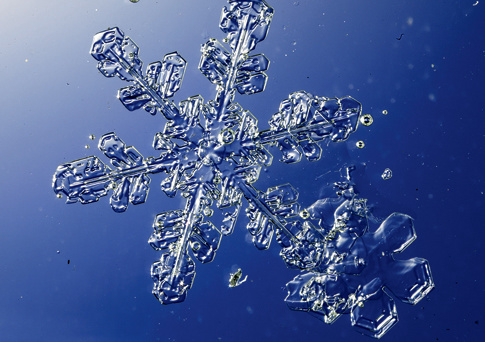
In addition to glue, replicas can also be made using polyvinyl chloride (Formvar) resin. This method, described in the 1981 book '
Additionally, Walter Tape describes in his book ' Atmospheric Halos ' the 'acrylic replica of a snowflake.' Place a snowflake on a glass slide that has been pre-coated with plastic film, then lightly spray with clear acrylic spray (available at hardware stores) to harden the acrylic in a way that replicates the snowflake's structure. Below is a sample of the acrylic replica featured in 'Atmospheric Halos.'
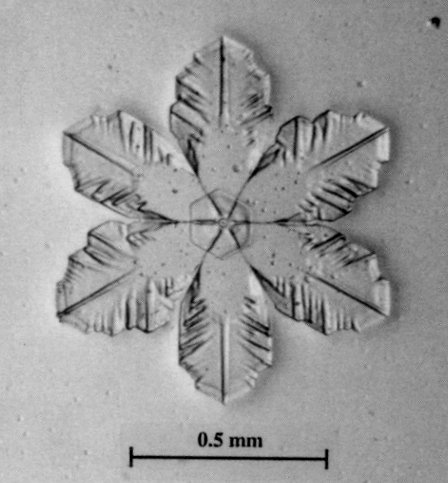
Snowflakes preserved with glue or acrylic do not melt, so they can be carefully observed indoors regardless of the season.
Related Posts:


in Science, Posted by log1e_dh