Google will introduce a mechanism to display warnings for 'battery-intensive smartphone apps' and make them harder to find in the store
Battery life is a concern when using a smartphone. Some apps continue to consume battery power even after the screen is turned off, refusing to go into sleep mode. New battery consumption rules have been announced for Android app developers. Starting March 1, 2026, apps that do not meet the standards will be restricted from appearing on Google Play, and a warning will be displayed on the app's individual page.
Android Developers Blog: Raising the bar on battery performance: excessive partial wake locks metric is now out of beta
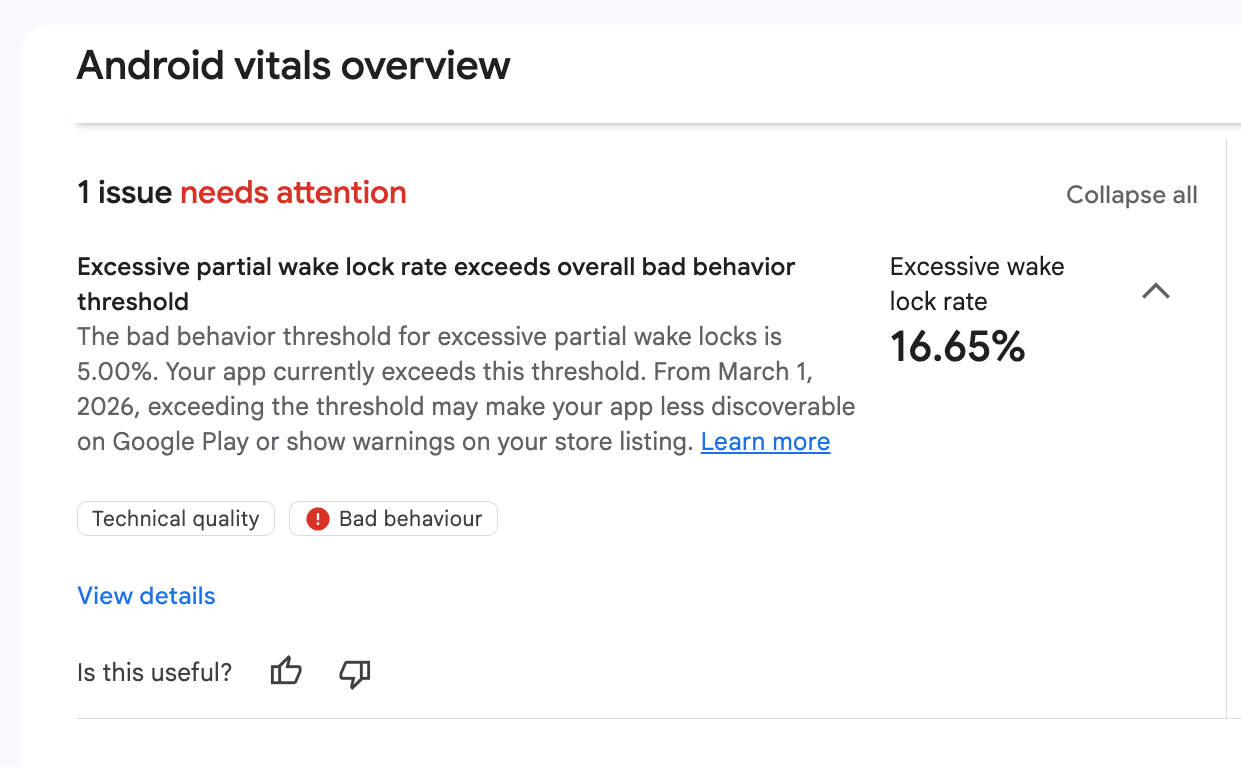
Android apps generally stop running when the screen is turned off, but some continue to run on the CPU even after the screen is turned off. This 'continuing processing after the screen is turned off' behavior is achieved by an API called ' PARTIAL_WAKE_LOCK '. Google has now defined 'operation using PARTIAL_WAKE_LOCK for more than two hours in a 24-hour period' as an invalid behavior.
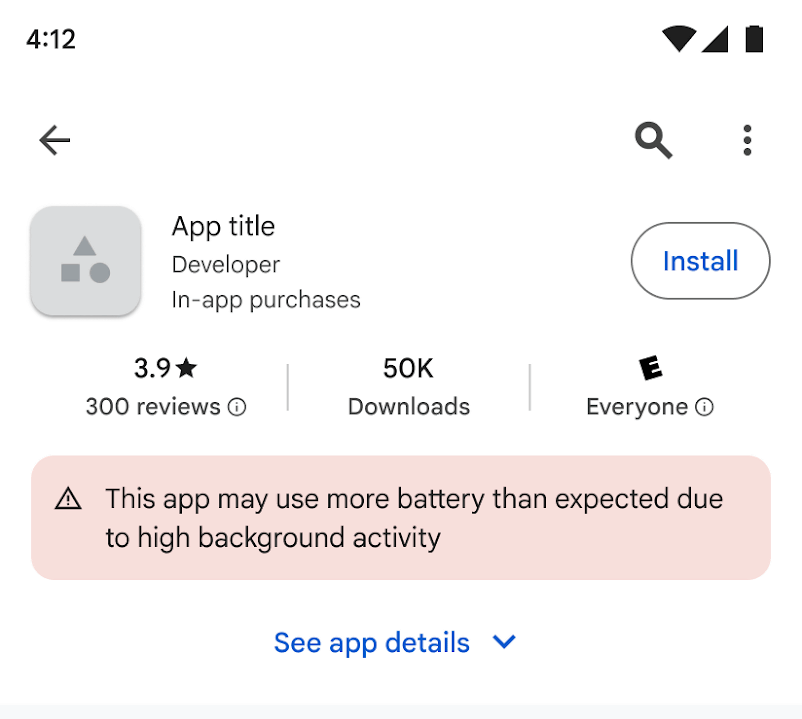
If 5% of app users experience PARTIAL_WAKE_LOCK activity for more than two hours in a 24-hour period over the past 28 days, the app may be removed from prominent displays such as recommendations. Additionally, a warning message stating 'This app consumes a lot of battery' may appear on the app's individual page on Google Play. These measures will begin on March 1, 2026.
Developers can use
Related Posts:




in Smartphone, Posted by log1o_hf