Chinese researchers develop special stem cells that reverse aging and successfully rejuvenate elderly monkeys

Senescence-resistant human mesenchymal progenitor cells counter aging in primates: Cell
https://www.cell.com/cell/fulltext/S0092-8674(25)00571-9
Restoring youth: Scientists use engineered cells to restore vitality in primates | EurekAlert!
https://www.eurekalert.org/news-releases/1088662
Anti-Aging Breakthrough: Stem Cells Reverse Signs of Aging in Monkeys
https://www.nad.com/news/anti-aging-breakthrough-stem-cells-reverse-signs-of-aging-in-monkeys
In humans, the protein FoxO3 binds to DNA and responds to cellular stress by switching genes on and off, and these genes are involved in many cellular processes that promote healthy aging and extended lifespan. Therefore, the FOXO3 gene that encodes the FoxO3 protein is considered a 'longevity gene.'
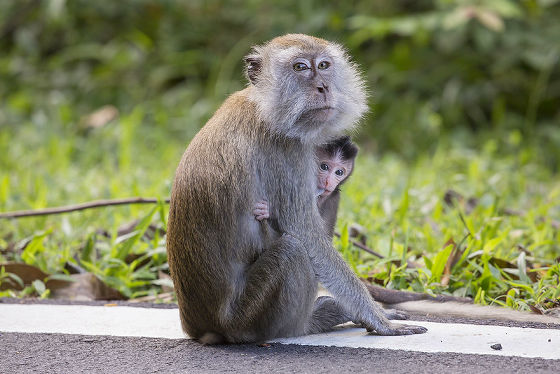
The research team used cutting-edge synthetic biology techniques to create a new type of human stem cell called 'senescence-resistant mesenchymal progenitor cells (SRCs)' that were engineered to enhance FoxO3 activity. To test the effects of SRCs, they conducted experiments on cynomolgus monkeys, a species of primate closely related to humans.
In the study, cynomolgus monkeys aged 19 to 23 years (equivalent to a human age of approximately 57 to 69 years) were divided into three groups: a saline group, a normal stem cell group, and an SRC group. The injections were administered every two weeks for 44 weeks. No serious adverse events, such as immune rejection or tumor growth, were observed.
by
After 44 weeks of treatment, researchers measured a series of biological indicators to determine whether SRC slowed biological aging in the elderly cynomolgus monkeys. To measure memory retention, the researchers administered the Wisconsin General Test (WGTA), which asks monkeys to remember which box contained food.
The researchers found that the SRC-treated cynomolgus monkeys were able to remember the food box more accurately than the saline-treated or normal stem cell-treated cynomolgus monkeys. Furthermore, the memory of the normal stem cell-treated cynomolgus monkeys was comparable to that of the saline-treated group, suggesting that it was the SRC, not the normal stem cells, that improved the memory of the elderly cynomolgus monkeys.
Furthermore, MRI analysis of the brain structure of cynomolgus monkeys revealed that administration of SRC alleviated age-related brain atrophy and restored brain connectivity to a state equivalent to that of 3- to 5-year-old cynomolgus monkeys (equivalent to a human age of approximately 9-15 years). Specifically, it was confirmed that SRC administration rejuvenated the structural connectivity between seven brain regions, including the prefrontal cortex, which is important for working memory.

The research team used micro-CT to measure bone mass in the teeth of the cynomolgus monkeys and found that while saline-treated cynomolgus monkeys showed age-related bone loss, SRC-treated cynomolgus monkeys' teeth resembled those of young monkeys, suggesting that age-related osteoporosis was alleviated.
The research team then examined the increase or decrease in gene expression in 61 tissues throughout the body. The increase or decrease in gene expression reflects the functional state of cells, tissues, and organ systems. The results showed that approximately 30% of the tissues in the cynomolgus monkeys receiving normal stem cells were rejuvenated, while more than 50% of the tissues in the cynomolgus monkeys receiving SRCs were rejuvenated.
Analysis of the structural changes in organs and tissues of cynomolgus monkeys treated with SRC revealed improved vascular health in the lungs and heart, reduced aortic thickening, and reduced levels of Alzheimer's disease-related proteins and abnormal mineral deposits in the kidneys and brain.

NAD+, a media outlet focused on aging science, argues that because stem cell exhaustion is one of the root causes of aging, it makes sense to turn to regenerative stem cells to combat aging, and suggests that human clinical trials of SRCs may be possible in the near future.
Related Posts:




in Science, Posted by log1h_ik