Increased levels of certain brain proteins may be linked to cognitive decline

Researchers at the University of California, San Francisco, have discovered that certain proteins may play a key role in brain aging, a finding they hope will lead to the development of treatments for neurodegenerative diseases such as Alzheimer's.
Targeting iron-associated protein Ftl1 in the brain of old mice improves age-related cognitive impairment | Nature Aging
This Protein Slows the Aging Brain, and We Know How to Counter It | UC San Francisco
Switching Off One Crucial Protein Appears to Reverse Brain Aging in Mice : ScienceAlert
https://www.sciencealert.com/switching-off-one-crucial-protein-appears-to-reverse-brain-aging-in-mice
The hippocampus is an area of the brain involved in memory and learning, and is one of the areas that shows the greatest decline in ability with age.
The research team investigated how the hippocampus of mice changes with age. They discovered that older mice, whose cognitive abilities declined due to a decrease in connections between brain cells in the hippocampus, had increased amounts of a protein called 'FLT1' compared to younger mice. 'FLT1' is known to be related to iron storage in the body, but its relationship to brain aging has not yet been elucidated.
When the researchers artificially increased the amount of FLT1 in young mice, the mice's brains and behavior began to resemble those of older mice.
The image on the left shows artificial neurons grown in a petri dish, showing branching neurites. However, when the neurons were engineered to produce more FLT1, the neurites became much simpler and branched less (image on the right).
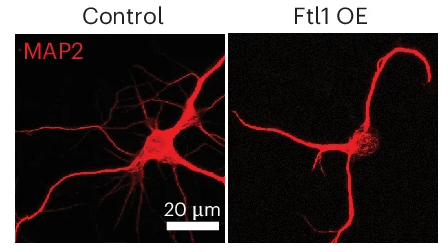
On the other hand, when the amount of FLT1 in aged mice was reduced, they regained their youthfulness, increased connections between nerve cells, and performed better on memory tests.
'This is truly a functional reversal,' said Dr. Saul Villeda, corresponding author of the study and deputy director of the Baker Institute on Aging. 'It goes far beyond simply delaying or preventing symptoms.'
Increasing the amount of FLT1 in aged mice also slowed the metabolism in hippocampal cells, but treating the cells with a compound that stimulates metabolism prevented this effect.
Dr. Villeda is optimistic that this research could lead to therapies that block the effects of FLT1 in the brain. 'It's a hopeful time to be involved in aging biology research,' he said.
Related Posts:






in Science, Posted by logc_nt