Research results show that interacting with human-like AI increases the risk of viewing real people as 'non-human' and oppressing them
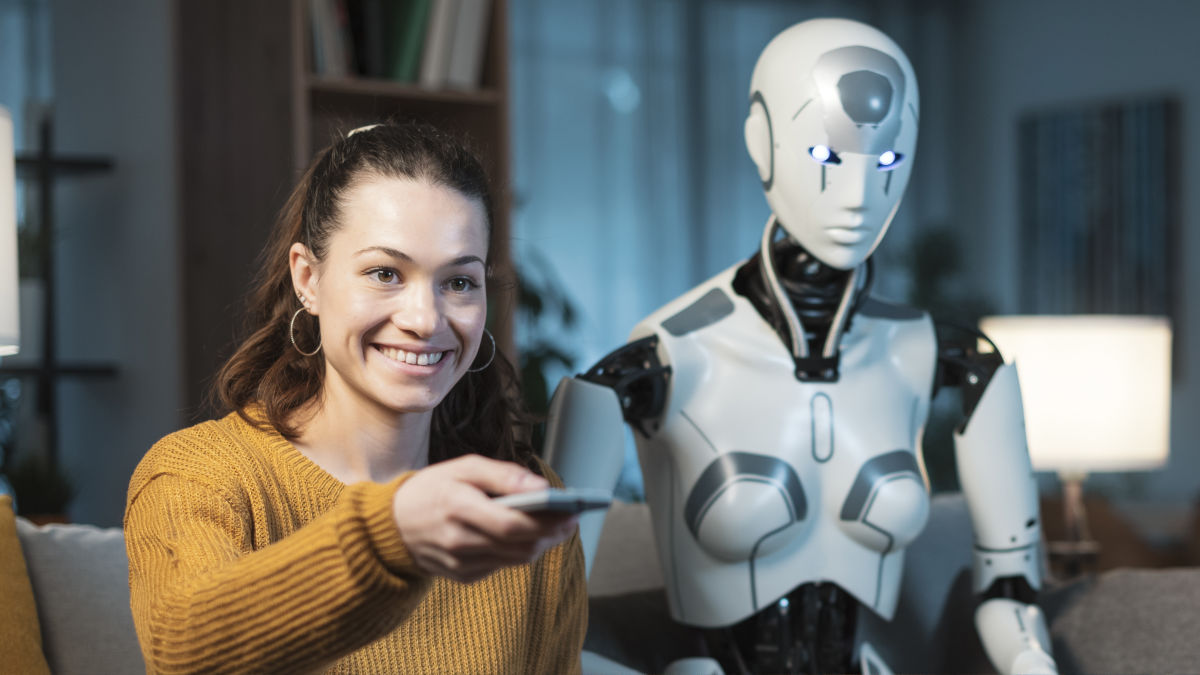
As AI technology advances, AI agents that demonstrate high emotional capabilities and empathize with users are emerging. At first glance, developing human-like AI may seem like a benefit to users, but research has shown that perceiving human-like AI can have the side effect of dehumanizing real people by causing them to view them as 'non-human.'
AI‐induced dehumanization - Kim - 2025 - Journal of Consumer Psychology - Wiley Online Library
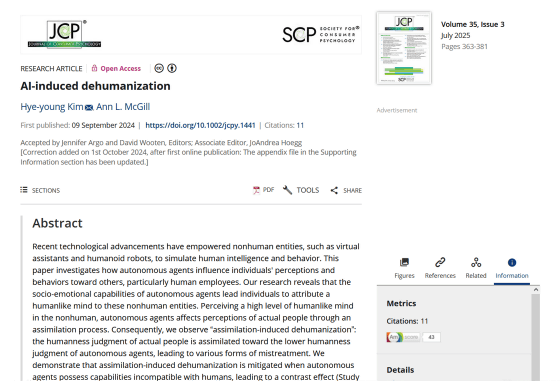
Assimilation-induced dehumanization: Psychology research uncovers a dark side effect of AI
https://www.psypost.org/assimilation-induced-dehumanization-psychology-research-uncovers-a-dark-side-effect-of-ai/
In recent years, AI agents have gone beyond the framework of 'convenient features' and some people treat them as casual conversation partners to kill time, confidants to talk to about serious problems, or friends to vent to. AI agents with high emotional capabilities have the potential to make user-AI interactions more satisfying, but it is not well known how this impacts 'perceptions of others.'
Psychological research has long shown that our perception of the mental capacities of others, such as their ability to think and feel, influences how we treat them. Emotions, in particular, are seen as central to humanity, and so if people interact with AI that has human-like emotional capabilities, they are more likely to view it as more human-like. Conversely, there are concerns that viewing AI as more human-like may lead people to view real humans less 'human,' potentially leading to dehumanization.
'What's interesting is that people respond to even the slightest hints of humanity in AI and often treat it like any other human being,' said Kim Hye- young, assistant professor at the London School of Economics . 'This led us to ask: Could the humanity shown by AI make machines seem more human, but also make real people seem more machine-like?'
Kim and his team conducted five experiments to examine how evaluations of 'AI's human-likeness' affect evaluations of real people. In the experiments, subjects were exposed to AI agents with high and low socio-emotional capabilities and asked to rate the human-likeness of the AI and real people. They also measured how the AI behaved toward real people.
In the first experiment, 195 participants recruited online were split into two groups and shown either a video of a humanoid robot dancing expressively and energetically or a video of the same robot performing mechanical parkour. All participants were then asked to rate how sentient they perceived the robot to be. They also read scenarios describing potentially negative changes to employee well-being, such as replacing employees' hot meals with shake substitutes, housing employees in tiny microcapsule rooms, or wearing tracking devices that monitor their every movement, and were surveyed to see how much they supported those changes.
The results showed that participants who watched expressive robot dancing perceived the robots as having a heart compared to those who watched mechanical parkour, and that participants who watched the robot dance were significantly more likely to support dehumanizing changes in the workplace.
In a second experiment involving 451 participants, participants were shown two videos of robots performing dance or parkour, as in the first experiment. They were then divided into two groups: one group described the robot's capabilities as 'moderate (on a human level)' and the other group described it as 'extremely powerful (possesses superhuman abilities, such as the ability to see infrared or X-rays).' Participants then answered a questionnaire measuring their level of dehumanization, asking whether they perceived humans as cold and mechanical, or as unsophisticated and animalistic.
The results of the experiment showed that, as in the first experiment, when subjects were told that the robot's abilities were average, they tended to dehumanize actual humans more when they watched a video of a dancing robot. On the other hand, when subjects were told that the robot had superhuman abilities, they perceived actual humans as more human. This suggests that when machines are clearly in a different category from humans, we tend to view them as more human.

In the third experiment, 651 subjects were divided into three groups and asked to read about one of three programs: a virtual therapy program capable of responding to subtle emotions, a medical diagnostic program capable of analyzing complex data, or a simple questionnaire analysis program. They then completed the same dehumanization scale as in the second experiment. The results showed that only subjects who read about the virtual therapy program increased their dehumanization of humans. This suggests that whether or not AI or robots have emotional capabilities can trigger the dehumanization process.
In the fourth experiment, 280 subjects were asked to read either an article describing AI as having superior emotional capabilities or an article describing AI's limited emotional capabilities, and then evaluated the 'human-likeness' of the AI agent and a typical human. Afterward, subjects were told they had a chance to win a $25 gift card and were instructed to choose between an Amazon gift card and a Costco gift card. Before making their choice, subjects were also asked to read an actual news article describing Amazon's inhumane working conditions.
The results of the experiment showed that subjects who rated humans as less human-like in general were less offended by a news article about Amazon's working conditions and were more likely to choose the Amazon gift card. This suggests that subjects exposed to emotionally capable AI will rate actual humans as less human-like, which will affect their real-world behavior.
In the fifth and final experiment, 331 participants were given a description of a conversational virtual assistant for a company's customer service teams. One group was told that the assistant had strong social-emotional skills and could adapt its speech to meet the emotional needs of customers, while the other group was told that the assistant's abilities were purely mechanical. Participants were then offered a $0.25 bonus and asked if they would donate it to a fundraising campaign to support the mental health of human customer service representatives.
The results showed that subjects who were told about an emotionally intelligent virtual assistant perceived the assistant as more human, but were less likely to donate to campaigns supporting human employees.

'The more we recognize the social and emotional capabilities of AI, the more likely it is that we will view flesh-and-blood humans as machines, and therefore less worthy of consideration and respect,' Kim told PsyPost. 'As consumers increasingly interact with AI in customer interactions, we should be mindful that the dehumanization caused by AI will increase the likelihood that we will unintentionally mistreat employees and frontline workers.'
One question that remained unclear in this study was, 'Will interactions with emotionally capable AI lead to similar dehumanization toward ourselves?' One possibility is that in workplaces where AI with advanced emotional capabilities exists, human employees may be more accepting of dehumanization. Conversely, it is possible that dehumanization of others may actually enhance one's own humanity.
'Understanding how these effects will unfold over time will be especially important as AI becomes increasingly ingrained in our daily lives,' said Kim. 'Ultimately, we aim to understand how AI technologies can be responsibly designed and deployed so that they enhance, rather than undermine, our social relationships and human values.'
Related Posts:





in Free Member, Web Service, Science, Posted by log1h_ik