Intel's board of directors is dominated by people who are not knowledgeable about semiconductors, and their incompetent decisions are killing Intel.
Intel's performance has been sluggish, and in August 2024 it cut about 15,000 employees, equivalent to 15% of its total workforce, as part of a $10 billion (approximately 1.5 trillion yen) cost-cutting plan. It has also been reported that a competitor
Intel on the Brink of Death | Culture Rot, Product Focus Flawed, Foundry Must Survive – SemiAnalysis
https://semianalysis.com/2024/12/09/intel-on-the-brink-of-death/
SemiAnalysis begins the article by stating that 'Intel's board of directors is incompetent and decades of terrible decisions are driving Intel to its death,' and harshly criticizes Intel's board of directors. SemiAnalysis lists 'Intel's board of directors' incompetent decisions' as examples of 'Intel's board of directors' incompetent decisions,' such as 'removing Pat Gelsinger from his position as CEO and putting the chief financial officer (who is not an expert in semiconductors) and the head of the client computing division as interim CEO,' and 'reducing investment in fabs and refocusing on x86.'
Intel announces CEO Pat Gelsinger's retirement, 'thanks to my colleagues around the world who have worked with me as part of the Intel family' - GIGAZINE
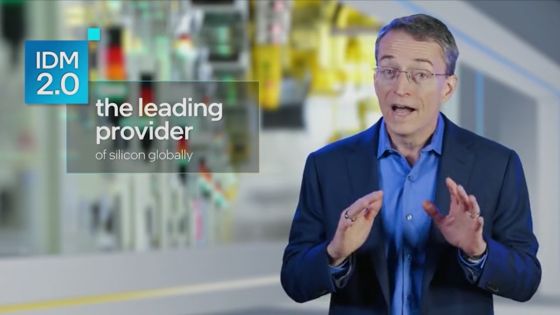
Intel's rivals, such as AMD and NVIDIA, have built a business model of 'designing chips in-house and outsourcing manufacturing to other companies.' On the other hand, Intel has maintained a business model of 'producing chips designed in-house in its own factories' for many years, and Intel's factories basically only produced Intel chips. Meanwhile, Gelsinger announced the foundry service expansion strategy ' IDM 2.0 ' in March 2021, and proceeded to build a system to undertake the production of chips designed by other companies. IDM 2.0 was progressing steadily, but Gelsinger stepped down as CEO before Intel's performance recovered.
Will Intel's foundry service expansion strategy 'IDM2.0' be the key to Intel's revival? - GIGAZINE
SemiAnalysis speculates that the reason Gelsinger stepped down as CEO was because the board was not happy with Gelsinger's plans. It also points out that, although Gelsinger has made several mistakes, including a failed AI strategy and the abandonment of the Tower Semiconductor acquisition, he was the most suitable person for the CEO position among the current board members.
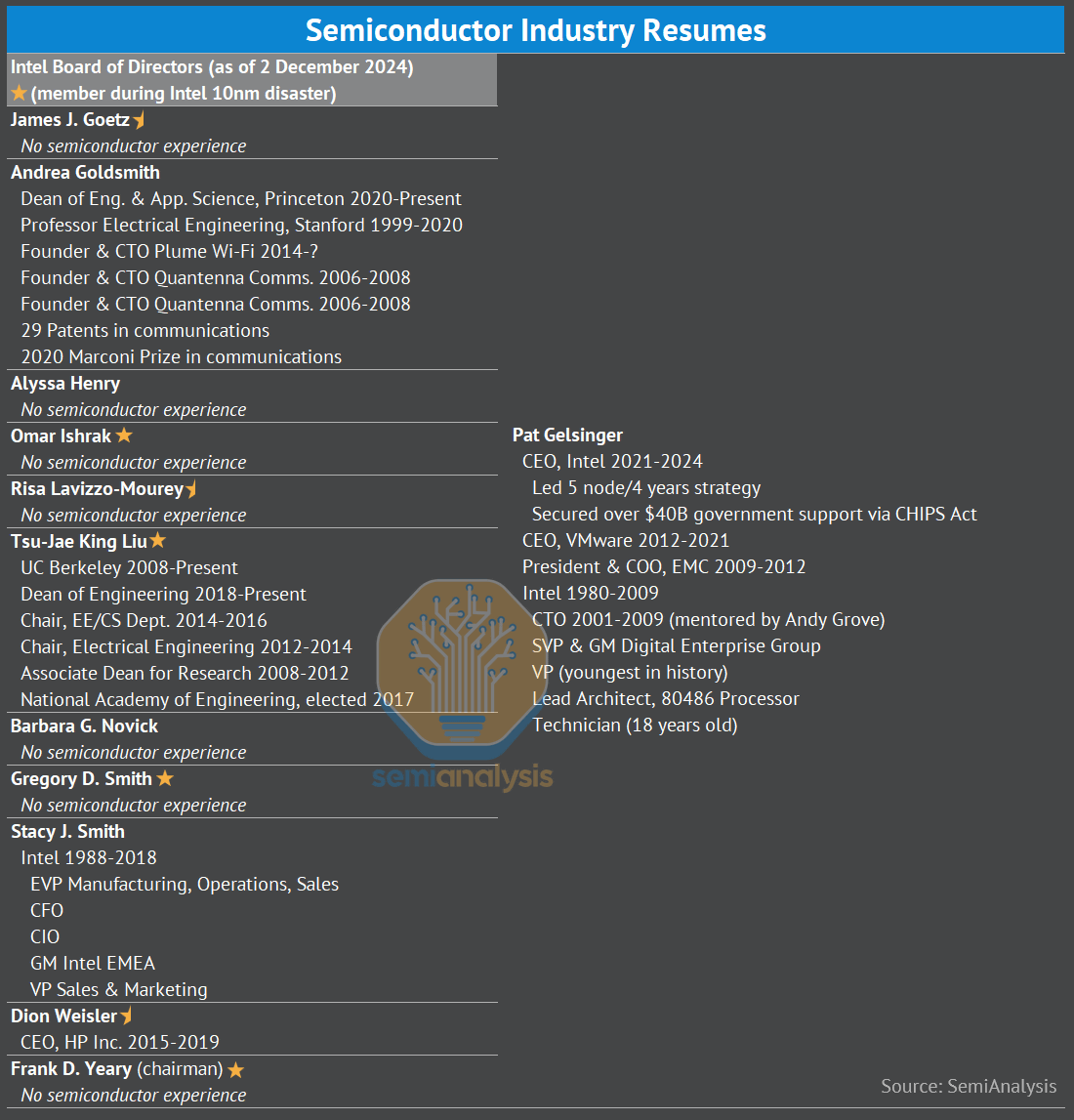
SemiAnalysis points out that one of the problems with Intel's board of directors is that there are 'few people who are knowledgeable about semiconductors.' The image below summarizes the careers of the 11 board members as of December 2024. Of the 11, seven have no track record in the semiconductor industry, and of the four who have a track record, two have academic achievements but are not industry insiders. SemiAnalysis calls the situation in which people who are not familiar with the semiconductor industry are in important positions 'Intel's cultural corruption.'
The beginning of Intel's cultural corruption dates back to Paul Otellini's appointment as CEO in 2005. At the time, Otellini and Gelsinger were the leading candidates for CEO, and Otellini was valued as a business expert, while Gelsinger was an expert on the technical aspects of semiconductors. After being appointed CEO, Otellini worked hard to improve Intel's performance, including signing a contract with Apple to install Intel chips in Macs. The video below shows Otellini handing a silicon wafer to Steve Jobs at the announcement of the Intel-equipped Mac.
First Intel Mac (10 Jan 2006) - YouTube
While Otellini achieved some success, he also showed a business-oriented attitude, such as offering PC manufacturers anti-competitive contracts to pay them money instead of adopting AMD products. Also, since Otellini became CEO, Intel has made political decisions rather than technical ones, leading to strategic mistakes such as acquiring security company McAfee and allowing Arm to dominate the mobile market.
Intel acquires McAfee for $7.7 billion, aims to improve security technology from both hardware and software sides - GIGAZINE
By Josh Bancroft
Brian Krzanich, who took over as CEO from Otellini, also made the mistake of 'significantly delaying the transition to the 10nm process.' SemiAnalysis calls Krzanich 'the worst CEO in Intel's history.'
Moore's Law flashes yellow light, Intel's 10nm process transition delay certain - GIGAZINE
Bob Swan was appointed CEO after Krzanich. Swan has served as CFO at many companies, including Intel. In other words, Swan is a businessman at heart and Intel's first non-technical CEO. During Swan's tenure as CEO, Intel spent $38 billion (5.7 trillion yen) on capital expenditures, while spending $36 billion (about 5.4 trillion yen) on share buybacks. For Intel, which was lagging behind TSMC, the world's largest foundry, in the transition to cutting-edge processes, the neglect of capital expenditures was a fatal blow. In addition, technical personnel were significantly reduced during Krzanich and Swan's tenure as CEO. SemiAnalysis points out that the decisions of the board of directors, including these CEOs, created Intel's current situation.
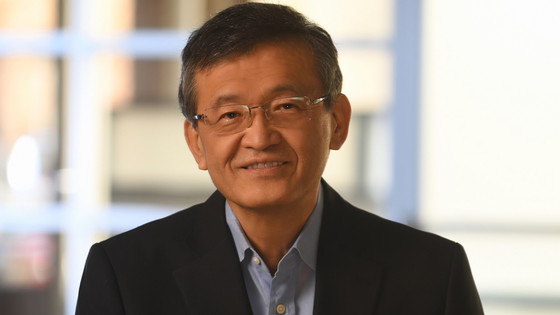
In addition, former director Lip Boo Tan will become Intel's new CEO in March 2025. He holds a bachelor's degree in physics from Nanyang Technological University in Singapore, a master's degree in nuclear engineering from Massachusetts Institute of Technology, and an MBA from the University of San Francisco. He served as CEO of Cadence Design Systems, which handles semiconductor development software, from 2009 to 2021, and has also received the Robert N. Noyce Award, the Semiconductor Industry Association's highest honor.
Intel appoints former director Lip Vu Tan as new CEO - GIGAZINE
Related Posts:
in Hardware, Posted by log1o_hf