The age at which chuunibyou develops is between 14 and 18 years old, and there are six categories of chuunibyou cases. The analysis, theory, and practice of expressing the chuunibyou pose are also discussed.
At

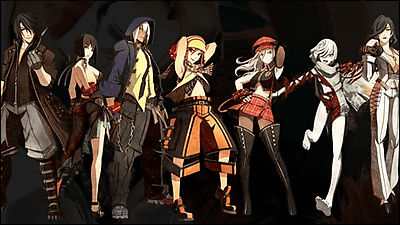
First, I was asked to express the God Eater characters in cool poses. Here's the challenge. First, I received the request, but what does 'cool' mean to God Eater? There are many different types of cool, and what is cool varies depending on people's preferences. So, I had to find what is cool to God Eater. Second, I had to 'express the character through poses,' and while I've given poses to various characters in the past, similar characters often end up with similar poses and gestures. It's difficult to bring out individuality. Expressing a character through poses is difficult.

Next, what does 'cool' mean to God Eater?

First of all, when we were creating the cutscenes, the 3D God Eater character models looked like this. I thought the characters had a cool, edgy feel. What does cool mean for God Eater? The target audience is middle and high school students. What makes middle and high school students think that edgy images are cool...

I think it's a middle school character.

I wondered what a chuuni character is, so I collected and looked at pictures of chuuni characters. '
Reference 1: Light Yagami from 'DEATH NOTE' on the cover of Takeshi Obata's art book 'blanc et noir'

Reference 2: 'Code Geass: Lelouch of the Rebellion' Blu-ray Volume 1 jacket

Reference 3: Good Smile Company's ' Black★Rock Shooter Black blade ver. '

Reference 4: CD ' EVANGELION ADDITION ' jacket

Reference 5: 'Mobile Suit Gundam 00' Blu-ray Volume 7 jacket

Maybe the choice itself was wrong, but what exactly is a chuuni character?

He's a character that's extremely popular with people who are in the midst of chuunibyou. So I decided to research and analyze what chuunibyou really is.

It has been found that the age at which chunibyo most commonly develops is between 14 and 18 years old, and that it develops during adolescence and young adulthood.

However, this alone doesn't really explain it, so I did some research online. After looking at many cases, I've come to understand that the reasons for these behaviors can be divided into six categories. Here are the reasons. Cases that fall into the first category include 'starting to drink coffee that isn't very good,' 'starting to listen to Western music,' and 'suddenly getting rid of things that you used to collect, like plastic models or professional baseball cards, because they suddenly seem very childish.' The reasons for these three behaviors are 'wanting to show that you're now an adult.'

Let's move on. The second example is 'smoking even when we're on a school trip' or 'changing the color of my hair with spray paint.' The reason for these behaviors is to show that I am a strong person who won't be intimidated by society's restrictions. I want to show my strength by saying, 'I don't know about such restrictions and I can act independently.'

The third reason is, 'I don't want my friends to see my family,' 'I get furious at my mother and demand she respect my privacy,' 'When my mother asks me where I'm going, I reply, 'Outside.'' The reason for this behavior is 'conflict between a desire for independence and the reality of being dependent.' Put simply, chunibyo is said to develop during adolescence and young adulthood, and while they believe they can act with the same independence as adults, in reality they have to live dependently on their parents. When confronted with this, they feel ashamed and uncomfortable.

Moving on to the fourth point, the symptoms are 'wanting to be different from classmates,' 'starting to look for a true best friend,' and 'wanting to buy a keychain to impress.' The reasons for these behaviors are 'questioning who you are and doing something different.' Not satisfied with the things your mother buys you from the mass-market store, you might start wearing distressed jeans or a shirt with a skull on it.

Number 5: 'I write lyrics even though I can't compose music,' 'I'm obsessed with Dragon Quest and Final Fantasy and want to be a game programmer, but all I can think about are the stories and items in the little events in the sequels,' what do you think? The reason for this is that I believe I can do it if I try. I didn't learn it somewhere, but I believe I can do it if I try.

So, number six. 'Getting worked up about knowing a popular band before they were popular.' This is something I can relate to, so it hurts a little. 'Adults are dirty,' 'Suddenly starting to say whether ramen is good or not.' The reason for this behavior is 'I want to think I understand the essence of things better than other people.' It feels like they're trying to be a little above themselves, like, 'I know it, seriously.'

We now know that these six reasons are the causes of chunibyo behavior. We also discovered that these reasons stem from two psychological factors.
Let's look at two psychological states. Starting with group A. These are the reasons for the behaviors mentioned above, 1, 2, and 3. What kind of psychological state is this? It's the assertion of being an adult, which in psychology is called the desire for recognition. This is when a person goes from adolescence to young adulthood, goes through secondary sexual characteristics, and has the appearance, intelligence, and autonomy of an adult, but because of parents and teachers, things don't go as they want, and in response, they say, 'I'm an adult, I want to be recognized.'
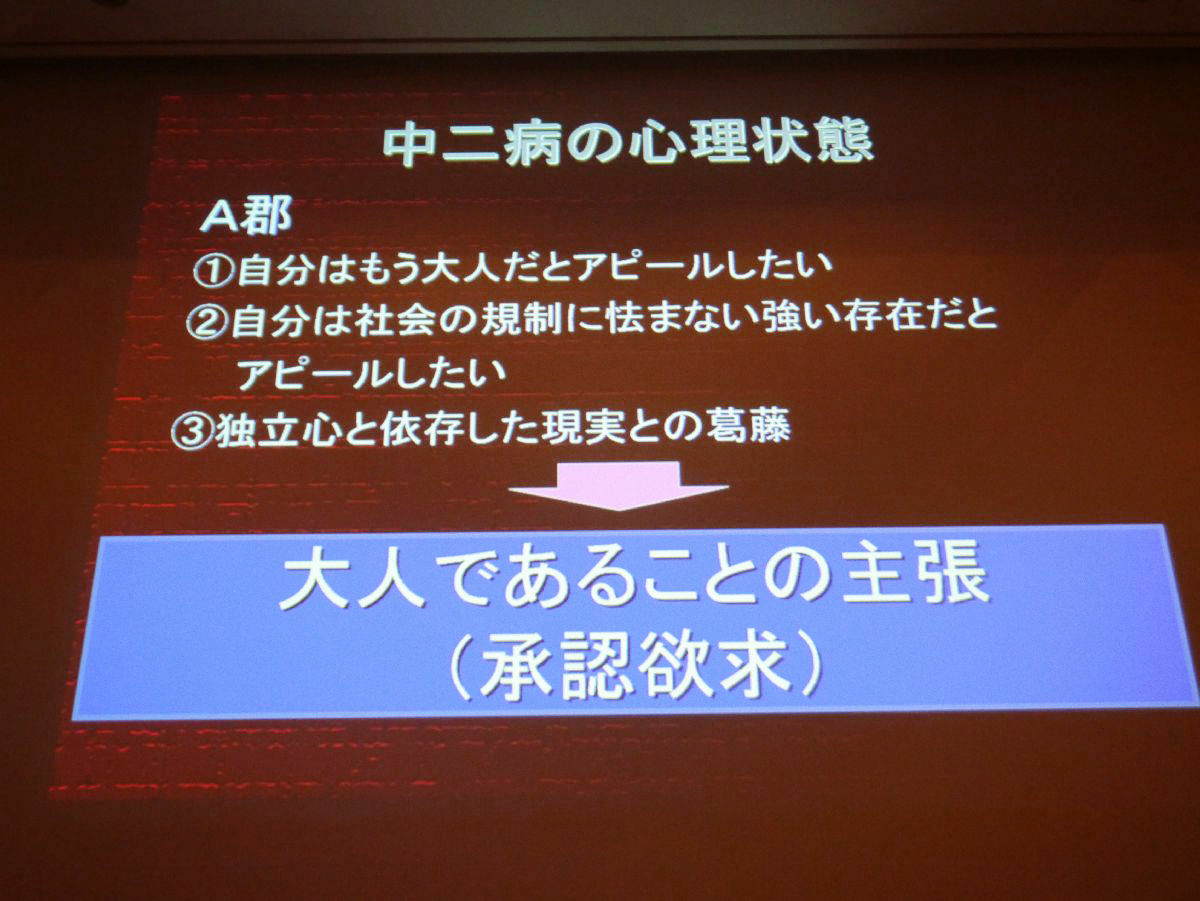
This is Group B, another psychological state. It is the reason for the behaviors mentioned above as numbers 4, 5, and 6. What kind of psychological state is it? It's a search for oneself. In more complicated terms, it's called self-identity. It's the adolescent process of self-formation through asking oneself questions like, 'Who am I? Who am I? What should I do? How should I live?' So now we know what kind of psychological state chunibyo arises from.

What kind of chuunibyou characters do people with chuunibyou like? We found that chuunibyou characters are characters that people can empathize with, project themselves onto, and admire, in relation to the two psychological states mentioned above.

So what does 'cool' mean in God Eater? The answer for God Eater is coolness that chuunibyou people can empathize with, project themselves onto, and admire. So, can you empathize with these two characters? Do you think they're cool?

So now we understand how cool it is. The next step is to figure out how to incorporate this coolness into the character's pose.

First of all, a person's posture and actions reflect their inner self. Therefore, to express the characters through poses, we used an animation method that summarizes the tendencies of human posture and behavior to express the differences between the characters.

The animation method is a unique, systematic compilation of 'how to give a character a certain character' and 'physical movements based on a person's psychological state.' I would like to introduce three key points from this.

Point 1. 'Strength of awareness of the other person.' Can you tell just by looking at them how aware they are of you? In fact, you can tell just by looking. You can tell how aware someone is by looking at their gaze, head, chest, and waist. It's difficult to explain verbally, so I've created an image for you.

The man in the blue shirt on the left is my boss, and the man on the right is me. Right now, my boss has 0% interest in his subordinates. How can you tell that he's 0% interested? I think you can kind of tell, but he's not looking at the person. He's not looking or even looking at them at all. He has 0% interest in the person. Even if he says 'yes, yes,' he's not listening seriously at all.

Next, they're about 20% interested. What has changed? Their head is facing the other person, and their hands are on the keyboard. The boss is still focused on their own work. But they're still looking at you, so they're interested, asking questions like, 'What are you talking about?' and 'Please hurry up and get the requirements done.'
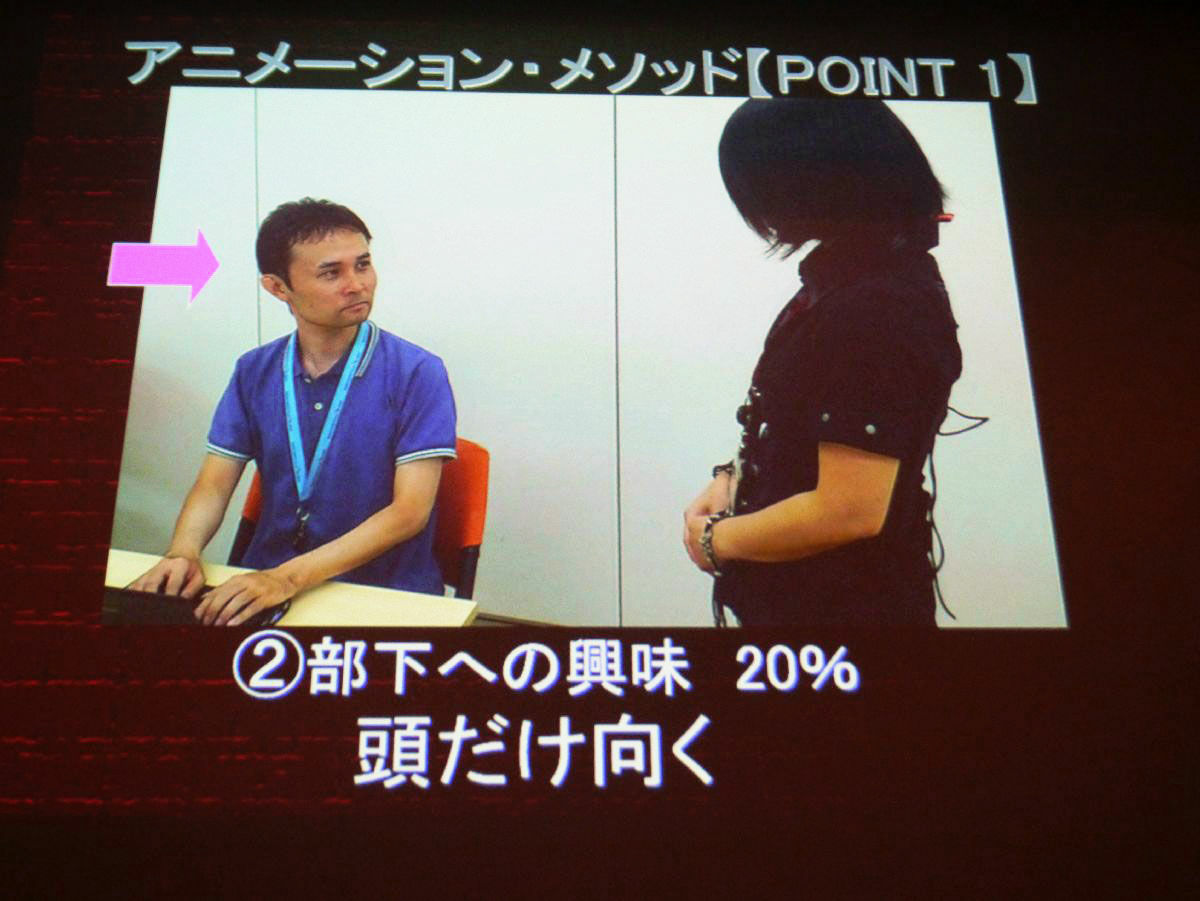
So, what does it feel like when someone is about 50% interested? The difference from before is that their head and chest are now facing you. By turning their head and chest toward you, they also take their hands off the keyboard. This finally gives the impression that they have stopped what they are doing and are willing to listen to what you have to say. But it's not 100%. Let's take a look at what 100% interest feels like.

He is 100% interested in his subordinates. By 100%, I mean that his head, chest, and waist are facing his subordinates. This finally puts him in a position to listen 100% to what others have to say. He is a good boss who listens to what others have to say.

Now, let's move on to point 2. 'Open Positions and Closed Positions.' These are postures that reflect what psychology calls 'acceptance' and 'rejection.' Let's take a look at what this is as well.

It is a posture of acceptance and liberation. This is called the open position. What makes it an acceptance and liberation posture? It may seem like the person is willing to listen, but what you should look at is that their arms and legs are open, not crossed. This is the open position.

So what about the closed position? A posture of refusal and defense - this is the closed position. It's the opposite of the previous one, with the arms and legs closed. The face looks a bit reluctant, but some people may smile, shake their head and fold their arms. If you're going to talk to your boss and they're in the closed position, it would be wise to try again.

Regarding the palms, the left side is the open position, which represents acceptance and release. The hand is open. The right side is the closed position, which represents rejection and defense. The palm is clenched.

In the past, there was a pose called

Next is the back. On the left is the open position, which represents acceptance, release, and confidence. The back is arched. And on the right is the closed position, which represents rejection, defense, and thinking. When you are thinking, your back is arched. This is how it appears on the back.

The traditional hero pose is arching your chest and crossing your arms. This is an open position with your back arched, a sign of confidence. Crossing your arms is a sign of denial. It shows your firm belief that you won't be affected by the villain. It's a very unique pose that combines open and closed positions. Speaking of heroes, while I was gathering information on various characters, I found a character from a TV anime who has the perfect open position. I'd like to introduce it to you. It's the signature pose of Sky High from '

Point 3. Differences between genders. When trying to express femininity through poses, I often tend to tuck my elbows or knees inward for girls, but doing that makes all the girl characters, no matter how unique they are, look the same. How can you express femininity and masculinity while still retaining individuality? I'll teach you the key points.

Which of the two is male and which is female? The left side is male, and the right side is female. What are the differences? The poses themselves are different, but in the case of the man, the image is that the force is being released and diffused outward. This is just an image. In the case of the woman, the image is that the force is being closed inward. This is true in 3D, but when drawing in 2D as well, if you pay attention to the flow of muscles and joints, you can express femininity and masculinity without losing individuality, so please give it a try.

So, I have explained three key points of the animation method.

Next, we will put the animation method into practice.

Now, let's actually create a pose. However, since I want you to just look at the pose, I'll use the standard model from

The whole body is turned at about a 45-degree angle. This shows how conscious the character is of the other person. The reason for turning at about a 45-degree angle is to express the assertion of being an adult and a personality that does not like to get too close to others. If the character faces straight ahead, they will appear very honest. That's why they turn at a slight angle. In this case, a character who is confident in themselves will have their left chest facing forward, and a character who is subconsciously lacking in confidence will have their right chest facing forward.

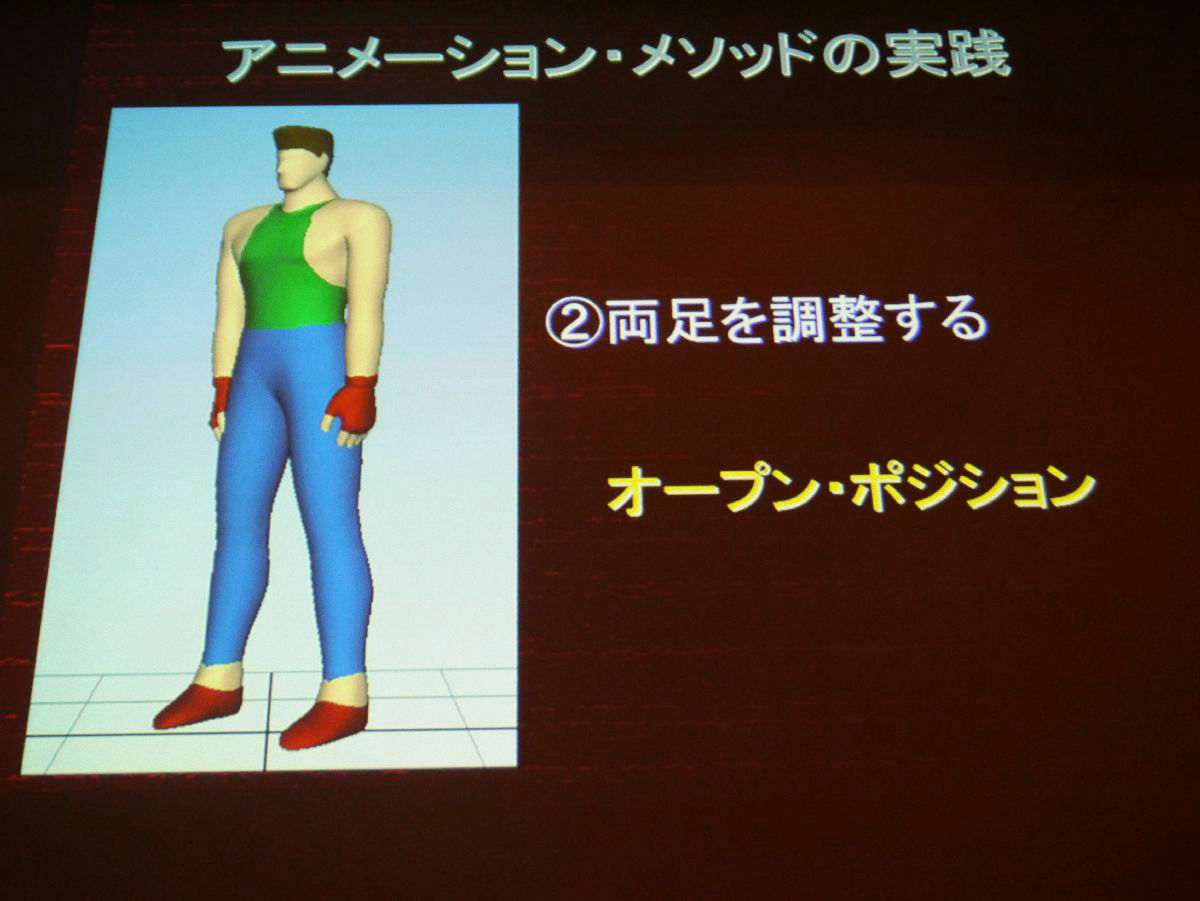
Now, let's adjust both feet. This is an open position. The more confident you are, the wider your stance should be. This character is confident, but he doesn't like to get too close with others, so I'll keep his stance fairly wide.
The joints face outwards. This is due to gender differences. It looks like this.

Slightly arch your back. This is a closed position. You are in a state of self-discovery, so arch your back a little.

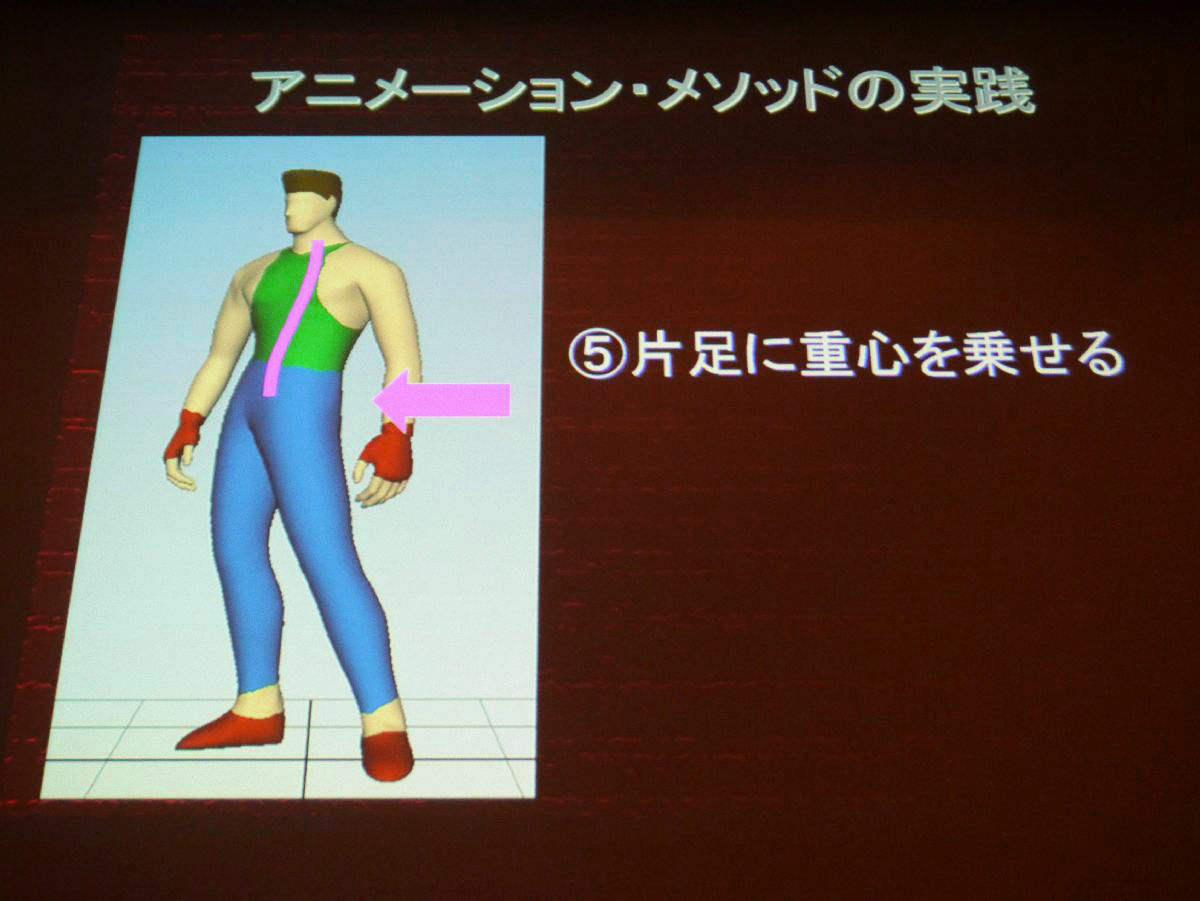
Next, shift your weight onto one leg. If you just bend your back, your lower body will be a little tense, so shift your weight onto one leg. At this point, your spine will form an S-shape. Keep your balance in that S-shape.
Finally, turn your head slightly forward. This shows how conscious you are of the other person. If you turn your head too far forward, you'll appear very obedient and attentive to what others say. If you turn your head to the side, you'll appear indifferent, so this character turns their head slightly forward.

This completes the middle school pose.

The completed chuuni pose is actually used as the pose for this character in God Eater. In this way, I used animation methods to create the God Eater characters.

If you line up a pose using the method and a pose without using the method, it will look like this. The pose on the right is a pose I made up randomly.

These are the God Eater characters created using the method. The yellow character second from the left has an open personality and has nothing to hide, so she is facing straight ahead. The woman second from the right with bob hair and black clothing has her chest out and a very open posture. She is a big sister type character, so she is posed like this. The women do not have their elbows turned in or their legs turned in. The women in God Eater are strong-willed, so we were careful about these aspects so as not to weaken the characters.

Let's sum up. In response to the questions 'What does 'cool' mean for God Eater?' and 'How can we express the characters through poses?', the answer was 'Using animation methods, we were able to accurately express what middle and high school students think is cool.'

Finally, in this article on physical chuunibyou theory for busy people, I've done a lot of analysis of chuunibyou today. I've also explained three key points of the animation method. But can we create chuunibyou characters more succinctly? I'll just give you the key points.

Now that I've explained the method, why not take a quick look at the illustrations of the junior high school second-graders I gave as examples? They're all 'wiggling.' When using the method to find yourself, you round your back and assume a closed position. When you bring that posture into a comfortable, resting pose, your pelvis tilts. To balance, you open your chest. This creates a natural S-shape.
So, in other words, the chuuni characters are...

Just wiggle it!

Thank you for listening.

bonus

Related Posts: